



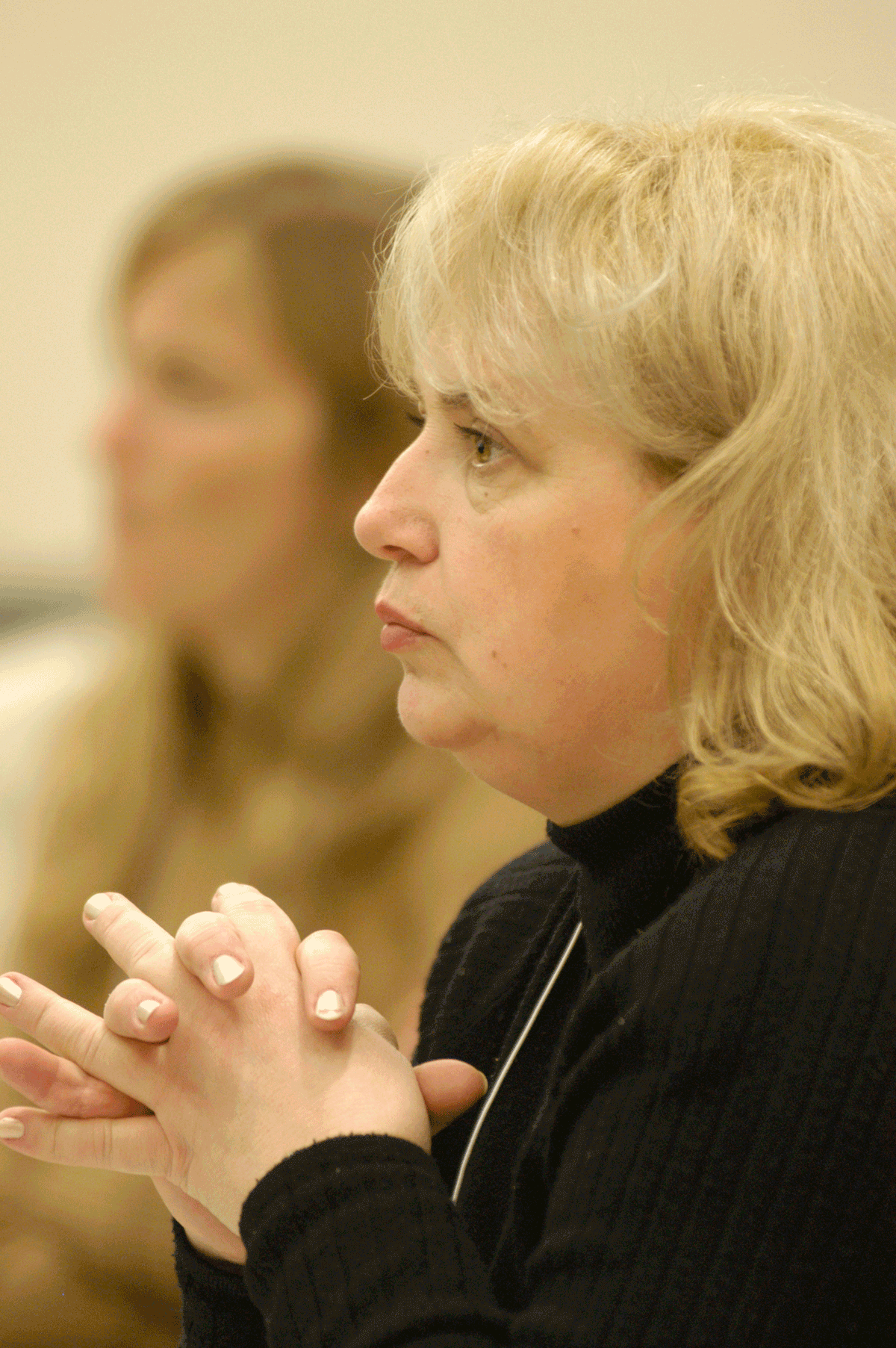
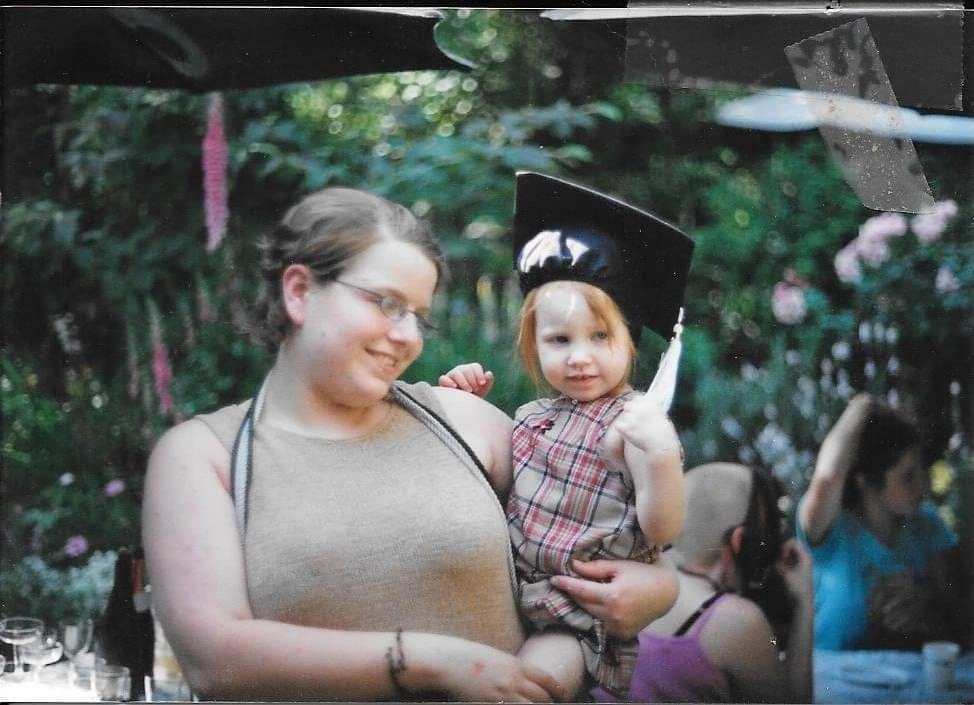
 Jade Prior and her mom Mishelle Prior of Eugene represent two-generations of Oregon parenting students.
On September 15, 2021, the U.S. Senate passed a resolution declaring September National Student Parent Month. As a person who both was a student parent, and has worked to advocate for other student parents throughout my education and career, after many long years of simply trying to be seen and acknowledged, this federal recognition felt like an important victory. While it didn't direct resources to student parents, nor change laws or policies to better protect and ensure our equitable access to higher education, it showed acknowledgment and solidarity both for the fact both that we exist, and that we are significant: one in five undergraduate students, and one in three graduate students, is parenting during their studies.
In the student parent world, this was a moment for both celebration and frustration: many of us work in small offices, or even departments of one, and our day-to-day work centers around supporting students parents. This is busy, ongoing, and critical work. Helping student parents address their needs and overcome their challenges and crises takes priority over day-to-day work. Between helping students succeed academically, helping them navigate systems to find child care and meet their basic needs, and helping strategize crises, we are very busy people!
Celebrations and special events take months to plan, and with National Student Parent Month being declared half-way through September, many of those celebrating this monumental recognition, were left with no time to plan, organize, and implement a celebration.
Instead of seeing September 30 as a deadline for celebrating the hard and diligent work of parenting students and their allies, we should view the close of National Student Parent Month as a catalyst towards the change that is on the horizon.
While I no longer work directly in a student parent program on my campus, I've been busy supporting student parents through research, program support, curriculum development, and advocating for policy and systems change, I can admit that, like a lot of my colleagues in the student parent world, I wasn't ready for a sudden two-week deadline.
So to my friends in the student parent world, I have a proposal. Instead of seeing September 30 as a deadline for celebrating the hard and diligent work of student parents and their allies, we should view the close of National Student Parent Month as a catalyst towards the change that is on the horizon. Let’s use this as a call to action through which we will work to expand college access, inclusion, and success for student parents and their families between now and the second National Student Parent Month in 2022.
This is a moment to celebrate and showcase the collective work that we are already doing to support student parents, and to consider what it would take to be able to do our work even better. It's also a call for advocating for policy and systems change, envisioning a nation where every person—regardless of their background, age, race/ethnicity, income, gender, marital, and/or parenting/caregiving status—is offered an equitable opportunity to complete a college degree.
Highlights from Ongoing Work to Support Student Parents
At the Higher Education Access for Parenting Students Research Initiative, we have been busy working to advance student parent success across the landscape of U.S. higher education. Here are a few highlights of our work from the past year, and some previews of what you’ll see from us in the coming year:
Educating the Public About Student Parent Issues
- Testifying before the Oregon State Legislature's Senate and House Education Committees on the need for student parent demographic data collection, which led to the passage of Senate Bill 564, requiring public postsecondary institutions to collect student demographics pertaining to parenting status. Oregon was the first state to pass such legislation, through an effort that was mobilized by student parents and their allies.
- Authoring a series of op-eds to call attention to student parents and their challenges and successes in outlets including The Hechinger Report, Diverse Issues in Higher Education, and Ms. Magazine.
- Launching Student Parents @ the Center, in collaboration with the Urban Institute, a project through which we are developing and expanding upon a framework for understanding and mapping the broad range of policies intersecting in parenting students' lives that support or impede their college success.
Reports and Resources on Student Parent Programs Across the U.S.
- Releasing a new report on a landscape scan of student parent support at Oregon's public colleges and universities.
- Publishing resources for student parents in New England, the Mid-Atlantic, and Florida through our Find Your Way project. And expanding Find Your Way to the Pacific Western Region with Hawaii’s Bridge to Hope Program. In the coming months, we’ll expand our team to include student parents in states across the Pacific West.
- Releasing the Campus Family Housing Database, a searchable online tool, reflecting the findings of a nationally comprehensive study documenting U.S. colleges and universities offering students the opportunity to live on campus with their children.
Academic Journal Articles and White Papers
- Publishing a new article in About Campus about how to strategically time student parent support services across the phases of an academic term.
- Releasing a new white paper and sample curricula reflecting pedagogies for parent/child learning through the Two-Generation Classroom Project. In the coming year, we are excited to put this work into action through a partnership to support student parents.
Contextualizing Our Work in Historical Perspectives
- Student parents have been part of college life for a lot longer than most people realize! There is so much to learn from the history of student parents in higher education to inform our contemporary work, but this history is still largely undocumented. Our Student Parents in History Project, launching in fall 2021, is building a digital archive of documents and oral histories on the history of student parents in higher education from the Post World War II era through the present day.
We work to engage and elevate the expertise, leadership, and contributions of current and former student parents in meaningful ways that counter tokenism and affirm experiential expertise.
In all of these efforts, we believe it is critical that student parent voices and expertise are centered, supporting their efforts as emerging leaders and experts in higher education, social science research, policy, and advocacy. We work to engage and elevate the expertise, leadership, and contributions of current and former student parents in meaningful ways that counter tokenism and affirm experiential expertise. Student parents' perspectives are critical to understanding the challenges that student parents face in college today and determining how to build systems to create a more inclusive and equitable future for student parents and their families.
All of our projects work to engage student parents as meaningful contributors to our shared work. We engage with student parents, interdisciplinary experts who were student parents during their studies, and self-identified student parent allies as knowledge and research partners, collaborating with them to engage in the processes of informing and shaping social change. We practice family friendliness and flexibility in every aspect of our work, creating inclusive, welcoming, supportive, and safe spaces to be both parents and students/professionals, recognizing the brilliance, strength, and contributions of all of our partners in this work.
In the coming year, we hope to inspire and advance the quest for equitable access to education for all: including students with kids. Our projects focus on informing and shaping policy, systems, and structural changes that are necessary to achieving this goal across the U.S., while exploring and testing new approaches and models in partnership with post-secondary institutions and communities, who are working locally toward this shared goal.
For us, National Student Parent Month is a symbol of recognition with the power to ignite and accelerate this shared mission. It serves as a checkpoint at which we can stop and reflect on all that we have accomplished and all that we still have yet to do. It is our hope that the time between now and September 2022 will be a year of collaboration, partnership, and movement building across the fields of higher education, economic mobility, and thriving communities, so that next September, we can look back on the year and see just how far we have come.
Autumn Green, Ph.D., is a research scientist at the Wellesley Centers for Women studying higher education access for parenting students. Dr. Green is nationally recognized for her scholarship on the lives of parenting students and has worked to create two-generation programs on college and university campuses.


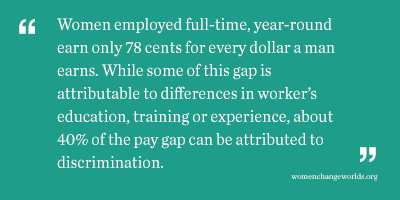 Service occupations, such as maids and housekeeping cleaners, personal care aides and child care workers, are the lowest paid of all broad occupational categories. This disproportionately affects the earnings of

 Boston After School & Beyond (BASB)

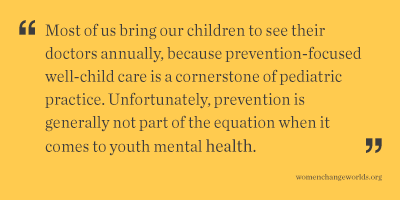 Treating youth depression once it emerges may be much more distressing, and much less effective, than identifying early symptoms of illness and treating them before they develop into a full-blown disorder. Prevention approaches have the potential to reach a large number of adolescents, and may be more acceptable than treatment because services can be rendered in non-clinical settings (e.g., schools, primary care settings), and do not require adolescents to identify themselves as ill.
 No one looks for a job in a newspaper’s “Help Wanted” section anymore. But some 50 years after the federal Equal Employment Opportunity Commissions in 1968 said that listing jobs under “male” and “female” headings was illegal, the psychological divide lingers – in sports.
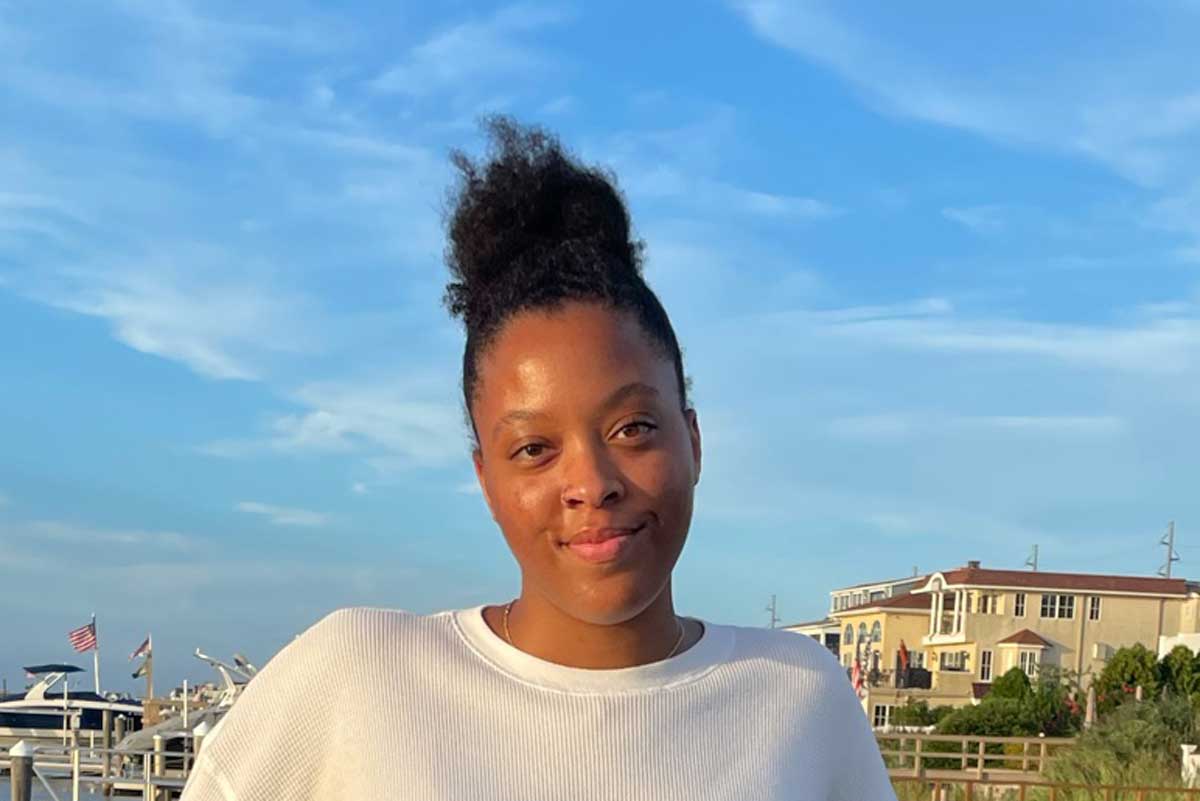



 , Ph.D., is a research scientist at the Wellesley Centers for Women studying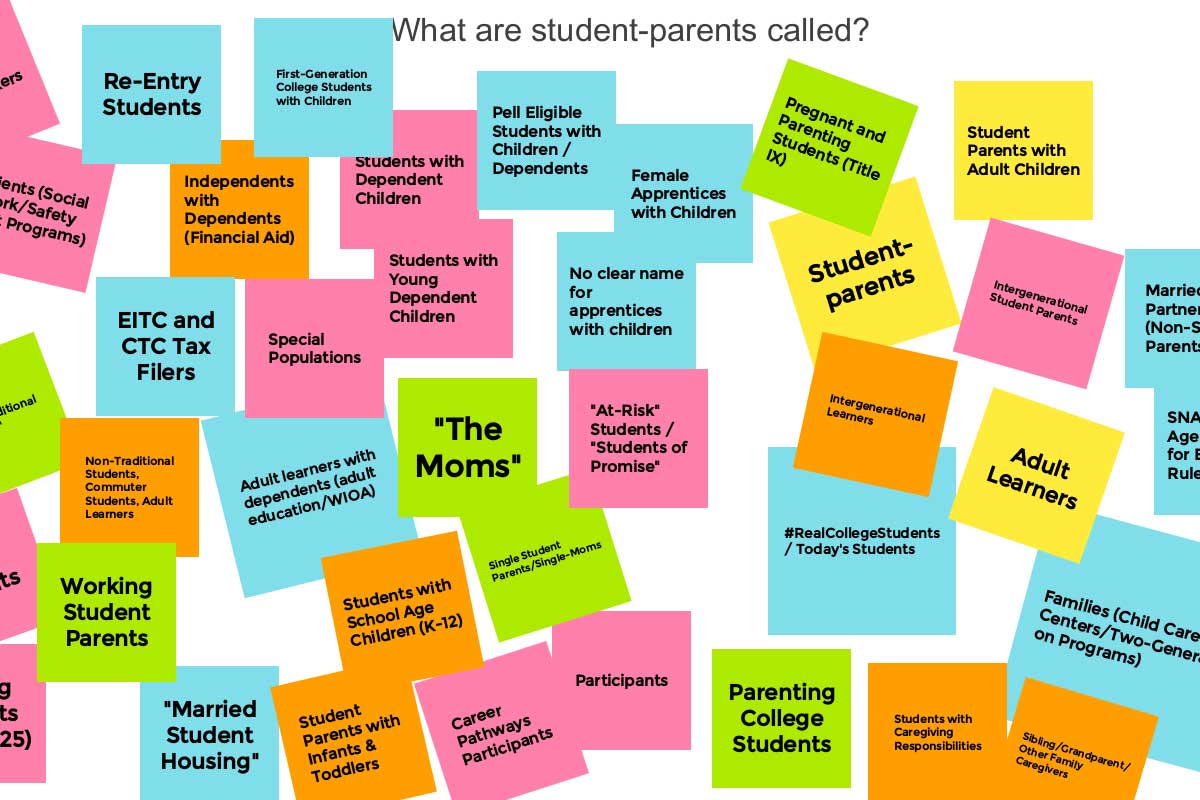

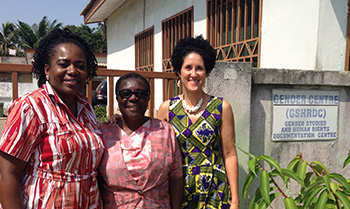
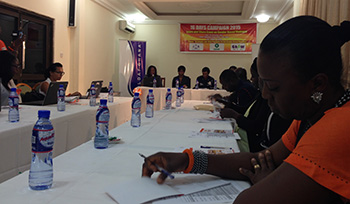
 One conundrum that was discussed is the fact gender-based violence statistics have gone up in recent years in Ghana, begging the question of whether domestic violence really is on the rise or, alternately, whether the new law has merely increased reporting of incidents due to society-wide sensitization. Although both factors may be at play, there was general agreement that the law was a necessary intervention on an unacceptable situation--broad scale gender-based violence in Ghana. (Of course, lest anyone single Ghana out, the
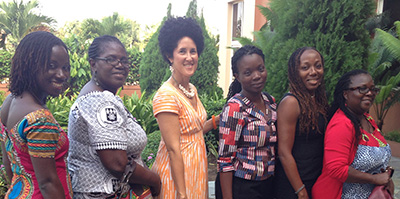
 data, convened a group of stakeholders to write new policy, and shepherded the draft policy through the national legislative process while simultaneously engaging in public education so that the government and the people were in it together. They needed to piece together support from many sources over many years to make this happen. Many others who also cared passionately about ending gender-based violence worked with them or supported this work. Now, as Ghana looks ahead the tenth anniversary of its landmark domestic violence legislation, the country can claim many accomplishments. These include the expansion of its judiciary system to address gender-based violence, a sensitized police force that includes a domestic violence unit, and the leadership of its Ministry of Gender, Children, and Social Protection. It also includes increased awareness of groups with special vulnerabilities (such as people with disabilities), and the education and sensitization efforts of numerous NGOs like WiLDAF and academic institutes like CEGENSA. All of these actors are vigorously working together to make sure that the country as a whole is moving in the same direction--away from gender-based violence and towards peace and security for women. Other countries can learn from Ghana --and other countries can increase the link between research and action to end gender-based violence.










 - Every 58 seconds during the school year a Latino public school student is corporally punished, every 57 seconds for Black students, and 48 seconds for White students;
 Utilizing such “rape myths” like the need for well-lit streets and women’s ability to walk safely perfectly illustrates Haugen’s limited understanding of sexual violence:
 Critical race theory has become the latest front in the culture wars. Depending on what you’ve read or what you’ve heard from politicians, you may be under the impression that critical race theory means talking about racism in any context, or that it means white people are inherently racist.
 Senior Research Scientist
 May is Mental Health Awareness Month. This year, it comes at a time when we have an increased focus on mental health due to the COVID-19 pandemic. Media reports have focused on the
 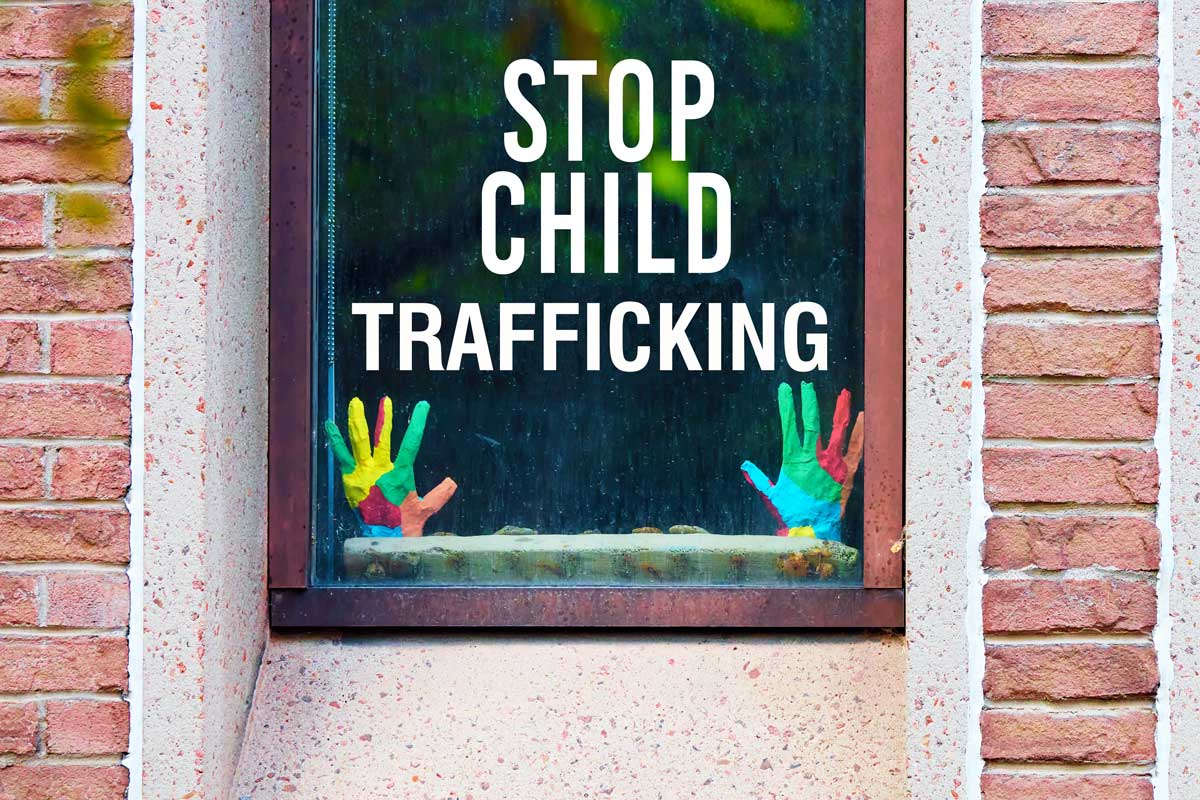 April is Sexual Assault Awareness Month and Child Abuse Prevention Month. Over the years, our work at WCW has addressed a wide range of critical issues related to these topics. One of the lesser publicly understood issues is the pressing problem of commercial sexual exploitation of children (CSEC) and teens, also known as sex trafficking.
 On March 11, 2021, the House of Representatives passed a bill seeking to “create a special education scheme to support deserving students attending public tertiary institutions across Liberia. The Bill is titled “An Act to Create a Special Education Fund to Support and Sustain the Tuition Free Scheme for the University of Liberia, All Public Universities and Colleges’ Program and the Free WASSCE fess for Ninth and Twelfth Graders in Liberia, or the Weah Education Fund (WEF) for short. The bill when enacted into law, will make all public colleges and universities “tuition-free”. The passage of this bill by the Lower House has been met by mixed reactions across the country: young, old, educated, not educated, stakeholders, parents, teachers among others, have all voiced their opinions about this bill. While some are celebrating this purported huge milestone in the education sector, others are still skeptical that this bill may only increase access but not address the structural challenges within the sector. I join forces with the latter, and in this article, I discuss the quality and access concept in our education sector and why quality is important than access. I recommend urgent action to improve quality for learners in K-12.

 As a new mother, you hold your baby in your arms, wishing for the best of the best for her. You may also be facing difficult career questions upon her arrival: When should you start working again? Should you be a stay-at-home-mom? Should you get a new job with a more flexible schedule? Will you be able to get promoted when you’re back at work? If you have a daughter, will she face the same choices in the future?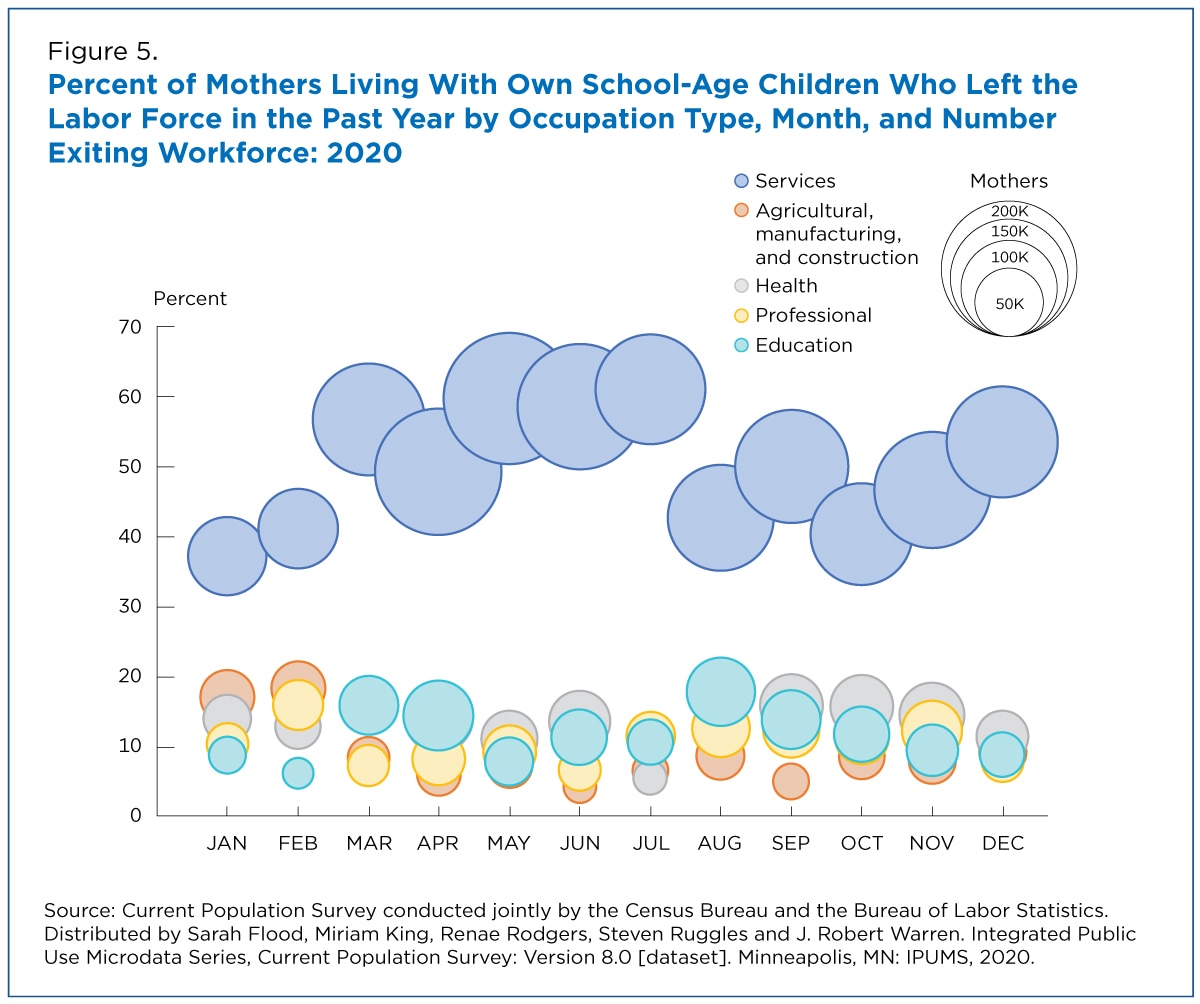
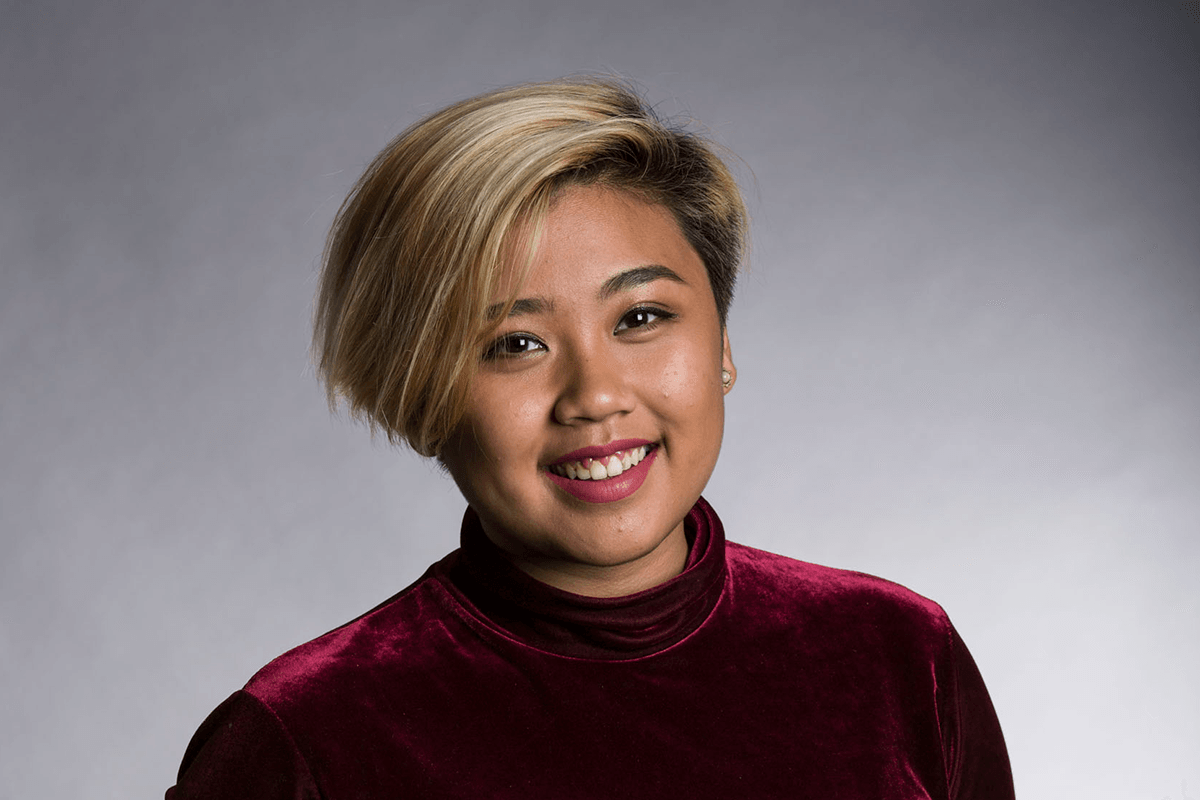 By the end of my first year at Wellesley College, I knew that I wanted to explore the world of research. I had taken the first of many gender studies courses to come, and left class with a head full of questions that I not only wanted answers to, but wanted to take a stake at answering. A stroke of luck brought me to an event for students to meet with research scientists at the Wellesley Center for Women. A stroke of better luck brought me to Dr.
 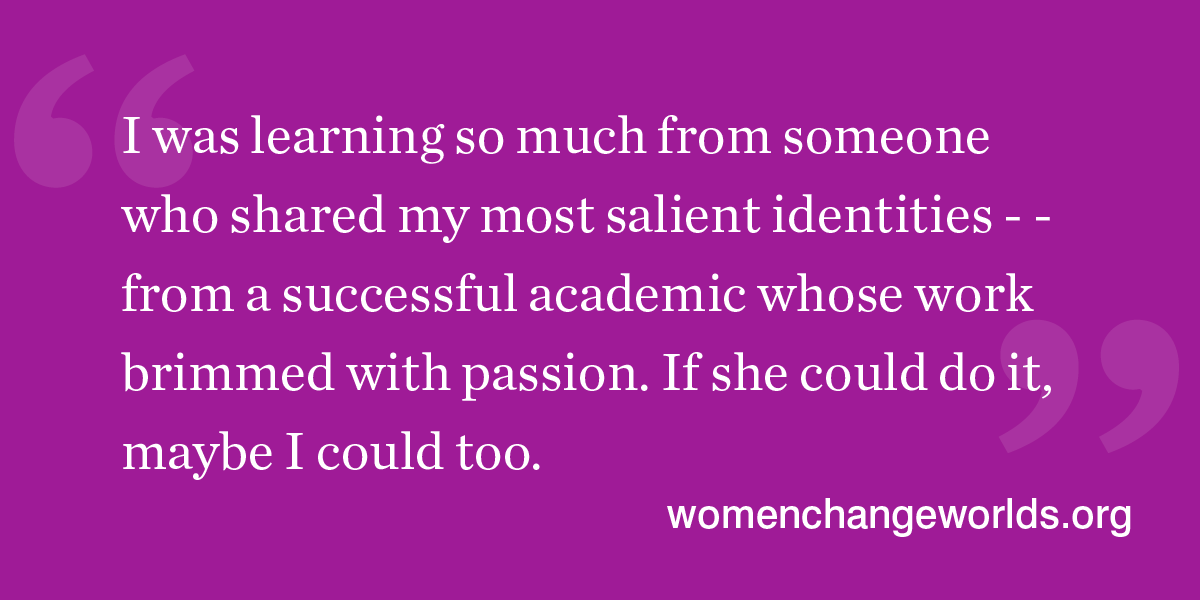 The power of representation became personal when I began to cultivate a mentor-mentee relationship with Linda. Our weekly/bi-weekly research check-ins were not only crucial for the advancement of the qualitative research we were conducting and my own research skills, but also for developing my own sense of worth and potential. Little by little, I was able to learn about Linda’s life and experiences, research and otherwise. I found out she was Thai (like me)! I found out that she also struggled in her undergraduate years (who knew that researchers were not perfect?). She spoke about her queerness in ways that normalized my own burgeoning questions about sexuality and gender. She validated my questions, hopes, and fears no matter how naive, incomplete, or overwhelming. I was learning so much from someone who shared my most salient identities - - from a successful academic whose work brimmed with passion. If she could do it, maybe I could too.
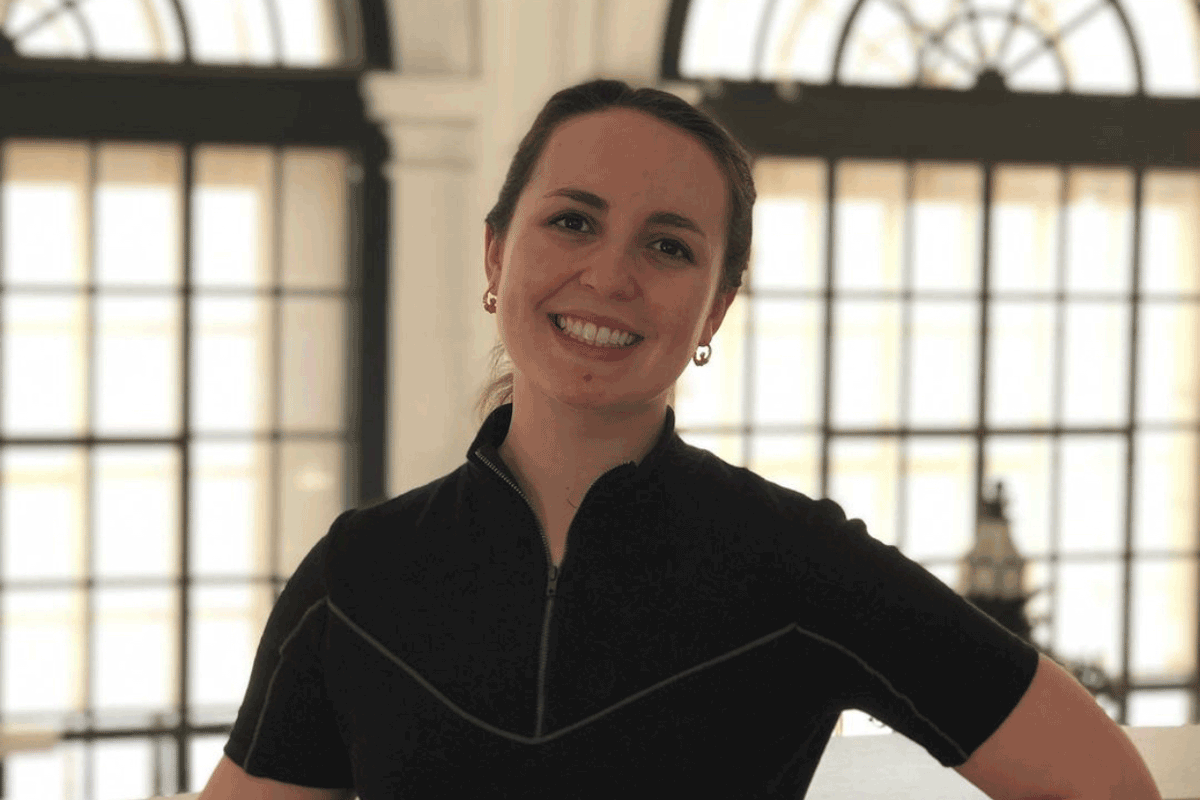 Sex education in the American public school system varies from state to state and from school district to school district. The lack of standardized sex education makes family education and conversations about sex and relationships all the more important for teenagers and their development. It is often assumed that parents are the default—that they are the only family members responsible for initiating these conversations. In my research conducted with WCW Senior Research Scientist
  It is the spring of 2020, and my senior year at Wellesley College is not at all what I imagined it would be like. Before concerns about COVID-19 led
  I spent the past semester working with Professor
 The pandemic has altered family life in unexpected ways.
 We at the Wellesley Centers for Women are starting our week with a sense of hope and possibility. We are proud to have a new
 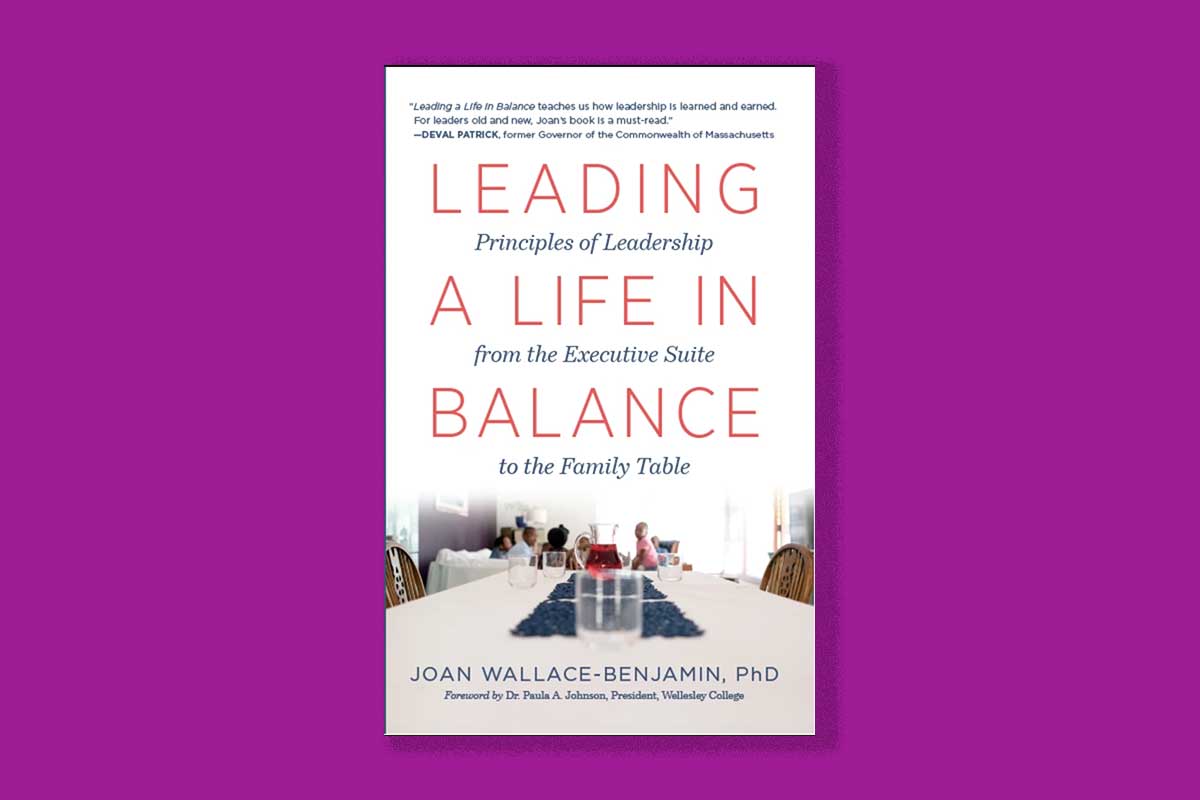 In my recently released book,
  In 2018, I began a
  Last year on Mother's Day, I was driving through the Rocky Mountains, on my way from Oregon to Maine where my life was about to change forever. It was the first Mother's Day I had spent without my kids since they were born, and the first Mother's Day since my own mother had passed away. I yearned to call her to share the news of my latest adventure, as I always had during our frequent long-distance phone chats, but I knew I couldn’t. The following week, my daughter would bring my granddaughter into the world on the southern coast of Maine. The transcontinental journey I was on would end with the newest love of my life joining our family.
 This landscape is familiar, strewn with ash and blood. We’ve been here before, too often, seeking the living, counting our dead. I know the terrain, can pick my way stumbling over the bodies, the stench of fear and hatred lingering in the air; the thoughts and prayers; the headlines and statistics.
 Social Justice Dialogue:
 Eric Bettinger and his colleagues

 s a precursor to teen dating violence. Schools—where most young people meet, hang out, and develop patterns of social interactions—may be training grounds for domestic violence because behaviors conducted in public may provide license to proceed in private.

 wear away at our health and wellbeing. The NPR poll found that individuals with a chronic illness were more likely to report high stress in the previous month (36% compared to 26% overall), as were individuals living in poverty (36%) and single parents (35%). These chronic stressors tax our abilities to cope with stress. For those individuals with high levels of stress, problems with finances was one of the main sources of stress, and this was especially true for those
  I wrote these thoughts as a white, upper-middle-class, able-bodied, heterosexual, secular humanist woman, with the primary goal of connecting more deeply with other white people and being open to all other intersections. I was deeply impacted by and must honor this writer of color--Isobel Debrujah’s “
 CALLING IN WITH LOVING ACCOUNTABILITY:
 I love the people in my life who push me to be better. I owe much gratitude for this piece to Mirah Anti, Jorge Zeballos, Pat Savage-Williams, Andrea Johnson, Donald Burroughs, Matthew Biecker, Ashley Tuzicka Ray, and Jamie Utt.
