The Women Change Worlds blog of the Wellesley Centers for Women (WCW) encourages WCW scholars and colleagues to respond to current news and events; disseminate research findings, expertise, and commentary; and both pose and answer questions about issues that put women's perspectives and concerns at the center of the discussion.

WCW's Women Change Worlds Blog

MotherStruck!

This article was originally published on Huffington Post and is posted with permission by the author.

Reproductive freedom. What do these words mean? They mean having the children you want, when you want. They mean not becoming pregnant when you don't want and not having children you don't want. They mean sexual freedom; becoming and expressing who you are.

International Planned Parenthood (IPPF) was founded because women were becoming pregnant when they didn't want to be and either having children they didn't want or resorting to unsafe abortion to terminate their pregnancies. We at Planned Parenthood in the USA and abroad have focused on providing safe and effective contraceptives to women who want to delay, limit, time and space their children, as well as safe abortion services. Along the way, my grandmother started a program to help women conceive, become pregnant and have the children they wanted. Fertility services are now offered at many IPPF clinics around the world.

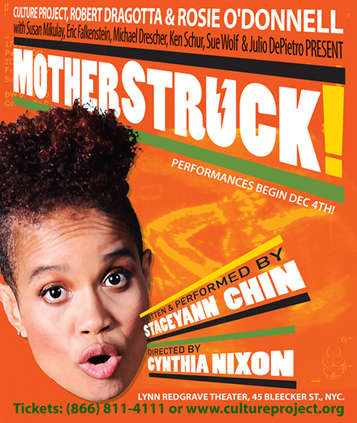
I was reminded of this last night at the opening of a marvelous new play, MotherStruck!, written and performed by Staceyann Chin, a half-Jamaican, half­-Chinese, lesbian immigrant to Brooklyn, who decides to have a child. The play chronicles her poignant search for the right partner--both the romantic and the sperm­ donor varieties--her marriage to a gay man (who dies before his 30th birthday), and her subsequent assisted insemination by his younger brother. After a fraught pregnancy and difficult delivery, Staceyann experiences the trials of motherhood as a single mom and the difficulty of trying to eke out a living as a poet in Brooklyn.

The play reminded me that reproduction is not relegated only to heterosexual couples, and that childbirth and raising children are often not easy or without pain and trauma. This is why reproductive freedom is vital.

At the curtain call, Staceyann Chin's daughter, Suri, bounded onto the stage with flowers for her mother. The actor enveloped her and held her tight in her arms ­­ a gift to her mother, and to us.

Alex Sanger is Chair, International Planned Parenthood Council, and a former member of the Wellesley Centers for Women Council of Advisors.

Tags:
WCW

Connecting with You in 2016

People of all ages are spending more time on smartphones or tablets. Did you know that smartphone users are expected to increase to 70 percent of the global population, or 6.1 billion phones, by 2020? In the past couple of years many have experienced the phenomena of selfie sticks, and wearable technologies like FitBit or the Apple Watch. We have computers that not only talk to us, but listen to us and track our steps, our sleep, our heart rate. Technology invades our everyday (and every night) experiences and changes how we interact with the world. Technology offers us an overwhelming variety of information and choices about what we read or listen or view. It helps us stay connected and informed.

It’s essential to us that we stay connected to you. Much of our social change work can be found on our website (wcwonline.org). Thanks to a new responsive design that is built off an engaging visual template donated by Capgemini*, you can view the site more easily on a smartphone, a tablet, a laptop, or computer on your desk; you can stay better informed of the important work we’re doing.

As you know, research is a big part of WCW’s four decades of groundbreaking work. And we want to learn from you, too. You already let us know how our content impacts you when you tweet, share, like, or pin our work. However, we want to learn more from YOU!

We are experts on research, social change--but we need you to share your insight on how you use the wcwonline.org website.

  • Are you able to find the information about the social issues in the lives of women and girls, families and communities that is important to you?
  • Do you find what you need by viewing our video commentaries, listening to our podcasts, downloading a fact sheet, a policy brief, or a presentation?
  • What is helpful?
  • What is missing?

The website analytics we use give us many valuable statistics but they don’t tell us the complete picture about you, and the information you seek.

Please help inform us by taking a few minutes to fill out the quick survey and help us understand what areas of our work you are most interested in, how you learn about our work, and ways we may be able to make your online experiences with our website and social media more beneficial. This is a great way to impact WCW’s dissemination efforts and further help to improve the lives of women and girls, and their families and communities. Thank you!

Sue Sours is the Information & Technology Systems Manager for the Wellesley Centers for Women, at Wellesley College.

*Top level design elements for wcwonline.org were generously donated by the Rapid Design Team of Capgemini, one of the world's foremost providers of consulting, technology and outsourcing services. "Gender equality is an important component of Capgemini’s focus on diversity and inclusion, and larger corporate responsibility and sustainability strategy, and it is proud to have helped The Wellesley Centers for Women more effectively disseminate its research through support for the refreshed website." Learn more about Capgemini!

Tags:
WCW

The Value of Mentorship: A Personal Reflection

Juliana Robeson and Georgia Hall

Two summers ago I started what I thought would just be a summer job at the Wellesley Centers for Women (WCW), with Georgia Hall, Ph.D, a senior research scientist with the National Institute on Out-of-School Time (NIOST). That summer job extended into the fall semester of my junior year at Wellesley College and when I returned from my spring semester abroad, I was excited to be working with Georgia as the Shirley R. Sherr research intern for the summer. Now in my senior year, I am still working at NIOST and I am incredibly grateful for the opportunities it has given me. In particular, I am incredibly grateful that I have had an amazing mentor in Georgia.

This experience has been invaluable, because of Georgia. I have been able to learn so much and have been exposed to so many aspects of research that I would otherwise not have had and which many undergraduate students never get to experience. This past summer, while assisting Georgia with her work in the Women and Girls in STEM (science, technology, engineering and math) project, I was also able to pick my own topic to investigate. This was incredibly exciting because it gave me a chance to use skills I already had, learn new skills, and explore my own interest. I learned so much, including being able to analyze data and conduct site visits. Georgia was an incredible mentor every step of the way, giving me feedback but also letting me work on my own. Thanks to Georgia and all the other amazing WCW researchers at NIOST, I have acquired skills that I will use for many years to come.

When I first began the daunting process of applying for jobs, I reflected on the experiences that I have had and realized how strongly they influenced my career path. Although I hope to go into health care, I want to work for several years before continuing on to graduate school. Thanks to my experiences with Georgia, I now have the skills and passion for data analysis—an incredibly important aspect in the health care field. Georgia encouraged me to take a quantitative analysis class, too, and I now am able to pursue such work immediately after graduation.

Without someone encouraging and inspiring these interests and helping me along the way, I may have never found out how fascinating data analysis could be (at least for me—some people may disagree!). Soon I’ll be completing my time at Wellesley, and I couldn’t think of anywhere else I’d love to spend my afternoons working and anyone else I would want as a mentor. I am sure that what I have taken from my time at NIOST and what I have learned from working with Georgia will help me for many years to come. And I know that if I ever need advice, there’s always someone waiting to help.

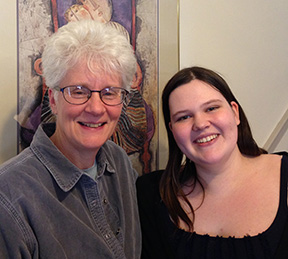
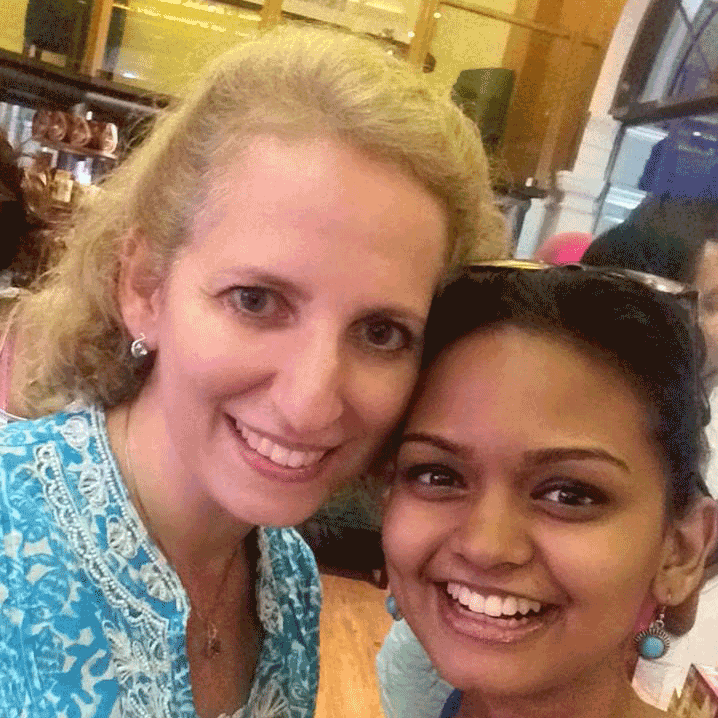
Juliana Robeson is a Wellesley College senior (’16) majoring in Spanish, minoring in Women’s and Gender Studies. In addition to her work at NIOST, she serves as a Student Ambassador for the Wellesley Centers for Women. She is pictured above (right) with her mentor, Georgia Hall.

Tags:

The New $20 Bill: A Victory for Women, or, Happy about Harriet!

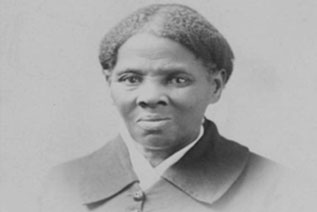
 Harriet Tubman

One of my favorite footnotes in the world appears at the bottom of the first page of the Combahee River Collective Statement in the first edition of Home Girls: A Black Feminist Anthology on page 272. It reads, “The Combahee River Collective was a Black feminist group in Boston whose name came from the guerrilla action conceptualized and led by Harriet Tubman on June 2, 1863, in the Port Royal region of South Carolina. This action freed more than 750 slaves and is the only military campaign in American history planned and led by a woman.” As a Southern Black woman now living in greater Boston, I have in my travels back and forth driven across the Combahee River many times, moved by the small highway sign that unceremoniously identifies this historically significant waterway. It has become a kind of sacred place to me, over which I always say a silent prayer when crossing. Whether on Interstate I-95 or Highway 17 (the older, smaller “blue route” that runs parallel, all the way up and down the East Coast), it is a prayer of gratitude to Harriet Tubman and all that she did for the liberation of human beings.

She was a tiny woman, a woman with a disability, and, of course, a Black woman--who also happened to be an almost superhumanly courageous person and a logistical/navigational genius. She commandeered the Underground Railroad, shotgun in hand (so that no one would run back to slavery). An abolitionist in word and deed, she led the Combahee River Raid. She eventually worked as a suffragist. And, in her old age, she founded an old folks home for indigent women, even though she herself died indigent in that very home. Race, class, gender--she covered it all. Her story is one of the archetypal stories of American culture. We are because she is, and because she is, therefore we are, to paraphrase my retired philosopher colleague, Ifeanyi Menkiti, and many other African cosmologists and epistemologists.

When the U.S. Department of the Treasury announced two years ago that it was planning to put a woman on the $10 bill, I voted for Harriet Tubman every chance I got. I was privileged to participate in an invitation-only phone call of women leaders with representatives from the Treasury Department, and I also voted online as an “ordinary citizen.” And I unapologetically urged my friends on social media to do the same. So, when the announcement arrived last week that Harriet Tubman would be the face of the new $20 bill, I was ecstatic. Victory!!! Who better to represent so many different marginalized U.S. populations, not to mention to embody, personify, and reify the black feminist theoretical innovation of intersectionality, emblazoned onto popular discourse by the very Combahee River Collective that so revered Tubman??
I have to hand it to Jack Lew, the U.S. Treasury Secretary who recognized that the time was right--indeed, overdue--to put a woman on a piece of high-circulation U.S. currency and to right some historical wrongs. In fact, not to stop with Harriet Tubman, Lew spearheaded a series of changes to the $20, $10, and $5 bills to reflect a more inclusive history of the U.S. Beyond the addition of Harriet Tubman to the $20 bill, a diverse group of suffragist women will be added to the back of the $10 bill: Sojourner Truth, Lucretia Mott, Susan B. Anthony, Alice Paul, and Elizabeth Cady Stanton. Like the women of the U.S. today, these women were ideologically and politically diverse, ranging from radical to reformatory in both rhetoric and method. Their history of interaction is complex, as texts such as Angela Y. Davis’s Women, Race and Class, and documentaries such as Ken Burns’ and Paul Barnes’ "Not for Ourselves Alone," reveal in captivating detail. Placing these women together on the back of the $20 bill suggests symbolically that we can work through our differences for good--a message badly needed right now in the U.S. It took 75 years--three generations of activism--to achieve the vote for women in America. No single woman did it alone, and women of diverse opinions each played a pivotal role, even when they disagreed on tactical and ideological points. This is a great inspiration for our times. And to add even more inspiration, the Rev. Dr. Martin Luther King, Jr., Marion Anderson, and First Lady Eleanor Roosevelt will be added to the back of the $5 bill to give life to the legacy of President Abraham Lincoln.

Admittedly, if I had a private audience with Secretary Lew, I would suggest the inclusion of some notable Americans of Asian, Latin, Middle Eastern, Native American, and Pacific Islander descent in addition to the very welcome inclusion of African Americans on the new bills--and I might even suggest that he replace the image of slaveholder President Andrew Jackson (after whom my hometown, Jacksonville, Florida, is named, incidentally) with these diverse Americans, since he has (too) long had his day in the sun. I can only hope that this is the plan for the $50 and $100 bills!
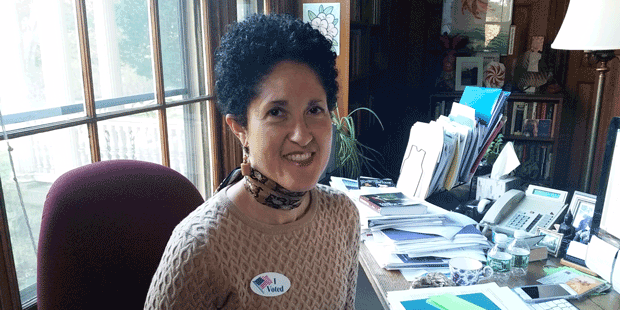
I think it was a good decision to begin these momentous changes with the currency of everyday life. $20s, $10s, $5s--we look at these every day, and now these ordinary currencies will stimulate important social discourse. They might even stimulate the economy! #GenderPayGap, #SayHerName, #NotThere, #EverydaySexism, and #BlackLivesMatter are all having a heyday. All of these discussions should move a step forward now that we have racial and gender diversity on the money!

In sum, this was a great week for U.S. women, U.S. history, and maybe even the U.S. economy. Who won’t be excited to get and try out the new $20 bill? ATM machines, anyone?? Another milestone toward gender equality has been passed, another hurdle cleared. Although there is still a long way to go, I am thankful and glad, indeed, exuberant!

Layli Maparyan, Ph.D. is the Katherine Stone Kaufmann '67 Executive Director of the Wellesley Centers for Women and Professor of Africana Studies at Wellesley College.

What’s Next: Coming Together

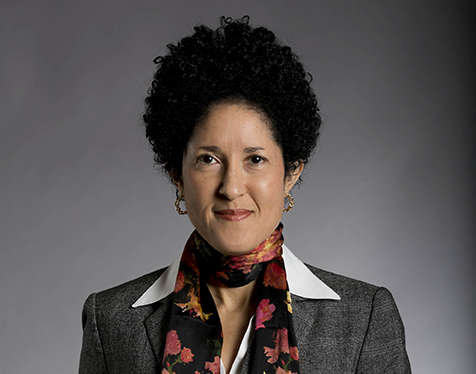
Layli MaparyanSince voting this morning, all I have been able to think about is the next four years. Without even knowing yet who is going to win, my mind has already jumped ahead. What do we want the next four years to be like? What can we do to make them be the way we want them to be? The negativity of the last 18 months has been excruciating, and I know it doesn’t represent the best of who we are. I want better for all of us!
Indeed, as executive director of the Wellesley Centers for Women, whose mission is to advance gender equality, social justice, and human wellbeing, these concerns have been at the forefront of my thinking. How can we ensure that the times that lie ahead lead us closer to these ideals?

Today we plant the seeds of the next four years with our thoughts, emotions, and actions. It is more important today than ever that we consciously start thinking about what we’d like our nation and our culture to be like, that we work as hard as we can to generate the good feelings we know are best for ourselves, our families, our communities, and the country, and that we take actions immediately that move us in the right direction. We can start doing this even before the polls close, just as soon as we have cast our ballot – because these actions will be relevant no matter who wins.

What will you do to move our country in a positive direction, to heal the divide?

I’m starting with a post-election community unity block party in my neighborhood. I’m inviting the people I see every day – and a few I’ve yet to see, since I’m new to my neighborhood – to my home for an evening of fellowship and food with my family. I’ve let everyone know that it doesn’t matter how you voted, where you worship, whom you love, or where you come from – I just want us to come together in the spirit of friendship and community. My hope is that we will affirm each other as neighbors, discover through conversation the wonders of our diversity, and deepen our sense of connection, concern, and shared destiny. Maybe you can do something like this on the block where you live, too.
Over time, I am going to make a point to reach out to people whose political views differ from my own (even though I am non-partisan by choice, due to my Bahá’í faith, I do hold political views!) and find ways to connect, talk, and share – over lunch, in a joint endeavor, through our kids, in our places of worship or community service – in any way I can find.

To heal our nation in these times, I feel certain that enlarging the circle of people that we can call friends and enlarging the circle of people who know that we care about their wellbeing and happiness will help shift the tides. I believe that, if all of us did this – even with one or two people – we would heal this great divide in no time. Are you up to the challenge??

Let me know what you decide to do. Let’s not retreat into our enclaves of comfortable sameness. Let’s instead enlarge our sense of community and welcome new people in until our nation is one big circle – or many small overlapping circles – of inclusion. The leadership we need doesn’t just come from the White House – it comes from within our hearts.

Layli Maparyan, Ph.D. is the Katherine Stone Kaufmann '67 Executive Director of the Wellesley Centers for Women and Professor of Africana Studies at Wellesley College.

November 9th Reflections: Through Harriet Tubman’s Eyes

 Layli Maparyan

We have a new President-Elect. For many of us, on either side of the aisle, it is not what we expected. My daughter cried when I told her, not just because she is a girl, but also because she is an immigrant. She is scared, and I, as her mother, had to reassure her that life will go on and that we will be okay even if there will be new challenges.

It occurred to me that this is the attitude that I must carry forward, not just at home, but in my work, life, and leadership. It is the attitude that many before me have maintained, against the face of obstacles and conditions as hard or harder than what I am facing now. Like Harriet Tubman, I must “follow the drinking gourd” and keep my sights on the North Star of my aspirations.

The biggest gift I can offer at this time is empathy – to those whose hopes were shattered, to those whose anger, pain, and frustration led us in this surprising direction, and to those who are just plain terrified right now, especially the little ones and the youth. Clearly, we are a country of different realities, and we need to find common ground. I remind myself of my own mantra, “All of us are sacred.” As Thich Nhat Hanh taught me, I breathe in, breathe out, and utilize the present moment as a place of refuge.
The second biggest gift I can give is my continued commitment to peace, amity, love, liberation, and the freedom borne of illumination, as well as the very concrete and achievable ideals of gender equality, social justice, and human wellbeing. We can’t give up! Even with the rhythm of one step backward for every two steps forward, we are still making progress, we are still transforming our society and the world. We can’t use this moment to further polarize ourselves; rather, we must use it to dig more deeply within ourselves for places of connection. As we know, thanks to our relational-cultural theorists, is that connection is what causes us to thrive.

How can we work with what we have to achieve what we need to achieve and get to where we need to go? Our own ingenuity is being invoked, as is our ability to “make a way out of no way.” Because I’ve seen it done, I know we can do it. Let’s share our creativity and plentiful gifts as we figure this thing out together.

Onward! The North Star is still shining!!

Please feel free to share your reflections.

Layli Maparyan, Ph.D. is the Katherine Stone Kaufmann '67 Executive Director of the Wellesley Centers for Women and Professor of Africana Studies at Wellesley College.


Approaching Adulthood: Assisting Youth Aging Out of Foster Care

In 1954, the United Nations established Universal Children’s Day (November 20) to promote togetherness and children’s rights. It is a day that reminds and encourages us to work towards a better future by improving the wellbeing of children all across the globe. In recognition of Universal Children’s Day, Joan Wallace-Benjamin, president and CEO of The Home for Little Wanderers, looks at the obstacles facing children and young adults who are at risk of aging out of foster care and highlights programs that can improve their welfare.


Transitional age youth, those who are leaving state systems of care, are one of our most vulnerable populations of children. Each year in the United States, about 23,000 young people age out of foster care, according to Child Trends, because they reach the legal age of adulthood (18-22 years, depending on the state) and are no longer qualified to receive state services. And each year, these youth lack a permanent relationship with a biological or adoptive guardian, forcing them to navigate the challenges of adulthood without a mentor and critical support systems.
In the U.S., nearly 36,000 children are at risk for aging out of the system, as they are at least 9 years of age and have a case plan for long-term care or emancipation. For those who are at risk of aging out of foster care without a permanent solution and forever family, they are at greater risk for homelessness, unemployment, incarceration, early pregnancy, substance abuse, and struggles with physical, mental, and behavioral health.

Often times, these youth are dually enrolled in multiple state systems of care, including child welfare, juvenile justice, and behavioral and mental health services. In 2015 in Massachusetts, 312 out of 800 youth offenders in the Department of Youth Services had previous involvement with the Department of Children and Families prior to their detention, according to a 2016 Tufts University study. This sequential, often simultaneous, involvement in multiple systems of care place these youth at a crossroads; they lack positive, unconditional supports and mentoring that is offered through adult relationships as well as concrete resources and tools required to thrive independently, including housing, employment, health insurance, education, and basic life skills. Transitional age youth are often removed from conversations pertaining to child welfare and are underserved in the innovation of strategies to best support and strengthen children within these systems.

The Home for Little Wanderers believes that these youth deserve every opportunity to thrive and succeed to their full potential as they enter adulthood. By collaborating with the Department of Children and Families, the Department of Mental Health, and the Massachusetts Task Force for Youth Aging Out, the Home has developed specific and effective supports to serve this population. Through customized, age-specific services the Home has implemented innovative programs, including the Young Adult Resource Network (YARN) for “wraparound” services, the Roxbury Village to provide transitional housing for homeless youth, Academic Support for College and Life (ASCL), Peer Mentors, Life Skills programs, and Life Coaches. All of these programs share the same goal and ultimate vision for success: to connect young adults with community resources and help them become contributing members in the community while acquiring the skills they need to achieve self-sufficiency.

Alongside this, the Home works tirelessly to collaborate with various agencies through both communication and action to advocate for change and ensure their voices are heard. Through shared partnerships, the Home works to strengthen connections and services for youth who are at risk for transitioning out of care, which not only prepare them for entering adulthood, but also foster connections and relationships with adults and peers that will follow them on their path toward personal and professional success.

For more information on the Home and their work with Transitional Age Youth visit: thehome.org

Joan Wallace-Benjamin, Ph.D. is president and CEO of The Home for Little Wanderers as well as a graduate of Wellesley College, Class of 1975.

Three Activities to Help Students Deepen Their Gratitude

This article originally appeared in Greater Good, the online magazine of the Greater Good Science Center at UC Berkeley.


Young students sitting in a classroom with their teacherIt’s one thing to teach kids to say “thank you” when they receive a gift or when someone does a favor for them. But how can we help children understand what gratitude really means, in ways that will make them more likely to feel it deeply, express it authentically, and reap its many benefits?
One way to increase kids’ gratitude is to guide them to not only acknowledge that someone else did something for them, but to also consider why the person did it, what the cost to the person was, and what benefits they have received from it. The idea is that gratitude happens when you realize that another person has intentionally done something that benefits you, especially at a cost to themselves.

This thinking process, which researchers refer to as “benefit appraisal,” highlights the interpersonal nature of gratitude and may help strengthen our relationships. In one study, elementary schoolers who were taught benefit appraisal reported more positive emotions and showed more grateful attitudes and behaviors than other students, both immediately and months later.

In partnership with the Greater Good Science Center and the John Templeton Foundation, Open Circle, an evidence-based social-emotional learning program for students in grades K-5, has added a new component based on the science of gratitude—including benefit appraisal. In addition to incorporating gratitude into their professional development workshops for educators, they developed gratitude lessons and practices for their classroom curriculum for grades 4-5.
The pilot group of teachers who have tried the gratitude curriculum have responded very positively, reporting benefits for themselves and their students such as strengthened classroom relationships and community, higher levels of positive emotions, and more generous and compassionate action.

We are grateful to Open Circle for allowing us to share three sample activities for helping students deepen their understanding and practice of gratitude—along with insights from some of the teachers who have used them.

Click here to see the full post in Greater Good and read the three sample activities for helping students deepen their gratitude.

Emily Campbell is the research assistant for the Greater Good Science Center’s education program and a Ph.D. student in education at UC Berkeley.

World AIDS Day: Reflections and Hopes from an African Village

The Pearl Community Empowerment Foundation, (PCE) my persistent mission and struggle, is building a firm foundation for Uganda's rural young people as well as shaping the attitude and consciousness of the grassroots people. This World AIDS Day, I would like to reflect about the Amor Village community, the village where I was born.

Amor Village is composed of 871 households; with a population of 1,479 people. This is a very poverty-stricken community, composed entirely of farmers who rely on agriculture for their income and rain drops for their food production. Every household has a history of HIV-- either someone has died or is living with HIV. Of these, 77% are young people below 30 years of age. This has left so many orphaned children, struggling to survive and make a living for/by themselves.

Our HIV/AIDS interventions have been very minimal, due to lack of the necessary resources required to respond to the needs of the community. For example, there's a family of four—a father, mother, and two sons--all infected by HIV/AIDS. Such a family needs psychological support, food, and medication as well as education for the two boys. This is just one of the examples of families in need of our support, but within the wider community of the 24 villages we are currently supporting through educational interventions.

That said, we have registered achievements in terms of our health interventions: 812 rural girls received education about the dangers of early sex, teenage pregnancy, and early marriages; 104 rural boys received education about condom use and HIV/AIDS risks. We partnered with the AIDS Support Organization (TASO) which provided HIV counseling and testing for 203 people in the community. In conjunction with Open Circle, a project of the Wellesley Centers for Women, we conducted a Life Skills training for 106 people, including youth, teachers, and parents; communication, problem-solving , and leadership skills were some of the topics of the training. This project was funded by the International Research & Exchanges (IREX).

We have barely scratched the surface of possibilities, and with support we hope to move forward with our preventative health initiative such as facilitating the counseling and testing of the local people, HIV/AIDS awareness campaigns, and general education about reproductive health, family planning, and parenting. We will be able to implement programs to meet our health goals after we acquire resources such as a laptop, projector, generator, camcorder, cameras, stationary, funds for the rental of venues, facilitating the consultants and the project implementer.

The PCE Foundation is a Ugandan national rural development and empowerment NGO founded in 2011 to empower rural communities through dynamic but simple programs that directly involve and benefit community members, especially women and children, currently operating in rural communities of the Tororo and Buteleja districts in Eastern Uganda. The Foundation embraces community-driven solutions to community challenges. This fosters the implementation of not only relevant/appropriate need based but also sustainable projects. In line with this principle, the PCE Foundation has identifies community needs that are developed into fully fledged projects, that benefit individuals and families directly affected by HIV/AIDS.

My journey over the last five years, since I founded the PCE Foundation, has transformed my life. Little did I know, after having lost nine siblings to HIV/AIDS, that I would have so many people from across the world sharing their care, resources, and love. I am enriched by this large global family, and my neighbors and villagers are, too.

Beatrice Achieng Nas, BSC, was Community Solutions Program Fellow through the IREX Board, and a visiting scholar at the Wellesley Centers for Women in fall 2013. She worked previously with Build Africa Uganda before founding the Pearl Community Empowerment Foundation.


Tags:
WCW

For the Trailblazing Women Who Mentor Me

January is National Mentoring Month, a time to recognize the value of mentoring in all its forms. Kavindya Thennakoon ‘19, a student assistant in the WCW communications department, reflects on the profound impact that mentors have had on her path to Wellesley and beyond.


Kavindya with her mentor AntoniaMentorship was the reason I came to Wellesley College, all the way across the globe from Sri Lanka. Back in 2013 on the day of the United Nations’ International Day of the Girl Child I was given the opportunity to address the Sri Lankan parliament on the status of young women in Sri Lanka and on what can be done to make things better. I spoke on how Sri Lanka lacked a comprehensive sex education curricula, how the judiciary victim-blamed women and girls, and how male parliamentarians sitting in the audience had set a very bad precedent.
Little did I know that in the audience were two Wellesley women, the past U.S. ambassador to Sri Lanka Michele Sison (Class of '81) and UNRWA chief of staff Antonia DeMeo (Class of ’89) who was the UNICEF deputy representative to Sri Lanka at the time. In the years to come Antonia became such an important part of my life -- a mentor if not for whom Wellesley would have remained just a distant dream.

Antonia has remained such an incredible role model, who I constantly run back to for advice, guidance, and reassurance. For me, both my mother and Antonia were such good role models of women who’ve broken the barriers, defied the norms, and shattered the stereotypes.

Coming into Wellesley I was embraced by a host of wonderful mentors, from Sarah Isham and Elizabeth Mandeville (Class of ‘04) from Career Education, who connected me with a number of great opportunities while helping me figure out my options and interests, to Milena Mareva (Class of ‘01) from Admissions and Karen Pabon from Slater International Center, who were always there with advice and support to handle the tough transition from home to college. From there I made my next stop at the Wellesley Centers for Women (WCW) and I couldn’t have possibly asked for anything better.

My work here at the Centers as a communications assistant is something beyond a mere task-oriented job. To me, it has been a learning journey where I’ve gathered such important skills in the areas that I am most passionate about. It’s such a refreshing change to be mentored and guided rather than merely supervised, which is the exact environment that the WCW communications team members, especially Donna Tambascio and Megan Cassidy, have created.

At WCW I have ample creative space to work on projects that I am interested in, to work with software that I am keen to know more about, and to learn something new every day instead of ticking a to-do list. More than anything else, it’s such a great feeling to work under people who value your mental health and wellbeing above all else, and who are ever ready to give you all the space and time you need to recover. Looking back at my journey starting off in a community where girls are not allowed to be out on the streets past seven and where rape victims are blamed for their dress and chastity, I can not stress enough the critical role played by the trailblazing mentors in shaping my life.

Young adults who face an opportunity gap, but have a mentor, are 55 percent more likely to be enrolled in college than those who did not have a mentor, according to a 2014 study commissioned by MENTOR: The National Mentoring Partnership. However the report also stated that 1 in 3 young people in the U.S will grow up without a mentor. This number could grow when considering countries like mine where the concept of mentorship is still foreign. Having a safety net of women who you can fall back on for advice, guidance, and mentorship is a chance that every girl deserves. In a world where board rooms are tipped off balance, where feminism is a crime, and where women are constantly othered every step of the way, we all need that extra push.

Kavindya Thennakoon is a student assistant in the communications department at the Wellesley Centers for Women. She is a Wellesley College sophomore (Class of ‘19) double majoring in Anthropology and Cinema and Media Studies.

Supporting Housing Stability for Victims of Domestic Violence, Stalking, and Sexual Assault

This policy brief originally appeared in the Fall/Winter 2016 Research & Action Report from the Wellesley Centers for Women as part of the multi-media series Advancing the Status of Women & Girls, Families & Communities: PolicyRecommendations for the Next U.S. President.


Victims of Domestic Violence Often Face Housing Problems
The physical, psychological, and economic consequences for victims of domestic violence (DV) and their families have been well documented, and although recent federal legislation provides certain housing protections for some DV victims, many women and their families remain at great risk for homelessness and ongoing violence.

Concerning Data, Trends, and Experiences
Domestic violence (DV) exists in every community, affecting people regardless of age, race, gender, social class, sexual orientation, religion, or nationality. Federal legislation such as the Violence Against Women Act (VAWA) of 2005 and its reauthorization in 2013 acknowledges the problem and provides some housing protections for victims of DV in federally subsidized housing. While such housing protections are an important step forward, there remain critical gaps for many DV victims.

In addition to the physical and psychological effects of DV, many women face considerable economic hardships and challenges securing stable housing for themselves and their families if they try to leave an abusive partner—research indicates a concerning relationship between DV and female homelessness.) Further, dominating behavior by an abuser is part of a pattern of control, and some women trying to leave an abusive relationship may often need to move to substandard housing -- or end up without any housing -- while they often continue to be at risk for violence from their abuser after they leave.

Research has found that among women who were seeking help after separating from an abusive partner, 25 to 50 percent reported housing-related problems. Over one third (38 percent) reported that they became homeless immediately after separating from their partner. An additional 25 percent reported needing to leave their homes during the year after separation.

The same study found that homelessness for DV victims may result from circumstances such as a sudden and urgent need to be safe from an abuser. In such cases, victims may rely on emergency calls to the police for help. However, due to zero tolerance policies or nuisance ordinances across many cities, DV victims who repeatedly call 911 for help may be evicted. Such policies may result in women staying in abusive relationships in order to keep their homes. Women in subsidized housing face additional barriers and are especially vulnerable because there are few low-income housing units available, and the federal programs developed to assist women by paying a portion of their rent (e.g., Section 8) have long waiting lists.

VAWA of 2005 established important housing protections for women in certain federal housing programs. The 2013 reauthorization expanded housing protections to protect more victims by 1) expanding the violence categories to include sexual assault in addition to DV, dating violence, and stalking, 2) expanding protections to cover all federally subsidized housing programs, 3) clarifying the notice tenants must receive about their rights under VAWA, and 4) including an emergency transfer policy requirement for landlords, managers, and owners.

This legislation represents considerable progress in recognizing the housing issues that victims of DV face and has put protections in place for victims to be able to stay in their homes or move to another location. However, implementation challenges remain: there is no definition of “actual and imminent threat,” putting public housing residents at risk for eviction; it is not clear where victims can file complaints against housing administrators; and victims living in private housing are not covered by the legislation. These gaps further extend victimization.

Approaches and Recommendations
Recommendations for improving housing stability include:

  • According to VAWA, a public housing agency (PHA), owner, or manager may evict or terminate assistance to a victim if the PHA, owner, or manager can demonstrate actual and imminent threat to other tenants or employees at the property. Like VAWA 2005, VAWA 2013 does not define “actual and imminent threat.” Therefore, it will be critical for advocates to work with the federal agencies responsible for administering the provisions to include a clear definition of this crucial term as well as guidance in their regulations.

  • The housing protections contained in VAWA do not clearly indicate where to file complaints if a PHA refuses to comply. Policymakers and advocates should provide additional guidance on filing procedures and requirements, and these should be provided to tenants along with their notification of rights.

  • In coordination with local law enforcement and DV advocates, there should be outreach and training provided to PHAs and owners on VAWA 2013 that include victim-centered information on the dynamics of DV, sexual assault, and stalking.

  • Confidentiality requirements that protect the disclosure of personal information required in documents that must be presented by a victim seeking housing protections should be bolstered in the interest of protecting the victim’s new location from an abuser.

  • VAWA is designed to protect victims who reside in federally subsidized housing programs. However, legislatures should consider policies and procedures that protect victims in private housing and those who own homes with their abuser. In a 2015 study that I co-authored along with Kelly M. Socia and Malgorzata J. Zuber, we found that an increase in foreclosures in a community leads to increases of DV reports to police. Indeed, DV affects women in all communities, and there should be housing protections available to every victim seeking to leave an abusive partner.

  • There should be coordinated efforts between the federal government and local communities to eliminate the application of nuisance ordinances to victims of DV, stalking, and sexual assault.

April Pattavina, Ph.D. is a senior scholar at the Wellesley Centers for Women working with a team of collaborators on the Justice and Gender-Based Violence Research Initiative.

Female Kicker Makes History

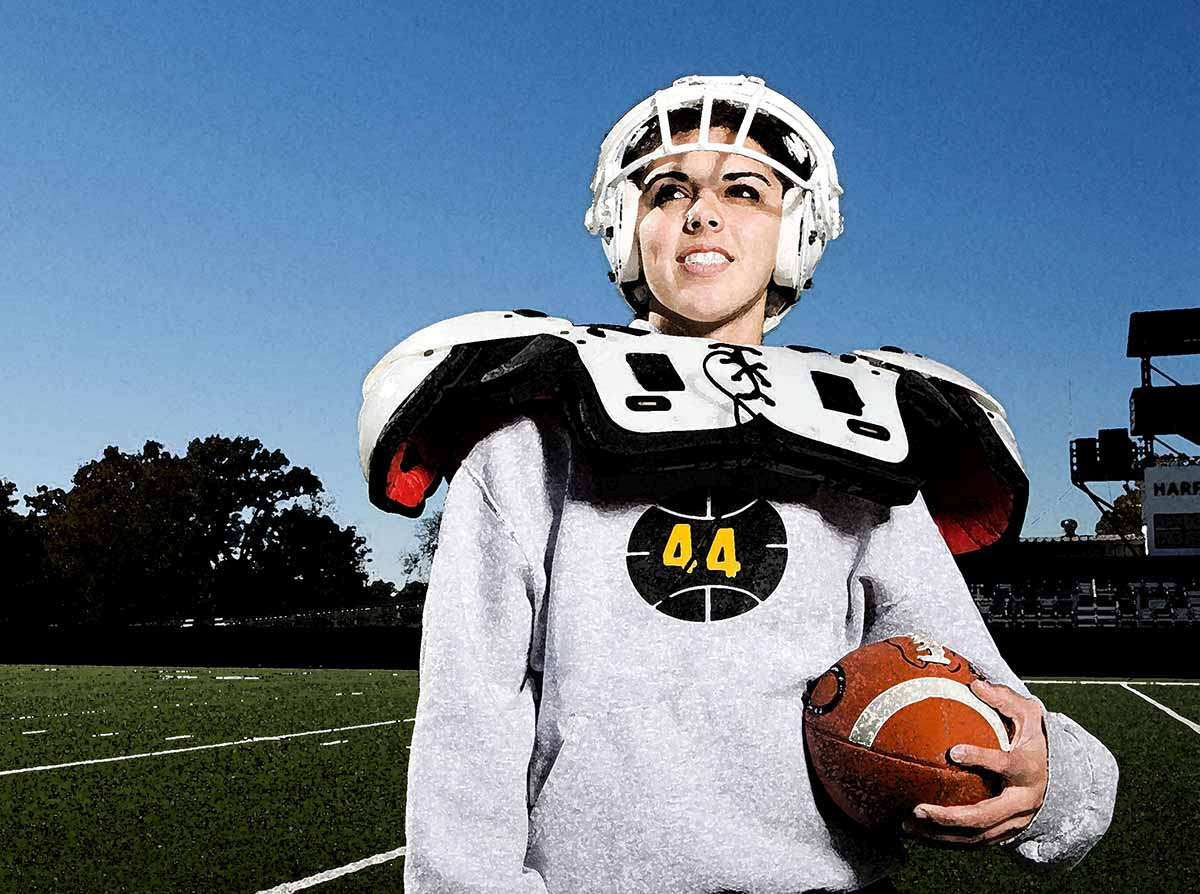
When Arizona high school senior Becca Longo on Wednesday officially signed on to be a kicker for Division II Adams State University Football, it was notable for a key reason: She was getting paid.

Of course, she is not literally getting paid. But she is getting a scholarship to play. There is growing history of female athletes playing football at the college level, but it’s not clear that any others have been recruited and given an athletic scholarship.

Katie Hnida, who played for Colorado and then New Mexico, walked on. And while Shelley Osborne in 2014 was recruited from Jeffersonville High in Indiana to play defensive back at Campbellsville University in Kentucky, they play in the NAIA, which does not award scholarships. (Three years later, however, she is still on the roster as an active member of the team.

Why do scholarship dollars matter?

Symbolically it’s a big deal. Not only for the obvious problem women have getting paid the same money for the same work as men (the wage gap now stands at 82 cents to the dollar men earn). But the scholarship also begins to challenge an historic bias about how males and females view and participate in sports. Culturally, there is an assumption that men play to win and women play for fun and fitness, notions reinforced through the origins and structures of sport opportunities.

It has taken decades for female athletes to be viewed as individuals every bit as driven and intense as their male counterparts. The scholarship helps make that case for one simple reason: When coaches recruit, they don’t waste money. They are picking talent and assembling the elements of their team with a goal of winning.

Credit Adams State coach, former Arizona Cardinals quarterback Timm Rosenbach.  He told media that he just picked a player he thought could compete. “I see her as a football player who earned it,” he said. “She has a strong leg and can be very accurate.” Last season Longo made 30 of 33 point-after kicks and a 30-yard field goal

When Hnida in 2003 became the first female to score an extra point in an NCAA Division I game (she actually scored two, against Texas State), it was seen as a stunning event. More than a dozen years later, Longo’s recruitment is more noteworthy than shocking.

We are – at long last – becoming acclimated to the talent and intensity of female athletes. It is not a freak occurrence to see women excel. It’s sinking in that high-level ability can be developed, trained and practiced. Why shouldn’t a 5’11” 140-pound athlete with a powerful leg and strong mental make-up kick field goals?

Just consider the arching bombs that female soccer players launch down a field toward a net. Aim over uprights and a boundary is breached.

Longo’s signing marks progress in the cultural understanding that women – as well as men – can be dazzling athletes worth real money. (NCAA women’s tournament basketball game UConn vs. Mississippi State, anyone?)>

Yet even as Longo’s name was hurriedly added to the Wikipedia “female American football players” entry, one notes that the list isn’t very long. The reasons for girls and women not to play football – aside from reasons no one should – reflect a stubborn gender bias about what is “appropriate” and what is not, particularly when we are talking about kickers.

Journalist Laura Pappano is writer-in-residence at the Wellesley Centers for Women and was a leader of The Women’s Sports Leadership Project. For seven years, she edited the FairGameNews blog, now preserved as an archive.

New Messages in Boston Race Protests

In 1973, when I was 21, I dropped out of college in New Jersey and moved to Boston. I didn’t have a clear plan or strong reason for the move. A girl I knew, on whom I was developing a huge crush, had relocated here; so had my boyfriend (life was complicated). The bookstores in Harvard Square stayed open until midnight—in contrast to the town I’d grown up in, which had no bookstores at all. It seemed like a cool place to be.

So I was new to the city, and living in my own world of discovering feminism and sharing collective apartments and working at odd jobs and coming out. I was not aware of Judge Arthur Garrity’s ruling in 1974 ordering students to be bused from neighborhood to neighborhood in order to desegregate the Boston Public Schools. I may not even have been aware of the violence that greeted the first black students to attend South Boston High, who were abused and threatened and pelted with rocks. Gradually, I learned. I remember being at a party at which half of the guests suddenly grabbed their coats and rushed out, someone having received a call that a black family in the South End was being attacked and needed defenders. These same progressives and others organized marches against the racist violence, but their outcry didn’t make much of an impression, in a city whose politics were dominated by ROAR (Restore Our Alienated Rights), the South Boston Marshals, and other antibusing groups.

I didn’t really understand what had happened in Boston until years later, after I did some reading about the city’s neighborhoods; the class, racial, and ethnic tensions that shaped them; and how they were changing because of redlining and gentrification—in particular, The Death of an American Jewish Community: A Tragedy of Good Intentions, by Hillel Levine; Common Ground: A Turbulent Decade in the Lives of Three American Families, by J. Anthony Lukas; and All Souls: A Family Story From Southie, by Michael Patrick MacDonald.

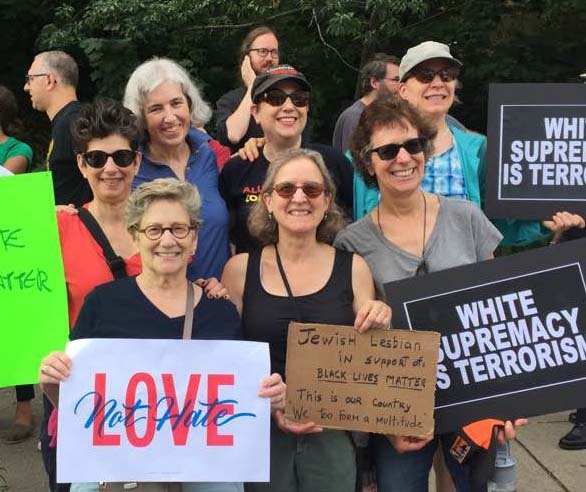
The contrast between then and last weekend—when more than 40,000 people (from within the city, its suburbs, and beyond) turned out on a hot, humid August day to protest a so-called Free Speech Rally on Boston Common that threatened to give a platform to racists, Nazis and Ku Klux Klan members—is astounding. From my vantage point, my fellow marchers seemed to come from all walks of life: students, union members, elders, yuppies. Blacks, whites, Latino/as, Asians, Native Americans. Christians, Muslims, Jews, Buddhists. LGBTQ folks and straights. Feminists, anarchists, socialists, Democrats, Libertarians, and Republicans. Most of the signs were home-made, and they, like the marchers who carried them, were both serious and joyful: “Black Lives Matter,” “Jewish Lesbian Against White Supremacy,” “The Only Thing We Hate is the Yankees,” and “Boston Ain’t Nazi-Town.” At one time, I wouldn’t have been so sure of that. Yet Mayor Marty Walsh seemed to have no doubt that he was speaking for most of his constituents when he declared, “We reject racism, we reject white supremacy, we reject anti-Semitism, we reject the KKK, we reject neo-Nazis, we reject domestic terrorism and we reject hatred, and we will do every single thing in our power to keep hate out of our city.”

How did this turnaround happen? I’m glad of it, but I don’t know. Some of the people I talked to theorized about a better-educated population, a two-term black president, more understanding and acceptance of LGBTQ people and other nonmainstream folk—and even the experience of the 1970s, from which at least some white people in Boston concluded that the anger, fear, and hatred that they directed toward people of color caused only misery and destruction—not only to others but even to themselves.
Surely some of it has to do with demographic changes. Boston is no longer as white as it was in the 1970s, and its neighborhoods are not quite as segregated (although don’t get me wrong, they are segregated still). People with wildly different backgrounds, cultures, and values have more day-to-day interaction—at work, on their block, in stores, on the T. Crime is down. Art, music, literary, and cultural events are not confined to Symphony Hall and the Museum of Fine Arts and the Hatch Shell on the Fourth of July—there are happenings throughout the neighborhoods that draw people out into the open, to enjoy them together.

Yet Boston remains a city of enormous economic inequality, institutional racism, struggling schools, and expensive housing and mass transit. The old fault lines could easily re-open, as people compete for scarce resources. After the march, some—cynics? realists?—said, “Nice turnout—now what?” For August 19 to be meaningful, we have to keep it going. For some of us, the protest was just one of a life-long series of actions, while for others it was a first. For all of us—certainly for me—it is an inspiration to keep marching in a positive direction, by remaining engaged and active, by working for justice and peace.

A writer, editor, and community activist, Amy Hoffman, M.F.A., is the editor-in-chief of Women’s Review of Books, published by the Wellesley Centers for Women and Old City Publishing. Her most recent book is The Off Season, a novel, forthcoming from the University of Wisconsin Press.

Developing Babies’ Literacy Skills

Friday, September 8, is International Literacy Day! In my opinion, every day should be called Literacy Day given its critical importance to all. This is especially true for very young children as developing language and pre-literacy skills are paramount to later academic success.

Parents, caregivers and other adults can do so much to help young children with these needed skills starting with their birth. Talking with babies before they even can use words helps them learn. Talking and discussing what you are doing while you are doing it, such as diapering, or preparing a bottle can become natural and spontaneous if done often enough. Conversations can happen throughout the day including times of bathing, playing, diapering, or feeding. Adults can talk with the infant and about what s/he sees or about what is happening. When you are outside, talk about what you see as well as what the baby is looking at. This joint referencing helps to teach the infant about the world by providing the words that go with an object or event. When very young, the adult follows the baby’s gaze, and at about six months, the baby is able to observe an adult’s gaze, look in the same direction and look at the same object. Experiences of joint referencing predict children’s understanding of words (receptive language) and well as their spoken vocabulary (expressive language).

Even singing helps babies with their language and literacy skills- no matter how well you sing. Silly songs can get babies’ attention, while repeating familiar songs can help calm and soothe them. You can even make up songs as it is the sound of your voice that is most important to the baby.

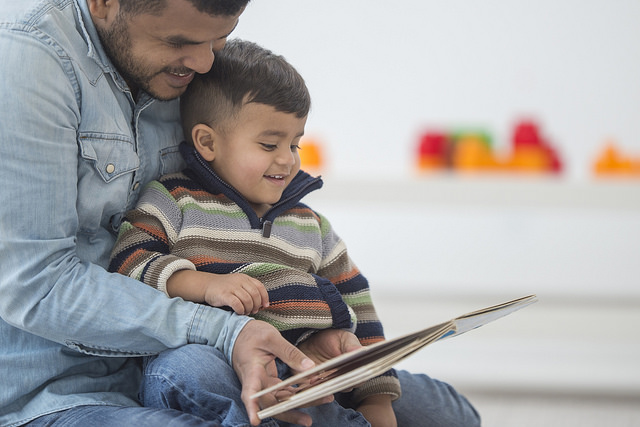
ReadingA dad reading to his young son and sharing books begins at birth. Try to read aloud to your baby every day! With the very young infant you may look at only one page of a book- in time, you can look together at two or more. Turning the pages, labeling pictures and describing what is happening on the page all lead to vocabulary and grammar development. Reading to your baby also predicts their early reading and writing skills! Cuddling together to read and share books is a very pleasant experience for both the infant and you! These very early enjoyable experiences can lead to a life-long love of reading. When there are plenty of books available, an infant may even try to look at the pictures in books on her/his own. And, remember your local library is a good source of books for your infant.

When a baby’s life is filled with talk, conversations, and books, the infant has a good start on the road to academic success.

Wendy Wagner Robeson, Ed.D., is a senior research scientist and member of the Work, Families and Children Team at the Wellesley Centers for Women, Wellesley College. Her research focuses on child development, early care and education, and school readiness, with a focus on policy implications.

Back to School, This Time with Social and Emotional Learning

It’s back-to-school time and families, youth, and educators must adjust their schedules for another school year. In the midst of the forms and information families receive – or that get “lost” in a child’s backpack or locker – you may have heard something about a social and emotional learning (SEL) initiative or curriculum. In fact, the local school system in my rural, seaside community is convening a team of educators to consider how SEL can inform and improve what teachers are already doing to promote positive youth outcomes.
SEL refers to the way individuals learn and use a set of social, emotional, behavioral, and character skills to navigate successfully in school, work, and relationships across the lifespan. Related experiences, programs, and curriculum vary widely just like the school or afterschool settings in which they are taught. Whether the particular program is focused on conflict resolution, character education, bullying prevention, or another version of social skills instruction, the development of SEL programs is based on the consensus among social scientists, educators, and health care professionals that social and emotional skills matter. The positive youth outcomes from high-quality, evidence-based SEL programs include improvements in behavior, attitudes, and academic outcomes. (Durlak, J. A., Weissberg, R. P., Dymnicki, A. B., Taylor, R. D., & Schellinger, K. B. (2011). The impact of enhancing students’ social and emotional learning: A meta-analysis of school-based universal interventions. Child Development, 82(1), 405- 432).

Across the country at all levels of education – from state administrators of federal child care funds to infant-toddler and early childcare teachers or public school and afterschool leaders – a focus on SEL practices is gaining ground. For many, this is not a new conversation.

Here at the Wellesley Centers for Women, SEL has been an ongoing part of our work for the past thirty years.

  • In 1987, Open Circle was launched as a research project committed to the social and emotional wellbeing of children. Today, Open Circle provides a unique, evidence-based SEL program for grades K-5 aimed at proactively developing children’s skills for recognizing and managing emotions, positive relationships and problem solving, as well as helping schools develop a community where students feel safe and engaged in learning.
  • The National Institute on Out-of-School Time (NIOST) has brought national attention to the importance of children's out-of-school time using research, training, and advocacy to strengthen children's emotional, physical, and social development.

From my desk at NIOST, I’m starting the school year by working at the national, state, and local levels to support educators and administrators in their efforts to promote positive youth outcomes, especially in the expanding field of SEL. Specifically, I am researching the SEL programs that states are currently adopting in preparation for our forthcoming workshop for out-of-school time (OST) leaders on how to integrate these practices into school-age child care or other OST settings. As I do this work, my background as a former school committee member and education advocate means I can’t resist passing along the newest SEL information that comes across my desk to the regional school administrators in my community who are convening the SEL planning discussions for local schools.
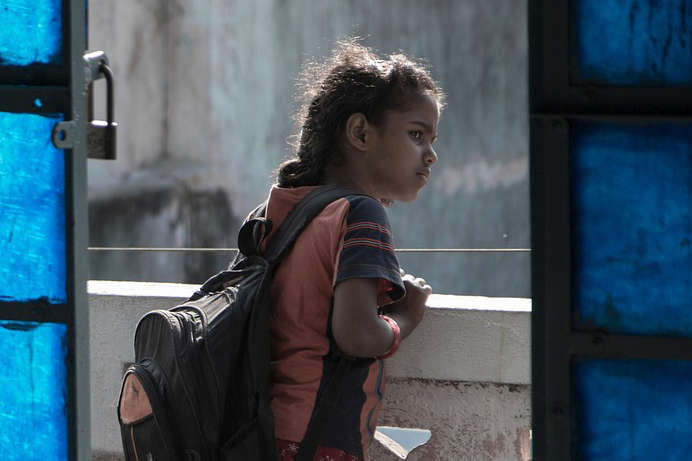
If you want more information about SEL programs and practices, check out the Wallace Foundation’s May 2017 report, Navigating SEL from the Inside Out.

If you simply want to celebrate the importance and purpose of afterschool care for the wellbeing of children and families, consider joining the 18th annual Lights On Afterschool on October 26, 2017. This campaign includes a series of events across the U.S. promoting awareness of the many ways OST programs contribute to positive youth outcomes and children’s wellbeing.

If you have other ideas or resource recommendations for how SEL can be incorporated more into OST programming, please share in the comments. Let’s make this a rewarding year all-around for our young people and those who support them!

Gwynne Guzzeau, M.S., J.D., is a research associate at the National Institute on Out-of-School Time at the Wellesley Centers for Women, Wellesley College. She has been affiliated with the Gestalt International Study Center for a number of years as a faculty member and Professional Associate and served as executive director from 2014-2016.

In India, Action to End Child Marriage Has a Long Way to Go

The Supreme Court of India ruled last week that sex with one’s wife under 18 years of age will be deemed as rape for which the husband can face up to 10 years of imprisonment. This judgement, being hailed as “landmark” by Indian media, irons out a major discrepancy in the Indian law: while the age of consent for women in India is 18, an exception in the Indian penal code allowed men to have sex with their wives between 15-18 years of age regardless of their consent (Indian law does not acknowledge marital rape).

While it is indeed a laudable step on part of the Indian judiciary that called out the “artificial distinction” between a married girl child and an unmarried girl child to be “arbitrary and discriminatory”, the judgement puts the spotlight on the issue of child marriage itself. A recent study conducted by IndiaSpend -- a journalism non-profit -- found that nearly 12 million Indian children are married before the age of 10, a mind-boggling figure that shows that child marriage continues to be a real and persistent threat in the country. We also know that early marriage can be disastrous for a girl’s sexual and reproductive health. According to Girls Not Brides, complication in pregnancy and childbirth is the leading cause of death in girls aged 15-19 globally. Considering that, this indeed is a landmark judgement which will now present a barrier to men wanting to consummate their marriages with their underage brides. However, the moment one begins to think about the wider socio-cultural context that child marriages take place in, the judgement sounds wildly optimistic and impracticable.

It is common knowledge that there is a link between lower levels of education and early marriage. The IndiaSpend research also found that as many as 5.4 million married under the age of 10 were illiterate, and 80 percent of them were female. Given that we are talking of a largely illiterate female population that is subjected to child marriage, what are the chances of them seeking legal recourse when faced with the prospect of forced consummation of marriage? Child marriage is also very often a discreet affair, one that is deeply entrenched in patriarchal values and traditions, and wary of the State machinery. Given how little agency a girl child has in a marriage, it is highly unlikely that she will report her husband for having sex with her. What, then, is the way forward? The obvious answer is education. It has always been known that educating girls and boys is one of the most effective ways of eradicating child marriage. Even the government of India acknowledged it when it said that child marriage is a reality in India due to economic and educational inequalities. However, what our government really meant was that given that child marriage is a reality, we might as well allow the consummation of marriage before the legal age of consent because “the institution of marriage must be protected”.
The government’s paranoia regarding the institution of marriage, as if it were more endangered than the Bengal tiger, is preposterous. And I don’t mean to be facetious about this. The government’s delusion is both amusing and scary; it has used this defence not only to argue for lower age of consent in child marriages but also against criminalizing marital rape which is an ongoing battle in the courts. In fact, in defence of not criminalizing marital rape, the government said that India could not follow the lead of western countries as “India has its own unique problems due to uneven literacy, economic and social diversity." Granted that India is an extremely complex terrain for the implementation of any such law, it cannot be used as an excuse for maintaining the status quo. Besides, it is not the government’s job to uphold the institution of marriage and what they call the Indian family system, based on the assumption that sexual consent is implicit in marriage and a nod to women’s autonomy will destabilize the institution. This is important because unless the government gets its priorities right, it will not be able to focus on levelling the “uneven” playing field that it acknowledges as the cause of social problems, also required for the effective implementation of women-friendly laws.

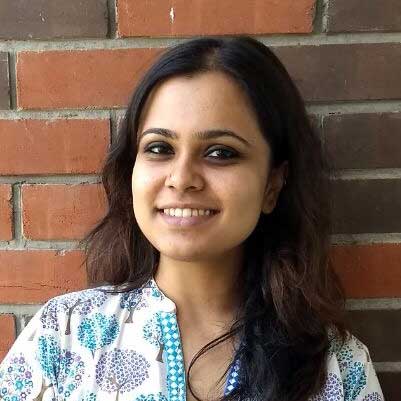
Nandita DuttaNandita Dutta is deputy manager at the Centre for Studies in Gender and Sexuality (CSGS) at Ashoka University in India. CSGS is a partner of the Wellesley Centers for Women.

#MeToo is a step forward, but it's time for bystanders and perpetrators to stand up

I applaud the strength and solidarity of the women (and men, too) who are asserting with the hashtag #MeToo, that they are among the estimated one in five women who have been sexually assaulted and one in four working women who have experienced sexual harassment in the workplace. Hundreds of thousands of women are assaulted each year in the U.S. Enough IS enough. What I now want to know is how many men will stand up against it. Maybe things are changing… It did not take long before we saw that men were writing #IHave and now as I suggest #IWill which can reflect steps they are taking and will take to end the role they have had in promoting gender-based violence and sexual assault, to assert that they will NOT stand by while sexual harassment and assault happen, that they will call it out when they see it.
Classic rape is recognized as a crime --- when a male stranger attacks a woman at night, kidnaps her, or breaks into her home, and then forces her at gunpoint to submit to sexual acts it is (usually) seen as rape. But this does NOT describe most rape, nor are most perpetrators of sexual assault strangers. Those of us working in this field have recognized for years that most rape occurs at the hands of someone the victim knows. While some of what draws our attention today is workplace sexual harassment not involving sexual contact, clearly in the context of the Harvey Weinstein allegations we are hearing about actual sexual contact, forced sexual contact, contact against the will of the victim. The lawyers can tell you what statute covers this behavior in your particular state, but when it occurs without the consent of the woman or child or when she is unable to consent, this is a crime. A serious crime that can result in jail time, a crime which should result in the attention of the criminal justice system-- though nine times out of ten it does not.

We have known for decades that most rape is perpetrated by men known to the victim; study after study have found that many hundreds of thousands of women and girls (as well as many men and boys) are sexually assaulted each year. So why are we still surprised to hear about it today? (Yes, we are doing better responding to sexual assault and, yes, it is gratifying to see the support that the women who have come forward to report what has happened to them in Hollywood are now—mostly—receiving. But year after year after year this is still with us.)

Again and again we see a backlash against the victims. Perhaps our system of justice will prosecute those who rape very small children or 97-year-olds, or those who assault women who are the valued mothers and daughters of powerful white men, but most sexual assault is not reported and, even when reported, does not lead to an arrest or prosecution.

We must remember it is not only Hollywood producers who sexually assault and not only young actors who are the victims. The rapists and perpetrators of sexual assault include:

  • the boss of a 17-year-old working in a fast food restaurant who needs her job so she can go to college, or
  • the supervisor of a 30-year-old mother who is a dishwasher, waitress, cashier, salesperson and needs her low wage part-time job to feed her family,
  • the manager who knows his employee can’t quit or take the chance of being fired so she won’t report or can’t find the time to go to the police or to court to press her case,
  • the manager, the frat-boy or the professor who knows the victim won’t risk the shame and humiliation of reporting and this won’t make it dangerous for him to continue assaulting her or others,
  • The senior colleague of an assistant professor who will decide her fate on the promotion and tenure committee,
  • The fellow student, the upperclassman or the star football player who knows his attention will flatter the first-year student or the jock who knows after she has had a lot to drink that he has a good chance of getting away with a sexual assault-- he knows that when she passes out in the dorm room, or by a dumpster in the parking lot, or no matter what happens to her, she will be too afraid to scream out or report what this star athlete has done,
  • Or a bus driver or taxi driver, priest, teacher, uncle, military superior, or neighbor who assaults the mother of his child’s best friend,
  • Finally there is the ex-boyfriend or partner who thinks that he is entitled to sex because she consented in the past, because he knows her secrets and can prey on her fears, insecurities, or her shame.

This is the reality of rape—a crime most likely perpetrated by a man known to the victim – an acquaintance, “friend,” classmate, employer, or partner. Such rape is more common than stranger rape. In spite of extensive data showing that rape is underreported, rarely falsely reported, and even after many Harvey Weinsteins--too many to count-- many still hold inaccurate beliefs about the nature of rape, when and to whom it happens, and its impact on the victim—the women who are young and old; Black, white and brown; rich and poor.

Yes, it is notable that women can now join in and feel supported enough to tweet #MeToo and in so doing make it clear that rape is not rare, that rape can happen to anyone. But now, it is also time to ask the bystanders and the actual or wanna-be perpetrators to stand up and say #IHave to indicate “I sexually assaulted someone,” “I stood by while my friends or classmates or colleagues did it,” or “I know men who bragged about it.” And use the hashtag #IWill to assert they will no longer stand by and do nothing but instead that they will stand up and support victims and survivors. #IWill stand up and call out these behaviors even when powerful men state “I just start kissing them. I don't even wait...when you're a star they let you do it. You can do anything. Grab them by the pussy. You can do anything."

Linda M. Williams, Ph.D., is senior research scientist and director of the Justice and Gender-Based Violence Research Initiative at the Wellesley Centers for Women at Wellesley College.


Need help or assistance? In the U.S., call the National Sexual Assault Hotline at 800.656.4673.

Adding a Lone African American to its Board is Unlikely to Solve Facebook’s Diversity Challenges

 In a meeting with the Congressional Black Caucus earlier in October, Facebook’s Chief Operating Officer, Sheryl Sandberg, made a public commitment to appoint an African American to its currently all-white board of directors – in the foreseeable future.
The promise came when members of the Congressional Black Caucus were questioning Sandberg about the lack of diversity on Facebook’s board and at all levels of employment at Facebook where only three percent of employees are African Americans, and there are no black executives. Lawmakers confronted Sandberg about Facebook advertising that has been linked to Russian accounts purchased during the 2016 election that were connected to Black Lives Matter. Members of the Congressional Black Caucus said that if more blacks were in decision making positions, the connection with Russian accounts and anti-Black Lives Matter content may have been caught before the FBI looked into the issue.

But is one African American board member going to be able to bring a loud enough voice to change the status quo on the board and also move the company toward greater diversity in its rank and file? Drawing on our research on how many women it takes to change corporate board dynamics we conclude that a lone member of an underrepresented group is unlikely to be an effective voice for change.

My colleagues Vicki Kramer, Allison Konrad, and I interviewed 50 women directors, 12 CEOs (nine male), and seven corporate secretaries at Fortune 1000 companies. We found that the benefits of having women on a corporate board are more likely to be realized when three or more women serve on a board.

While even one woman can make a positive contribution, more typically, the token minority person is simultaneously invisible as a peer who can contribute and hyper-visible for being different from the majority, with irrelevant aspects of their demographic difference overshadowing their professional skills. We heard examples of lone women directors being talked over and otherwise ignored when they responded to a strategy question but asked about their preference for home decorating. In other words, being a token tends to be a powerless position.

Having two people different from the majority is generally an improvement over the token position. But it is corporations with three or more different people on their boards that tend to benefit the most from the diverse perspectives they can bring. Our results showed that with three or more women, board discussions expanded to include the interests of multiple stakeholders, including the community and to pursue answers to difficult questions such as CEO compensation and diversity. Three or more women were also able to change board dynamics toward a more collaborative approach to leadership, improving communication among directors and between the board and management.

Important to note is that Facebook’s board is currently comprised of eight individuals—six white men and two white women—and two of these individual are the inside directors, Mark Zuckerberg and Sheryl Sandberg. This elite structure reflects the lack of a wider perspective of viewpoints, experiences, concerns, priorities, and sensitivities. While this may have helped the organization’s growth, there are corporate responsibilities beyond the bottom line.

If Facebook is serious about its diversity problem, adding one African American to its board is not going to be enough. It takes a critical mass of three or more people who are different from the majority to bring about change on a board.

Sumru Erkut, Ph.D., is senior research scientist at the Wellesley Centers for Women at Wellesley College. Her research interests include women’s leadership, racial/cultural norms and identity in youth and families, and adolescent development.

My Visit to MarketPlace: Handwork of India

Marketplace India group photoI have been a fan of MarketPlace: Handwork of India for decades, not simply because it is a Fair Trade organization but also because I love their clothing. I am the happy owner of many of their shirts (long and short sleeved), dresses (winter and summer), jackets, and wraps. Some of my clothes are bordering on 30 years old, faded and sadly, no longer available -- not even on the clearance site.

Generally, I make my purchases from the catalog, not from their website. I would wait until the catalog arrived to make my choices and over time, I began to notice that the catalog held more than just items to purchase. Indeed, it had stories and photographs of the women -- their lives at work, at their homes, their children, their recipes, their excursions, their wishes, their struggles, and accomplishments. I was intrigued and wanted to know more. This was not your usual catalog.

Since my Wellesley colleague Emmy Howe and I were traveling to Delhi for the Sex/Ed Conference in November 2017, we decided to schedule some visits in the Mumbai area. Among those we wanted to visit was the office of MarketPlace, located in the suburbs of Mumbai. After some negotiations with the CEO Pushpika Freitas and with input from the local director/supervisor, Linda Machado, we arranged to visit their office in the Santacruz East area of Mumbai.

Four women of India Marketplace siting togetherWith our cell phones actively participating in locating the office, along with the skills of our car service driver, we arrived after lunch on November 14, 2017. About 12 women artisans were gathered together along with some staff -- they greeted us with a special handmade mandala on the floor, and after a candle lighting ceremony, they sang us a song that they had written.
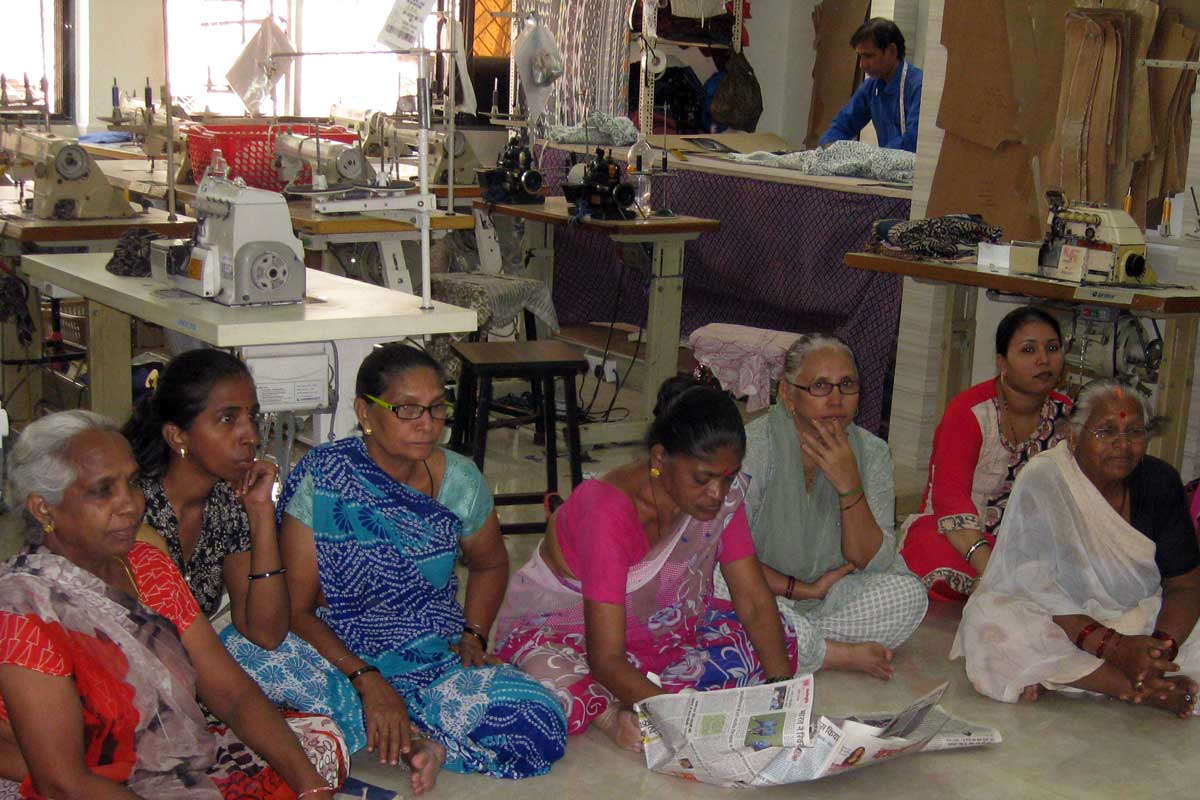
Our conversation got off to a lively start as we shared with them a song, albeit on YouTube, “Bread and Roses” sung by Joan Baez, and told them about the history and lives of women workers in the garment industry in the U.S.

With translation provided by some of the social workers from the NGO part of MarketPlace, called SHARE, which is responsible for the social development and empowerment of the women, along with our host Linda Machado and with some of the artisans who spoke English, we discussed the MarketPlace clothing that I wore and how I had spread the word among my colleagues. In addition, and more substantively, we discussed some of the unique features that MarketPlace offered them -- help with the education of their children, literacy programs, health improvements, the kids programs (148 kids between ages 4-25 years old); and how some of them had been promoted from within from artisan to supervisor. As they were promoted within the organization, they were provided with additional training in accounting and bookkeeping. Throughout our time together, we detected their obvious pride in their work and in their organization. One of the women said, “If not given this opportunity, we’d be washing dishes or doing housework in someone else’s house.”

Another special experience awaited us after some of the women artisans left with their bags of garments, which needed their embroidery; we climbed the stairs to the workshop. There we met additional artisans who worked on sewing machines, creating some of the prototypes for new clothing. Best of all, we watched a weekly discussion group -- an article of interest from the newspaper was selected and a group of women, ranging in age from 20-70 years old, sat in a circle expressing their opinions. This week’s topic was on dowry, which provided for a heated conversation. Even though we could not follow the conversation in Hindi, we noticed the animation that it produced. I asked Linda privately if all of the women were literate and she told me that some were not but the articles were read aloud so all participants were able to be involved.

The visit with the artisans in Santacruz East was so meaningful and vivid, and I know that I speak for both Emmy and myself when I say that we treasured our time there and the photos that we have of it. I will buy their clothing with new meaning attached to each and every item. And a big thank you.

Nan Stein, Ed.D., is a senior research scientist at the Wellesley Centers for Women. She has conducted research on sexual harassment/gender violence in K-12 schools and teen dating violence for more than 30 years and co-led the Shifting Boundaries, school-based dating violence prevention program.

What’s Our Resolution to Progress Gender Balance in the Workplace?

As we enter 2018 with eager anticipation, it is a natural part of the transition into the new year to establish personal and career resolutions. Many business leaders consider ways to refresh the strategy for their organizations seeking to answer questions such as “How can my team help our organization achieve its goals with a greater impact?”
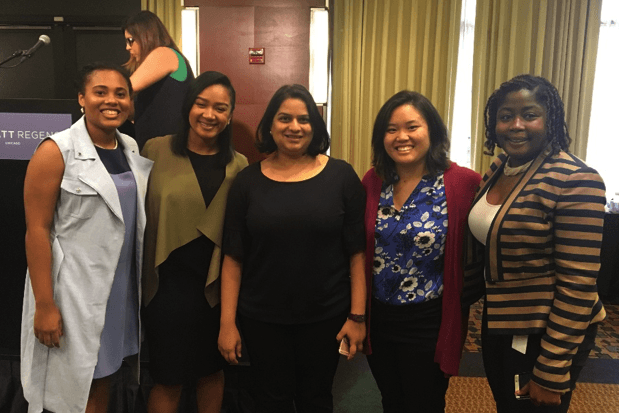
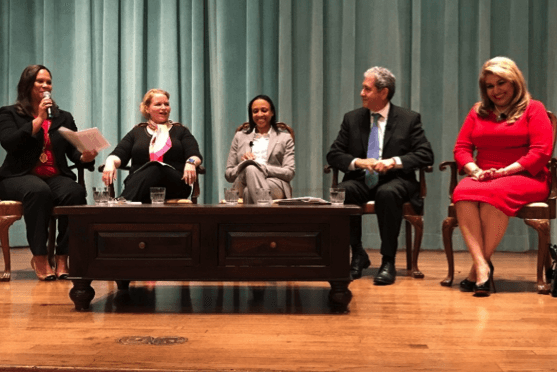
For Capgemini’s North America Corporate Responsibility Team, the answer is easy… We understand that to realize sustained change for greater gender equality we must facilitate courageous conversations, identify opportunities for improvements as they arise, and maintain accountability for our progress through measurable goals.

Some context on our current state:

In 2016 and 2017, Capgemini in the U.S. and Canada, respectively, became EDGE Certified. EDGE is the leading global assessment methodology and business certification standard for gender equality. Capgemini was awarded the recognition after a third-party review of its inclusion practices across five dimensions: equal pay for equivalent work, recruitment and promotion, leadership development training and mentoring, flexible working, and company culture. This recognition confirms our commitment to gender balance through impactful actions across North America, which include new benefits such as our backup care program. We will continue to be an innovative environment where our talent helps our clients transform business through solutions fueled by inclusion, diversity, and team development.

Capgemini’s EDGE Certification set the stage for our thought leadership on diversity measurement in the workplace enabling best practices sharing with other companies and community partners. In 2017, Capgemini sponsored two external events with the Anti-Defamation League’s Women’s Initiative, which had cumulative audience totals of over 600 attendees. Capgemini representatives joined other business leaders in addressing global gender balance challenges and the related topic of unconscious bias.

In July and December of 2017, Capgemini North America hosted its first Women in Digital sessions in San Francisco, CA, and New York, NY. Capgemini’s Global Women@Capgemini Group created this strategic program to explore how women are driving change as executives, navigating organizations through digital disruption to innovation.

Capgemini was also proud to support the National Diversity Council’s Women in Leadership Symposiums (WILS). The program’s mission is to bring together a diverse mix of successful women leaders who, through the discussion of topics relevant to today’s issues, educate, inspire, and encourage women to reflect on their own goals and status as they strive to move higher in their organizations.

Finally, Capgemini enhanced our Women’s Leadership Development Program (WLDP) to ensure a positive impact on the development of our women leaders. As a three-month program designed to provide training, mentoring, career objective-setting, and coaching for women in North America, WLDP is a signature program of the company’s talent development initiatives.
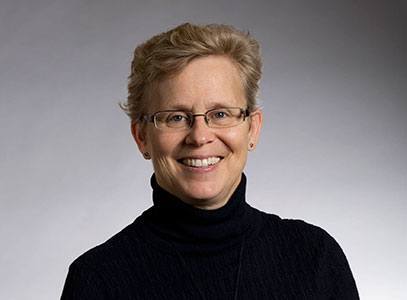
Our resolution for 2018:

We recognize that we need existing and future leaders contributing to the conversation on gender balance and equality in the workplace. This year we will empower our North America Employee Resource Group Leaders to build on last year’s 16,000+ hours of engagement through a focus on deeper partnerships with our leaders and clients to drive accountability across organizations, not only on gender balance but on all aspects of diversity and inclusion. In 2018, we will partner with our clients on everything from unconscious bias training to volunteering. We will continue to make progress by holding ourselves accountable to be the change we want to see through our behaviors anchored by our seven core values and leadership commitments. We’ve found past success where our grassroots efforts met our leadership goals and expect this year’s results to take us even further.

Janet Pope is a member of the Wellesley Centers for Women Council of Advisors. Additionally, she and her colleague Yvonne Harris work to grow the reach of Diversity & Inclusion initiatives at Capgemini North America.

#MeToo—Changing Brains, Relationships and Power Dynamics

This blog was originally posted on Psychology Today and is reproduced with the permission of the author.

Amy Banks, M.D.The #MeToo movement is giving a viral voice to women (and men) who have been the targets of violence and harassment. It is a social change campaign that I never thought would happen in my lifetime. Honestly, when it first started to spread on Facebook I thought it might be cathartic for the people who joined, but I didn’t anticipate it having wider social change potential. My bad—because I temporarily forgot about relational neuroscience and the power that can be unleashed when groups of individuals come together and support one another.
What does the #MeToo movement look like through the lens of relational neuroscience? A few studies come to mind that might help shed some light on interpersonal dynamics across power differences. Check-out "The Cookie Monster Study" as described by Dacher Keltner and his colleagues at University of California at Berkeley.

For those too busy to watch the five-minute video, here is a summary of the study. The researchers brought three individuals to the social science lab and told one of them that they were in charge—essentially giving that person power over the other two. While the group was busy with the assigned task of writing boring university policy, the researchers brought out a plate of four cookies. Initially, each of the three participants ate one cookie each, leaving one on the plate. Interestingly, most of the time, the person given the power eventually ate the fourth cookie. In Dr. Keltner's study taking the fourth cookie correlated with having power and also with a decrease in activity of the mirror neuron system (the circuits in your brain that produce empathy and allow appreciation of the impact of your actions on others). Further, as the researchers watched the behavior of those given power, they observed that the people in charge ate differently. They chewed with their mouths open and occasionally had little pieces of food dropping out of their mouths. Dr. Keltner describes this change in the level of interpersonal awareness as the "paradox of power"—the qualities that often bring someone to power, like empathy and the ability to listen to others, diminish once a person is in power.
Kelner's research and theory suggests that for many people simply having power over others decreases the activity in the part of the brain needed to understand the impact of your behavior on others. Just the opposite of what is needed to be an engaged, respectful leader.

The potential corrupting and disconnecting impact of power is an enormous problem in Western societies where success is often culturally prescribed as gaining power over others and obtaining more resources than those around you. In the US, the myth of individual success is promoted in business, politics, and sports. This model of capitalism is great for making money but not great at creating cooperative, balanced human beings. In fact, one of the "benefits" of making it to the top of the power hierarchy has been a blissful ability to do whatever you want to whomever you want, and because your empathy pathways may be immobilized by power you don’t have to feel the pain you are causing. Essentially, the abuse of power goes hand in hand with power over others, the dominant organizational model in our country. Because power over environments is everywhere, most people have witnessed power abuse at work or family gatherings, in religious communities and on sports teams. Sexual harassment and abuse has been and continues to be ubiquitous which makes the rather sudden rise of the #MeToo movement all the more stunning.

Amy Banks, M.D., is a senior scholar at the Wellesley Centers for Women who has devoted her career to understanding the neurobiology of relationships.

How Can We Support Working Parents?

A woman working as a server clears an outdoor cafe table.A few days ago, my eyes fell upon an online post discussing recent studies that showed how unpredictable work schedules in low-wage industries, especially food and retail, are really bad for families. The article highlighted that some practices, such as last-minute notices, on-call shifts, irregular and/or variable work schedules, etc., which are common in many industries in the U.S., harm workers, especially women who care for children.
My colleague, Senior Research Scientist Sumru Erkut, Ph.D., and I had just written about that same topic, as we continue to explore cross-industry relevance with our recent study on women’s leadership in the theater field. Through our interviews, surveys, and conversations at conferences, women had shared with us the challenges they faced in their lives when they wanted to rise to a leadership position in the theater. Our piece, published in Harvard Business Review, showed how some of the theater field’s practices, such as unpredictable scheduling of rehearsals and auditions, the 70-hour tech weeks before a show goes live, and extensive travel demands to get national visibility, all require work-life balance provisions that most workplaces currently have not yet put in place.

Even in this 21st Century, we have not yet come to accept that parenting is a shared component of our human condition. Every industry employs parents who are trying to balance their work obligations with their family roles. In fact, even non-parents can be called into a caregiving role, for example when their ageing parents need help. Gone are the days when a two-parent family could live on a single paycheck and when family roles were clearly divided. Therefore all of us, across gender and age, would benefit from a variety of workplace supports that accommodate our multiple roles as modern human beings.
The business argument for implementing work-life balance policies is fairly clear: these supports will help us stay better focused on our jobs’ priorities and be more productive, because we will be assured our home life is protected while we work. And, these policies will go further than just supporting us while we care for others. I remember the story a theater-study interviewee shared of how a policy change in one particular theater to make schedules a bit more predictable was received with gratitude by non-parenting colleagues: they now could more easily schedule every-day necessities, like medical or dental appointments.

Even though women and their allies have been calling for changes in workplace policies for decades -- and while some were indeed made -- we still have quite a way to go.

In the U.S., parental leave is still largely unpaid, financially penalizing those who start a family, and partially causing the gender pay gap, which becomes a lasting disadvantage for women’s economic security. Once past the period immediately following the birth of a child, working parents still face several more hurdles to be able to balance their family and their work obligations. Not only is the cost of good quality care astronomical, child care centers or other child care providers are organized along schedules that may not align with those of parents who need access to that child care. Public schools are equally uncoordinated with parents’ employment reality. Many workers have weekend duty or work overnight shifts, again most often in lower paying industries. However, there are almost no providers that take in children over the weekend or for overnight care, and most organized care requires a family to enroll with a predictable schedule for an extended period of time.

Thinking back on the findings in our women’s leadership in theater study, we identified that the hurdle to upward mobility among caregiving women is not the lack of a mother’s ambition or her creativity toward addressing those roadblocks, but rather the virtual absence of any workplace provisions. Indeed, women are just as intentional and strategic about their upward mobility as men are, and just as ambitious for that top spot. But, because caring for others, especially for children, is still predominantly a woman’s job, a working mother faces discrimination, lack of willingness to make any adjustments, and forced invisibility, expressed in statements like “I don’t think [women] aspire for that type of leadership role given their family situations,” which we heard in our theater study.

This mothers’ day, let’s honor all mothers in our lives in two ways. First, let’s pledge to share caregiving responsibilities equally in our homes, not just for that one Sunday, but for the rest of the time our loved ones need support. And second, both respect working mothers’ second shift as much as we do her employment contributions, and help advocate for change in policies at work to make that second shift easier to coordinate for all working parents. Showing children how families can be built with intentional gender equity is a crucial gift to our society’s future parents. Indeed, when our children in turn become leaders, their belief in work-life balance provisions will inform their future company policies toward fairness.

Ineke Ceder is a research associate at the Wellesley Centers for Women at Wellesley College, where she has been involved since the 1990s on projects that focus on race/ethnicity, sex education, child and adolescent development, and women's leadership. Her work described above is based on the research she conducted with Sumru Erkut, Ph.D., on women's leadership in theater.

Wellesley Centers for Women Mourns the Loss of Advisory Council Chair, Activist Deborah Holmes

Deborah HolmesThe Wellesley Centers for Women is mourning the death of Deborah Holmes, Chair of the WCW Council of Advisors and a passionate activist committed to the lives of women, people of color, equity, and social justice across the world.
“Deborah understood the intersectionality of social justice causes as well as the necessity of making change on multiple fronts at once, and she lived it,” reflected Layli Maparyan, Ph.D., the Katherine Stone Kaufmann ’67 Executive Director of WCW. “She brought indefatigable energy and an indomitable spirit to our Council of Advisors, and our global outreach and media impact expanded under her influence.”

Last spring, WCW cosponsored a research forum for change makers, “From Persistence to Power: Facts, Truth & Equity for Women,” in Washington, D.C., during which Deborah spoke about the need to address issues of intersectionality in order to achieve equity for all women in the U.S.

“It is hard to be black every day in America; but at the same time, I love being black. Because we have so much power, and the fact that we are in this room, and in this place, and still strong, and nobody has knocked us down, says a lot about our people,” she told the hundreds of attendees. “We are at a moment now where we have an opportunity, perhaps in coalition with other black and brown folk, to really rise up in a way that we rose up when we shut down the buses in Montgomery, when we forced people to listen to what we have to say.”

At the time of her death, Deborah was the Chief Communications and Engagement Officer at the Women's Funding Network (WFN), one of the world's largest philanthropic networks devoted exclusively to the equality and rights of women and girls around the world. There, she oversaw external and internal communications, brand and reputation management, strategic partnerships, and member relations. Prior to WFN, Deborah served as Chief of Staff and Vice President of Communications at the Global Fund for Women (GFW), where she was senior advisor to the CEO and charged with the development and execution of GFW's mission, vision, and strategies. Additionally, she was responsible for nurturing key organizational relationships and initiatives, enhancing staff and board capacity to steward the GFW brand, talent management, and human resources.

"No one met Deborah Holmes and was not immediately impressed,” said colleague Deborah Richardson, Herndon Human Rights Expert in Residence at Honors College, Georgia State University. “She wore her confidence and brilliance well, while openly embracing you as a fellow sister and comrade. Every moment of her life was purposeful—her yes meant yes. If she committed to something, she was all in.  What I learned from Deborah is we have to do more. Speak out more. Confront injustices more and love each other more. Those who had the privileged of working with her, and the thousands she felt a deep responsibility to—we are all blessed by her many gifts.”

An award winning television news correspondent and analyst for more than 30 years, Deborah worked for local, national, and international news organizations covering an array of issues including race, politics, and social justice. She addressed the importance of quality journalism during the D.C. conference.

“Backing down is no longer an option,” she argued. “The facts matter and we have to get the facts into the right hands of the people—and that includes your friends and associates who need to read and use critical thinking skills. Because there are facts out there. But if you choose not to read them, or you ignore them, then they are of no benefit to anybody. Losing first-rate investigative journalism,” she stressed, “is one of the worst things that can happen in this democracy.”

Prior to her work in women's rights, Deborah was Senior Vice President at a global communications firm, Fleishman Hillard, Inc., where she led client strategy in brand and reputation management, healthcare, and multicultural audience development and initiatives. She was an outspoken activist for issues impacting people of the African diaspora including racial equity and economic and political empowerment. Throughout her career, she promoted and facilitated opportunities that brought diverse voices into public discourse and debate to inform social change.

“This [work] takes time, and so you have to make a commitment within yourself and among your friends that you are going to devote some actual time to this in addition to the knowledge, but we have to show up,” Deborah said.

In addition to her service on the WCW Council of Advisors, Deborah’s board and community service included Global Press Institute, Change Philanthropy Partners, Bay Area Blacks in Philanthropy, Reporters Without Borders, and Alvin Ailey American Dance Theater.

Read more>>


Family, friends, and colleagues are welcome to share their reflections in the Comment Section below.

Tolerance as a Virtue

In the “New World Order,” nations are becoming multi-racial, multi-cultural, and multi-“colorful.” The act of embracing our common humanity remains a task for all to strive toward. Embracing the right of everyone to be different without judgment, is something we each can nurture and act upon. As we strive to rejoice in this diversity, it will make us stronger, amplifying the very best part of human nature. We are a hemisphere of immigrants. In the U.S., this concentration of different people has lead to new ways of understanding, even with pockets of intolerance and hate fighting against the greater society. As an immigrant from the world’s cradle of civilization—Africa—I was welcomed into the U.S. and I have felt welcomed.

The idea of promoting tolerance is characteristic of many societies, including the U.S. Regardless of the current challenges, this country has stood as a beacon and role model to the rest of the world to strive for the common good of humankind. This year, 2018, is an ideal time to reaffirm the values that we share as we reflect on the International Day for Tolerance. These values first uttered by John Locke (1632-1704) and well articulated by Thomas Jefferson in the Declaration of Independence “…We hold these truths to be self-evident, that all men are created equal, that they are endowed by their Creator with certain unalienable Rights, that among these are Life, Liberty and the pursuit of Happiness. History has modeled and reaffirmed these words, inching us closer to peace.

So what is tolerance? It is an act of unconditional kindness, forgoing wrongdoing, burying anger and hatred, being liberated from anxiousness, bondage, prejudice, and hindrances. In essence tolerance is a prime virtue for human dignity, where diverse peoples can live together with a richness of beliefs and experiences, where people are willing to listen with tolerance and compassion. To live and let live.

In my own experience, having been raised by a Muslim father and a Christian mother in Nigeria, and being married to an Italian, I have an appreciation for the compatibility of multiple systems and beliefs, and of the traditions which began early in life. These have made my life richer. And I have found that in truly listening and living tolerance, that I have been the beneficiary of respect and acceptance.

If we plan to promote intolerance, I urge that it be against tyranny in any form. Let us promote social justice by our very own actions and deeds. Let us look to ourselves to ask what we have to work on? Let us not be content with the status quo. Let us ask ourselves what we have in common with our community and what we are doing to welcome and accept those who seek a helping hand both in America and abroad.

In contemplating these questions myself, it is clear that we all need to step outside of our comfort zones, and at the minimum, use the soft power of parenthood, and friendship, to help both children and those in need, to embrace and understand the absolute virtue of tolerance. Let us promote inclusive knowledge, promote justice, and openly address issues of prejudice and discrimination. Let us make multiculturalism a continuum and not a conversation on separate culture, a Mosaic of cultural coexistence and interfere. Let us test our own reactions and assumptions. I will continue to strive to follow the Commandment I was raised with, ”Above all, love one another.”

It is for each of us to decide how we can strive to live and model the gift of tolerance and acceptance in each of our hearts and minds. We are strengthened by the efforts of those who have gone before us to achieve this unique place in history, where peoples from all walks of life in the world, like myself, have enjoyed the beauty of this American experience. It has allowed me to become a global citizen and advocate for peace on a world stage. Understanding that tolerance is unique in many parts of the world, I have worked with others to bring international visitors here solely to absorb the American experience. They become witnesses and spokespersons for the benefits of tolerance and living together with differences. Each returns a spokesperson in some way, of having witnessed these phenomena.

My older sister was flabbergasted, for example, that she saw a Mosque, Jewish Temple, and Christian Church as next-door neighbors while visiting me in the U.S. When she returned to Northern Nigeria, she was telling everyone who would listen. They trusted her account and perceived America and cultural tolerance in new ways.

I am reminded of the words of Rumi (1207-1273), a Sufi scholar, writer and poet who summed up tolerance as unconditional acceptance, patience, love, compassion, and benevolence embodied in what he referred to as ‘Seven Advices’ which epitomize the highest sentiment of humanity, transcends religious boundaries, and encompasses the common values of all religions:

  • In generosity and helping others: be like the river
  • In compassion and grace: be like the sun.
  • In concealing others’ faults: be like the night.
  • In anger and fury: be like the dead.
  • In modesty and humility: be like the soil.
  • In tolerance: be like the ocean.
  • Either you appear as you are, or: be as you appear.

So let us celebrate the 2018 International Day for Tolerance, renewing and retooling our own efforts to strive for these virtues. I hope to model tolerance in my daily life to my children and those who I am fortunate enough to cross paths with. Modesty and humility allow us to put down our preconceptions, personal differentiations, and preferences. In any faith and knowledge, practice will bring forth many good fruits.

Hauwa IbrahimHauwa Ibrahim, Esq., is a visiting scholar at the Wellesley Centers for Women at Wellesley College whose research interests include the root causes of terrorism, including radicalization of youth and building bridges of cooperation between religious and non-religious communities.

Poverty, Black Women, and HIV

About twenty years ago, I received some unbearable news about a dear friend.  A highly intelligent, strong, and beautiful woman of African-descent revealed to me that she contracted HIV as a result of having unprotected sex with a man who had the virus. Twenty years ago, I was convinced that the virus was an automatic death sentence for my friend. Thankfully, with advances in medical technology, not only is she still with us but she is healthy and thriving. However, keep in mind that she has the necessary resources that are needed in order to take care of herself, so she can successfully manage her overall health. She is middle class, has a good health insurance plan, has access to the appropriate health care, and has a supportive social network that encourages her to maintain her health.
However, the reality is that many Black women who contract the virus are not as fortunate as my friend. Black women mainly contract the virus through sexual activity with infected men. Many who contract the virus not only must live with HIV but also poverty. As a result, there are higher morbidity and mortality rates among Black women as compared to other racial communities. According to the Centers for Disease Control and Prevention, Black women are 18 times more likely to be diagnosed with HIV than are White women and due to lack of resources have an increased chance that they will die from AIDS. The theories surrounding this staggering racial disparity are complex. However, much of the discourse among published research discusses poverty as one of the main risk factors for the contraction of HIV among this marginalized group.

Research has demonstrated that poverty and HIV are inextricably linked. According to the Kaiser Family Foundation, 20 percent of Blacks live in poverty vs. only eight percent of Whites. An impoverished woman is much more likely to have an insufficient education about sexual health practices, less access to proper health care, as well as a reduced amount of access to appropriate contraception (i.e., condoms). In addition, research suggests that life stressors fueled by poverty can be the catalyst for mental health issues such as depression, anxiety, and loneliness. Such sequela may affect the sexual behavior/practices of women living in poverty that are detrimental to overall health.

This problem is systemic and multifaceted. Addressing this issue through actions based upon the ideals of social justice is key to preventing its escalation. There are several organizations that are dedicated to addressing HIV among Black women including the Black Women’s Health Imperative and the National Black Leadership on HIV/AIDS.

Katherine E. Morrison,KatherineMorrisonPhD Ph.D., is a former post-doctoral intern at the Wellesley Centers for Women.  She is currently the coordinator of the Health & Wellness major at Curry College, Milton, MA. She specializes in the prevention of disease and injury among marginalized populations including communities of color, women, and the LGBTQ community.
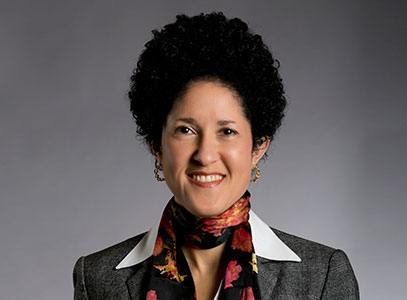
Boldly Moving Forward Together in 2019

Happy New Year! This year we are celebrating something very special, WCW’s 45th anniversary!

It was 1974 when we first began as the Wellesley Center for Research on Women in Higher Education and the Professions—a feminist think tank on a Seven Sisters campus, begun by a forward-thinking women’s college president, Dr. Barbara Newell.

We had the opportunity to hear from former President Newell last September, at the launch of the WCW oral history project, and she told the story of why she pushed for a feminist research center at Wellesley College during the early 1970s.

An economist by training, Dr. Newell was keenly aware of the power of data to move the needle on social issues by influencing policymakers and practitioners, giving advocates and activists the evidence they need to make the case for social change, and contributing new knowledge to academics and the general public alike. Dr. Newell knew that cross-disciplinary conversation and interdisciplinary collaboration spark the synergies that advance social innovation, and she brought women social scientists from diverse fields under one roof.

Today, 45 years later, we are still going strong on the platform she created. In 1995, joining forces with the Stone Center for Developmental Services and Studies, which was launched in 1981 to advance women’s mental health and developmental psychology through a feminist lens, we became the Wellesley Centers for Women, with an “s,” plural. Over the decades, our researchers have changed the world for women and girls, families and communities, with research that has moved women forward economically, politically, on the home front and in their careers, psychologically and socially, in all their diversity, around the world.

Through high-quality research, groundbreaking theory, and real-world action, the Wellesley Centers for Women has contributed significantly to gender equality, social justice, and human wellbeing — living up to our motto, “A World That Is Good for Women Is Good for Everyone!”

We wish you the very best 2019, and may we boldly move forward together!

Layli MaparyanLayli Maparyan, Ph.D., is the Katherine Stone Kaufmann ’67 Executive Director of the Wellesley Centers for Women at Wellesley College.

‘It’s Not in Our Head’… and yet Pain is in Our Brain:

Pensive looking woman of colorWhy Racialized Exclusion Hurts and How We Can Remain Resilient
Going into your home while Black, waiting in a coffee shop, playing with your child, styling your hair, swimming, cooking, flying as a doctor while Black…living while Black. And as such, being subjected to undo questioning, demeaning and sometimes life-threatening reactions  - you name it, we have seen it. And we feel it…which means our children do as well.  A starkly sobering example in recent weeks with the news of a 9 year old Black girl who committed suicide, no longer able to cope with the racist taunts she faced from peers at school.
 
Each of these widely known and growing incidences of exclusion, harassment and race-based violence impose criminalization of everyday behaviors onto people of color and others in marginalized groups.  These attacks have and continue to have a cumulative impact that injures psychological and physiological well-being. Evidence regularly grows about the impact of racial trauma and race-related stress on our emotional and physical health. What may not be as widely known is how racialized exclusion and violence show up in the brain.

Our neurobiological network is wired to connect. Which is why... Read full article on EmbraceRace.org

This article was originally published on EmbraceRace.org and is shared with permission. Karen Craddock, Ph.D., visiting scholar at the Wellesley Centers for Women, is an applied psychologist, action researcher, and strengths-based practitioner. She is director of Strategic Initiatives & Network Engagement at Embrace Race.

Justice, Peace, and Wellbeing


Stand With Others Blog QuoteAt the Wellesley Centers for Women, we envision a world of justice, peace, and wellbeing for women and girls, children and youth, families and communities, in all their diversity around the world. Like so many, our will and spirits have been tested by recent events, but our resolve has been strengthened. The fatal shooting of two African Americans in a Jeffersontown, Kentucky, grocery store; the more than a dozen pipe bombs sent to CNN and prominent progressive political leaders and supporters across the country; and the mass shooting of eleven worshippers at the Tree of Life Synagogue in Pittsburgh, Pennsylvania, are evidence that we need to stand strong and work together—to provide comfort, hope, knowledge, and power — to help shape a better world. We at WCW stand with those whose lives are forever changed. Only when social equity and equality, psychological wellbeing, peace, and freedom from violence and want evince for all people will our work have reached its true aim.
Layli Maparyan, Ph.D.

Katherine Stone Kaufmann ’67 Executive Director

Wellesley Centers for Women


Welcome to the Women Change Worlds Blog!

"A world that's good for women is good for everyone."

Welcome to Women Change Worlds, the new Director’s Desk blog of the Wellesley Centers for Women. At WCW, also known as the Centers, we do research, theory, and action that promotes justice and wellbeing for women and girls, their families and communities – and we’ve been doing it since 1974. This year, 2012, marks our official entry into the blogosphere, where our goal is to speak up and shape conversations – national and global, regional and local – that impact our core constituencies and the multiple contexts in which their lives unfold.

Here at WCW, our motto is “A world that’s good for women is good for everyone.” But what exactly does “a world that’s good for women” look like? The truth of the matter is, there are worlds within worlds, and a world that’s good for women acknowledges women’s similarities as well as women’s differences. This includes obvious and widely acknowledged differences – such as race, ethnicity, nationality, culture, religion, education level, income, social class, sexual orientation, gender expression, (dis)ability status, and age – but also less visible or less widely-acknowledged differences such as health status (physical or mental), experience with violence, rural/urban location, political attitudes, and even worldview. This “worlds with an s” approach acknowledges that not all women have the same perspectives or the same needs, yet, at the same time, all women deserve a life of decency, dignity, education, equity, power, health, and wealth.

As I state in my Director’s Message on the WCW website, today’s world has been shaped over multiple generations by feminist and womanist critical theory and social activism, yet many women and girls still do not enjoy full equality, freedom of expression, or even the provision of basic needs and rights. What gives?? What remains to be done?? What do we need to do to steer the world in the direction of that world that is not only “good for women” but is also “good for everyone”? These are the kinds of questions that this blog will tackle.

Since I took the helm of WCW in July, the popular media has debated such provocative issues as whether women really can or can’t have it all, whether there is or isn’t such a thing as "legitimate rape,” whether a nearly all-male panel of Congressional representatives is actually qualified to make decisions of national scope about birth control, what to do when a woman who testifies in favor of contraception is characterized with a misogynistic epithet in the national media, whether men are “in decline,” whether women are becoming the richer sex, whether father-daughter dances and mother-son ballgames are or aren’t discriminatory, and whether opportunity really is the route to overcoming oppression for women and girls worldwide. Just before I got here, we were having national and global conversations about issues such as whether the Arab Spring actually benefitted women, whether Title IX is still relevant, and even whether there are enough women writing op-eds. Now, as we hurtle towards a presidential election, we are talking about – although not loudly enough, in my opinion – whether and how women voters and women’s issues matter in this presidential election year. While I was chomping at the bit to blog on all these topics as I settled into my new position, my point is simply that the stream of women’s issues that matter – or issues that matter to women – is swift-moving and never-ending. Any moment can be the right moment to jump in.

In the worlds of scholarship and scientific research, not to mention the worlds of theory and program development, knowledge production can crawl at a snail’s pace. And rightly so, given the necessarily deliberate and systematic nature of such work: turning over every stone, ruling out every alternative explanation, testing every theory, and piloting then evaluating every program. Yet, with age and expertise comes authority and responsibility. Our researchers, scholars, theorists, and practitioners have invested years, careers, and at times even lifetimes into this work on behalf of women and girls, their families and communities. With nearly four decades of expertise at our collective disposal, those of us at WCW have a lot to say about the issues of the day. Women Change Worlds is our new platform.

While blog posts can never replace peer-reviewed journals and books, the immediacy of blogging plays in indispensible role in public discourse. From my perspective, blogging serves as a platform for bringing diverse constituencies into conversation and as a staging ground for organizing action. Blogging also serves as a needed bridge between the academic and the everyday. Blogging helps break through the walls that have kept the ivory tower isolated from everybody else and the silos that have kept thinkers of different disciplines from talking with each other. Blogging facilitates what I like to call “the politics of invitation” – a “build it and they will come” route to “another world is possible” – inviting us to engage towards change differently than the more adversarial “politics of struggle.” Thus, it is in this spirit that I hope you will join the conversation at Women Change Worlds, so that together we can make that world that is good for women, girls, and for everyone.

Layli Maparyan, Ph.D., is the Executive Director of the Wellesley Centers for Women at Wellesley College.

The Next Four Years: Electing Ourselves as Agents of Change

votebutton

Now that we’ve had a day to reflect on the U.S. presidential election results, it’s time to get back to the business of changing the world for women and girls, their families, and communities. We have the election to thank for bringing to light a growing gender gap in terms of the kinds of issues women and men are concerned about, and we would do well to study this more deeply. During the campaign season, “women’s issues” included not only the right to abortion, reproductive freedom and justice, and access to contraception, but also jobs, pay equity, education, health care, violence against women, and even, sadly, rape. And I can’t begin to name all the issues that didn’t even make it to the table of discussion. We were reminded, yet again, that we still have much work to do to make our nation – not to mention the world–a place that is safe and welcoming for women and girls, a place that respects and cultivates women’s and girls’ capabilities, and a place that acknowledges the reality that women’s issues are everybody’s issues.

As much as we may be energized, inspired, stunned, angered, or even fatigued by the election of our nation’s leaders, I think we should never lose sight of the reality that “we are the ones we have been waiting for.” And there is so much we can and should do of our own initiative, regardless of what government is or isn’t doing to make our dreams of social change a reality. Presidencies are complicated, and we can’t always rely on political leaders to realize our visions the way we might like. We must step into our own potential as the initiators and inaugurators, stewards and sustainers, of the change we wish to see in the world. I am blogpullquoteElectingOurselvesgenuinely thankful, on behalf of all of those who came before in many generations, to establish this diverse nation and secure the rights of people of all genders and backgrounds to vote, for those who did exercise that right on Election Day. At the same time, I hope we recognize the need to elect ourselves as agents of change. Now, it is time to roll up our sleeves and get back to work–perhaps with even greater exuberance.
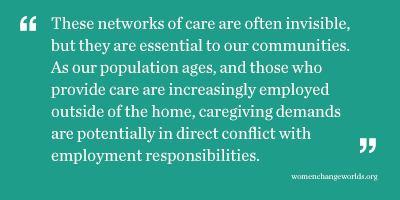
I invite you to share with us, in response to this blog, your highest hopes for women and girls, their families and communities, during the next four years. Have you chosen an issue to advocate for or work on? What do you care most about right now? How can we best work together to increase our power to make a difference? And, very importantly, have you asked any of the young women and girls around you what they think? Let’s start a conversation!

Layli Maparyan, Ph.D., is the Executive Director of the Wellesley Centers for Women at Wellesley College.


Caregiving across the Life Span

elderlymotherdaughter

November is National Family Caregivers Month, a time to recognize those who care for family, friends, and neighbors, including the elderly, sick and disabled. While the elderly are healthier now than in previous generations, about 17 percent of Americans 65 and older need assistance with one or more daily activities, such as bathing or dressing (Himes, 2002); many more need assistance with chores, errands or transportation. Family members in the community provide most of this assistance; for example, 26 percent of adult daughters and 15 percent of adult sons report spending at least 100 hours/year caring for or helping their older parents (Johnson & Lo Sasso, 2000).

While important, these numbers obscure the many ways in which we are each embedded in networks of care. Some of us are directly involved in hands-on caregiving, but care also encompasses “caring about” – paying attention in such a blogpullquoteCaregivingAcrossLifeSpanway that one sees and recognizes the need for care – and “caring for” – responding to other’s needs by taking responsibility for initiating caring activities (Fisher & Tronto, 1990).
I think of my 88-year-old mother, living independently, even though she is vision-impaired and cannot drive. Her children, who do not live nearby, call her regularly, provide financial support and make sure her bills are paid, and take responsibility for ensuring that she receives the care she needs. When they do visit, she has a list of chores ready for them. Her friends provide rides to church and occasional lunches out. Her neighbor calls her daily, takes her food shopping and to doctors’ appointments. Another neighbor brings her books on tape, and helps her figure out the technology to listen to the audiobooks. But my mother is not just a receiver of care. She calls friends who need to talk, makes sure that someone is checking on others living alone, provides advice and labor for activities at church, as well as advice to her children, neighbors and friends. In her younger days, she was the one providing transportation to others, visiting people in the hospital or at home, or providing housing and financial support for her adult children.

These networks of care are often invisible, but they are essential to our communities. As our population ages, and those who provide care are increasingly employed outside of the home, caregiving demands are potentially in direct conflict with employment responsibilities. This reality demands recognition of caregivers not just this month, but year-round, by employers who can provide workplace flexibility – to accompany someone to doctors’ visits, provide transportation, or help with food shopping – and paid family and medical leave for intensive caregiving when needed.

Nancy Marshall, Ed.D., is an Associate Director and Senior Research Scientist at the Wellesley Centers for Women at Wellesley College. She leads the Work, Families & Children team at the Centers. For more than 20 years, researchers on the Work, Families and Children team have studied the lives of children and adults, and the workplaces, early care and education programs and families in which they live, work and grow. The Team applies an ecological systems model to the study of the lives of children and adults. From this perspective, individual lives are best understood in the context of social institutions, such as families, the workplace, and early care and education settings.

Helping Children Deal with Traumatic Events

holdinghands

A message from Open Circle, the elementary school social emotional learning (SEL) program at the Wellesley Centers for Women:

"In light of the recent shootings in Newtown, Connecticut, we are writing to share some resources that school communities might find helpful at this time. This tragedy touches all of us, both near and far, regardless of whether we are educators, parents or students. Open Circle would like to offer its assistance during this difficult time by helping schools support students who, understandably, may have questions or concerns in response to this tragic event.

"Children may need reassurance that their classroom and school are safe places for them. It is important to recognize the needs of individual children who might have a harder time coping with this event than others. Often children who are blogpullquoteHelpingChildrenprone to anxious feelings or those with their own trauma history can be triggered by another traumatic event, even if it did not directly happen to them. In addition to the positive, supportive classroom climate and the social and emotional learning tools that Open Circle provides, some students may need additional time with a school psychologist or guidance counselor to help them manage their fears.
"It is also critical that adults get the support they need to help students with their questions and feelings about this tragic event. Modeling how to stay calm and knowing when to ask for help yourself will help reassure students of their safety and remind them that the adults in school will be there to take care of them.

"During difficult times, safety, consistency and predictability are critical to helping children maintain a sense of stability and psychological comfort. Open Circle provides a classroom routine and climate that is safe, consistent and predictable. Continuing to do Open Circle, as usual, is very important. Revisiting and applying the following skills and concepts may be one way to help students and adults as they deal with this traumatic event.

"Calming Down ...
Understanding Feelings ...
Speaking Up ...
Listening Skills ...

"Additional Resources
We recommend the following additional resources from the National Association of School Psychologists and the U.S. Substance Abuse and Mental Health Services Administration:

  • A National Tragedy: Helping Children Cope
  • Talking to Children About Violence: Tips for Parents and Teachers--English
  • Talking to Children About Violence: Tips for Parents and Teachers--Korean
  • Talking to Children About Violence: Tips for Parents and Teachers--Spanish
  • Coping with Violence and Traumatic Events: Tips for Talking with Children (by age group, in multiple languages)
  • Coping with Crisis--Helping Children With Special Needs
  • Tips for School Administrators for Reinforcing School Safety"
  •  

    Open Circle is a universal social emotional learning (SEL) program focused on two goals: strengthening students' SEL skills related to recognizing and managing emotions, developing care and concern for others, establishing positive relationships, making responsible decisions, and handling challenging situations constructively; and fostering safe, caring and highly-engaging classroom and school communities.

    Human Rights Month: Women Prisoners

    womenprisonsNew

    Massachusetts Corrections guidelines permit shackling women prisoners by one foot during birth and according to testimony given to the Joint Committee on the Judiciary in September 2011, women have left the hospital after giving birth shackled at their waist, arms, and legs. Such practices have been deemed a violation of the United Nations Convention against Torture, yet in a national study by the ACLU, such practices have been outlawed in only 18 states. Also, each year hundreds of women are held in the Massachusetts state women’s prison awaiting trial in the most overcrowded unit in the state, deprived of programs and family contact, because their counties cannot hold them, and they could not pay bail as low as $50.

    Both situations run counter to the Bangkok Rules adopted by the U.N. General Assembly in December 2010. Officially termed the United Nation Rules for the Treatment of Women Prisoners and Non-Custodial Measures for Women Offenders,” they expand government’s efforts to comply with international minimum standards for the treatment of offenders by emphasizing the special circumstances and needs of women. Certainly, the Rules impact was evident at an international conference, Women, Crime and Criminal Justice Practice: Diversion, Dignity, Desistance and Dignity, held at the University of Cambridge, January 2012. The U.K. participants reported on changes in the policies and practices affecting women offenders in the wake of a scathing report on the treatment of women prisoners issued in 2004, and participants from 18 countries spoke of the challenges of working with female offenders and their reform efforts.

    Although the average daily count of women prisoners in the U.S. is over 210,000, compared with 4,000 in the U.K., 2,000 in Italy, and 700 in Sweden, the circumstances and needs of women offenders throughout the world are remarkably similar. These include reproductive health and pregnancy; mental illness and substance abuse (often as co-occurring disorders); the separation from  dependent children for whom they have sole custody; experiences of violence andblogpullquoteWomenPrisoners trauma; lack of education and training; sexual victimization by criminal justice personnel; and restricted eligibility for state benefits.

    Many people in the U.S. believe that discussions of human rights belong in third and fourth world cultures; for many it is indeed surprising that a handbook, Treatment of Women Prisoners, based on the Bangkok Rules and written by advocates in Sierra Leone, could benefit women in the U.S. However, I recommend that policy makers, advocates and criminal justice personnel read this handbook or others like it together with recent ACLU reports on these important topics.

    The Massachusetts Women’s Justice Network (MWJN) platform for change in 2013, will focus on the reducing the numbers of women held in the state’s pre-trial unit and women’s health needs. For more information on the MWJN’s work, email ekates@wellesley.edu, and to learn more about the Bangkok Rules and ACLU efforts refer to:

    ACLU (2012). Briefing Paper: the Shackling of Pregnant Women & Girls in U.S. Prisons, Jails, and Youth Detention Centers. Washington DC: ACLU (2012). Briefing Paper: the Shackling of Pregnant Women & Girls in U.S. Prisons, Jails, and Youth Detention Centers. Washington DC: ACLU

    Mahtani, S. (2012) United Nations Rules for the Treatment of Women Prisoners: A Handbook.  Freetown: Sierra Leone. Advocaid.

    Pradier, C. (2012) Penal Reform and Gender: Update on the Bagkok Rules.  DCAF (Geneva Center for the Democratic Control of Armed Forces).

    Erika Kates, Ph.D. is a Senior Research Scientist at the Wellesley Centers for Women, Wellesley College, who directs the Gender & Justice Project on Women Offenders.

    Ending Violence – A New Year’s Challenge

    endviolence

    I can’t remember a time when our holiday season was more marred by violence than the one that just passed. Not only did the Sandy Hook Elementary mass shootings take place just days before Christmas (and in the middle of Hanukkah) in Newtown, CT, but there were also at least three other mass shootings in December (Happy Valley, OR, Frankstown Township, PA, and Webster, NY) – two of them seemingly “copycat” affairs. As if this weren’t enough, there were also mass shootings in October (Brookfield, WI), September (Minneapolis), August (Oak Creek, WI, and College Station, TX), July (Aurora, CO), May (Seattle, WA), April (Oakland, CA, and Tulsa, OK), March (Pittsburgh, PA), and February (Norcross, GA, and Chardon, OH) – making 2012 one of the most violent years on record for this kind of horror in the U.S.

    In fact, the whole thing became personal for me three days after the Sandy Hook shooting when Sean Louis Callahan – the mate of one of my dear former students and a new policeman only four months into the career of his dreams – was fatally shot in the head and neck after responding to a domestic violence call in a hotel in Clayton County, GA. The perpetrator, who was also fatally shot in that incident, was a previously convicted felon. That a loved one of somebody I care about had to go down to stop such a potential tragedy only fuels my fire for doing something about the normalization of violence that pervades our society.

    These mass shootings – as horrific as they are – are just the tip of an iceberg of normalized violence that is taken to extremes when mental health concerns, gun control issues, unresolved social oppressions, gender issues, and even economic insecurity are added to the mix. Taken together, these things are “always already” a powder keg waiting to blow up. Often these things are normalized in ways that keep us from seeing them unless we really look hard.

    Over the holiday break, for example, I had a chance to visit Disney World with my family. Primed by recent events, never before had I noticed the degree to which guns are embedded as entertainment everywhere from Frontierland to Tomorrowland. As much as I love Disney World as a fun getaway for multiple generations, I found myself irked by these seemingly “harmless” portrayals of “guns as good” to kids. I also observed the still tremendous amount of normalized sexism presented as entertainment in a theme park that, on one level, appears to valorize women and girls through its emphasis on princesses. Listening to the “Carousel of Progress” – which features a father figure from different historical blogpullquoteEndingViolenceeras cracking jokes at the expense of his wife and daughter, among other things – for probably the fifth or tenth time in my life, I thought, “When is Disney ever going to progress to gender equality (or racial equality, for that matter)?” As someone who grew up in Florida, I love Disney World, and my point is simply some of the sources of violence in our society are “hidden in plain sight.”

    Recent cases of gender-based violence, as well as the gendered dimension of recent episodes of violence that seemingly had little to do with gender, remind me that we can never look at violence in isolation. The shooting of 14-year-old girls’ education activist Malala Yousafzai of Pakistan, which I blogged about previously, was an attempt to suppress through violence women’s advancement to gender equality. The recent fatal gang-rape of a woman on a bus in Delhi, India, is an example of sexual aggression, which affects many women all over the world on a daily basis – from the epidemic war rapes of women in the Democratic Republic of Congo to commercial sexual exploitation and rape of women, girls, and boys all over the United States and elsewhere. The 40 million “missing girls” in China reflect a more systemic form of violence that comes from societal bias against women and girls.

    We must also look, however, at the ways in which masculine socialization normalizes and even encourages aggression – which, in its most extreme cases (when combined with mental illness, economic marginalization, racial/ethnic/religious hatred, or misogyny, for instance) becomes violence, often horrific violence. Media depictions of gun violence, for example, whether in movies, music, or video games, feed into this masculine socialization by linking guns with “cool” – not just for U.S. men and boys, but for men and boys across the globe. If we stop short of examining these connections because we don’t want to face what we might have to change, we are shooting ourselves in the foot (or worse).

    Obviously, violence isn’t just a U.S. thing. Anyone who has been able to sit through the constant stream of gruesome news reports from Syria, for example, has felt gut-level anguish over the seemingly interminable civil conflict there, particularly the wounds – many of them fatal – to innocent children. Violent civil conflicts and other insurgencies are now generating death and devastation in numerous parts of the world, from the Democratic Republic of Congo, Sudan, and Mali to Burma, Afghanistan, northwest Pakistan, Iraq, Mexico, and Colombia. The autumn flare-up of hostilities in the Israel/Palestine region and renewed violence in Egypt added to the somberness of this year’s holiday season. As we stand by from the safe distance created by our TV and computer screens, even this kind of violence has become dangerously normalized and numbing. Often, we are paralyzed into believing that there is nothing we can do.

    I write this today because I beg to differ. I truly believe that violence can be eradicated, and that we have the power to make it happen. “You may say I’m a dreamer, but I’m not the only one.” With this New Year, let us resolve to even explore the possibility of ending violence in our world – of truly creating a peaceful and nurturant global society – and to commit to taking the small (and big) steps that will lead us in this direction.

    Please join me in 2013, if you care about these issues, by making three commitments:
    1) I commit to the belief that we can eradicate violence,
    2) I commit to engaging in honest and sophisticated discussions about the causes of violence as well as earnest searches for ways to reduce and eliminate violence, and
    3) I commit to taking whatever personal and professional steps I can take to make ending violence a reality, and to work with and support others at home and globally who are doing the same.

    One of my favorite quotes is attributed to Milarepa, a one-time murderer who eventually became a Buddhist sage: “In the beginning, nothing comes. In the middle, nothing stays. At the end, nothing goes.” In our efforts to end violence in our world – in our nations, in our neighborhoods, in our homes, and in ourselves – let us commit to a beginning, a middle, and an end, knowing that if we are patient and persistent and creative and compassionate, we will get there.

    Layli Maparyan, Ph.D., is the Executive Director of the Wellesley Centers for Women at Wellesley College.

    In quest for equity, sports and combat are sisters

    helmets

    How perfect that National Girls and Women in Sports Day (who invented this cumbersome name?) arrives as the military prepares to lift it’s ban on women serving in combat.

    The barriers that women have faced to such service sound like the battle for equal access and treatment in sport.

    How so?

    Just step back and consider that the barriers, the arguments against women have focused on three central ideas (the three “I’s”): the presumption of women’s physical inferiority, the perceived immorality of women serving alongside men, and worry that women would be injured.

    Drop those three I’s onto sport and those arguments – inferiority, immorality, and injury – have been the rhetoric used to limit and bar women from equal access to competition, whether it was 1970s Little League or ski jumping (finally to be included in the 2014 Olympic games).

    In many countries, girls and women still do not have access to regular sports participation. In many urban areas, strapped families do not value or can’t afford to let daughters play sports.

    This is not merely a problem of fitness, but of political, social, and economic equity. Sport is not just about play, but about parity.

    When President Roosevelt signed the G.I. Bill of Rights on June 22, 1944, the official text of his public statement recognized “service men and women” in the opportunity to resume training and education. Reality looked different. Even women who flew B-26 Marauder medium bombers on service missions could be declared “nonveterans” and made ineligible for benefits. Many in that generation of women didn’t get the government-funded college education they earned.

    Women have been serving on the front lines. As the battlefield has become less clearly defined with danger available at most pay grades, it is time for women to have the same access to assignments and the economic and career benefits that come with combat-level commissions.

    There is grumbling. Worries about sexual harassment (immorality) fail to recognize that half of the assaults are against men. That’s a problem of unacceptable behavior, not of gender. Injury? Unfortunately, women are already getting injured and even dying — alongside men.

    The physical inferiority piece is more interesting. It raises questions of physiological differences and the relevant question: What do you really need to be able to do, physically, to perform?

    blogpullquoteQuestForEquityIn a recent NY Times story exploring how military fitness tests will change with the new admission of women, we learn that those are all under review. But Greg Jacob, former commander of the training school for enlisted Marines at Camp Geiger, N.C. points out that he saw women who couldn’t complete two pull-ups be able to pump out eight in a matter of months, “because they were training to that standard.”

    Females have never before trained for combat. Just imagine what it will mean to have women push themselves physically to a new level. Remember the surge in performance following women being allowed to run the marathon?

    Come to think of it, equal access to combat may be just the thing to bring women’s athletics to new heights.

    Laura Pappano is writer-in-residence at the Wellesley Centers for Women at Wellesley College, and an experienced journalist who writes about education and gender equity issues in sports. This post is courtesy of her blog, FairGameNews.org.

    Missive from the 57th UN CSW

    layli at UN

    It’s International Women’s Day, and I’ve spent the last week attending the annual meetings of the United Nations Commission on the Status of Women (CSW) – for the first time. As a starry-eyed youngster who used to collect pennies for UNICEF every Halloween when other kids were collecting candy, I always dreamt of being involved with the U.N. in some way. Now, here I am, representing the Wellesley Centers for Women in its capacity as a nongovernmental organization (NGO) with consultative status at the CSW under the banner of the U.N.’s Economic and Social Council (ECOSOC). It has been an eye-opening experience – one filled with a mix of awe and inspiration, counterbalanced by a healthy dose of critical reality checks.


    My week began at the opening session of this 57th CSW, which was presided over by Her Excellency Madame Marjon V. Kamara, Ambassador of Liberia to the United Nations and Chair of the CSW, newly re-elected for a second term. The priority theme of this year’s meetings is “Elimination and Prevention All Forms of Violence Against Women and Girls.” During the opening session, high-level statements were offered by a representative for the Chair of ECOSOC, who acknowledged that gender-based violence must be eliminated completely, and the Deputy Secretary-General of the U.N., who argued with some passion that ending violence against women is a matter of life and death and that we must channel our outrage into action. The highlight of the session was a speech by Michelle Bachelet, Head of UN Women and former president of Chile, who informed us that the 57th CSW, with its many country representatives as well as over 6,000 registered NGOs, was the largest-ever convening on the topic of ending violence against women and girls (VAWG). As such, she indicated, it represents an historic opportunity to take responsibility for ending violence against women and girls. Although I enjoyed these august speeches from the glamorous environs of the overflow room, having arrived a day too late to garner a coveted ticket to the U.N. General Assembly Hall, their messages stuck with me and set the stage for the rest of the week.

    The 57th CSW continues for another week, but today – International Women’s Day – is my last day here. On this day, there are festive celebrations and commemorations that will break up the grind of the regular daily meetings, which cycle between three-hour long sessions of 10-minute country reports, day-long in-and-out “informal” conversations (where the real work of negotiation gets done), “official” CSW side events, and “unofficial” NGO parallel events. As I prepare to depart, I find myself reflective with regard to the events of the week. Three themes in particular are holding my attention: First, is a global consensus finally emerging around issues related to women and girls, particularly with regard to ending violence against women and girls and more generally with regard to the theme of gender equality? Second, what will the post-2015 global development agenda look like? Although ending VAWG is the official theme of the 57th CSW, there has been a great deal of discussion around what will happen after the Millennium Development Goals expire in 2015 – and this theme will serve as the centerpiece of the next two CSW meetings, in 2014 and 2015. Third, what role do civil society organizations (CSOs) – particularly those, like ours, that are feminist, womanist, or woman- or girl-centered – play in advancing women’s and girls’ issues, at the U.N. and beyond? A recent article in the Stanford Social Innovation Review suggests that, with regard to some issues (such as ending VAWG), the role is indeed great. This gives us – as people who work at, stand with, or support WCW, a CSO with a longstanding reputation for high-quality research, innovative theory, and influential action programs – even greater impetus for all we do.

    All next week, I will continue blogging about these themes as I track the progress of the CSW to its final conclusion on Friday, March 15th. My trip to the CSW – a first, but certainly not the last – has been productive and illuminating. Yet, it has also introduced me firsthand to the “realpolitik” of advancing justice and wellbeing for women and girls around the world. Since such change is WCW’s reason for being, I look forward to dialoguing about the issues.

    Layli Maparyan, Ph.D., is the Executive Director of the Wellesley Centers for Women at Wellesley College.

    Is A Global Consensus Emerging on Women’s Issues?

    LMNGODEL

    As we hurtle towards the conclusion of the Millennium Development Goals (MDGs) in 2015, some of which have more or less been met and others of which remain very far from target, there seems, at least based on the most recent United Nations on the Commission on the Status of Women (UN CSW a/k/a CSW57) meetings, to be something of an emerging global consensus about women’s issues.

    First, there is now a nagging sense that eradicating violence against women and girls (VAWG) is “the missing MDG.” In fact, Michelle Bachelet, the Director of UN Women, stated this forcefully in her opening remarks at the 57th UN CSW last Monday. “Ending violence against women is the missing MDG that must be included in any new development framework. We need a stand-alone goal on gender equality with gender mainstreamed across all other goals.” Bachelet’s statement also indicates a growing international consensus around women’s empowerment and gender issues more generally.

    The fact that the authors of the MDGs didn’t think to include ending VAWG as a global development objective both highlights glaring flaws in the process that produced the MDGs in the first place and sets the stage for greater inclusiveness and attention to women’s issues, especially the eradication of VAWG, in the probable “next” global development model, currently being referred to as the post-2015 development agenda or framework. This emerging framework was the subject of a UN CSW parallel session called “The Post-2015 Development Agenda: What’s at Stake for the World’s Women?” This session was sponsored by the Post-2015 Women’s Coalition, self-billed as “a coalition of feminist, women’s rights, women’s development, grassroots and social justice organizations working to challenge and reframe the global development agenda.” The panelists noted that the MDGs were created through a process that was less than consultative and that women came late or not at all to the conversation. In contrast, the post-MDG process is proving to be highly and purposefully consultative – perhaps too consultative, as some have only half-jokingly suggested – and there is a sense that women and women’s issues must be prominent and interwoven in terms of both process and content.

    Second, it has become clear that eradicating VAWG specifically and gender equality more generally are preconditions of success for virtually all other planks of global development. Feminists, take a bow, because intersectionality-–the concept that both social identities (such as sex, race, and class) and social oppressions (such as sexism, racism, and classism) are interlocking, co-constitutive, and co-relative – was all abuzz in these discussions. It is fair to say that no one at this conference would argue that the next development model can proceed without fundamentally acknowledging the intersecting nature of all social inequalities and articulating the principle of gender equality as a necessary premise of all global development. My sense was that, all lingering controversies aside, maybe we’ve actually reached global tipping point with regard to recognizing the principle of women’s equality and the principle of the unacceptability of violence against women and girls. But, of course, principles alone do not a reality make.

    At the meeting, there has been well-articulated recognition that not only are all women’s issues intersectionally interconnected with all other development goals, but also that, because of intersectionality, development models must disaggregate the experiences of different groups of women (and men, indeed, people of all genders) with regard to the various development goals. UN-level, country-level, and NGO-level speakers acknowledged at this meeting that global targets and even country-level targets are insufficient because they often fail to capture the very different experiences of diverse populations within a country. On a more blogpullquoteGlobalConsensusEmergingpragmatic level, it was pointed out that the statistical apparatus which will make disaggregation of data possible on global or country-level indicators remains to be designed or put into place.
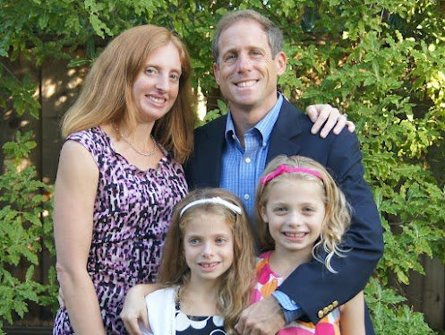
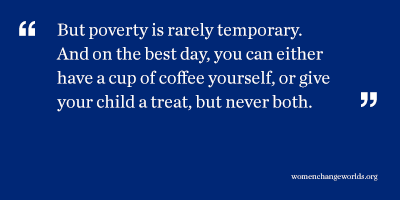
    For example, with regard to MDG 3, which aims to eliminate gender disparity in primary education, urban and rural girls or girls from different socio-economic statuses or racial or religious backgrounds within a country often achieve educational parity at different rates and face different constraints in the achievement of access to primary education. With regard to MDG 5, which involves reducing maternal mortality and increasing access to reproductive health resources for women, similar differences among women evince but are not currently well captured in the indicator data. Thus, speakers have argued, development goals must have quantitative (“this many”) as well as qualitative (“this well”) targets to address the real needs of sustainable human development. It is pertinent to note, however, that NGOs play a crucial role in the provision of the needed data that show these kinds of differences--both quantitative and qualitative--and helping to define the meaning and causality of the differences in outcomes. Women’s research centers, take heed!

    Thus, there was evidence during my week at CSW57 that a global consensus on women’s issues is emerging. It is fair to say that we have perhaps reached the global tipping point with regard to the acknowledgment that violence against women and girls is unacceptable and must be eradicated. Additionally, we have perhaps achieved global consensus about the value, although maybe not the particulars, of women’s empowerment, at least at the level of state actors. There are of course, cautions. This consensus does not imply that nations, cultures, and subcultures are in agreement about what women’s empowerment means or looks like, or about the frameworks to use when creating rationales for eradicating VAWG. Stark religious differences have been in evidence at CSW57 as they have been at virtually all UN meetings pertaining to women and gender, and lines of conflict and contestation still run deep. Similarly, regional differences have been in evidence, particularly, for example, between the countries of the European Union and some Middle Eastern nations. I also observed interesting differences between countries with high populations of recognized indigenous people (in Latin America or the Pacific Islands, for example), and nations whose populations are more uniformly non-indigenous in self-characterization.

    One test of this consensus will come at the end of the week when the participants in CSW57 do or don’t come up with a list of agreed conclusions. In the history of the UN CSW, according to one knowledgeable scholar I met at the meetings, only once has a meeting ended without a list of agreed conclusions--and that was last year. Michelle Bachelet herself acknowledged the possibility that language will have to be “toned down” to make a set of agreed conclusions possible from this meeting. So, stay tuned as we follow this CSW57 journey!

    Layli Maparyan, Ph.D., is the Executive Director of the Wellesley Centers for Women at Wellesley College.


    It's a SNAP: Living on Four Bucks a Day

    SNAPfoodChallenge

    This blog appeared originally on YWCatalyst blog. Author Peter Biro is the husband of Nova Biro, a participant in LeadBoston, YW Boston’s experiential executive leadership program which explores key equity issues facing Boston. As part of its examination of poverty, LeadBoston 2013 participants undertook the Supplemental Nutrition Assistance Program (SNAP) Challenge (feeding yourself on four dollars a day for one week). To support Nova, the entire Biro family participated in the Challenge to better understand food insecurity. Here, Peter reflects on the experience:

    I rarely decline a cappuccino any time of day, and certainly never first thing in the morning, but last Thursday I had no choice. To support my wife Nova, our family went on a diet. We were trying to shave not calories, but dollars: her mission was to complete the “SNAP Challenge” as part of her LeadBoston program, and experience issues of poverty firsthand by limiting our daily food spend to what poor families can afford. That number, per person, is only four dollars a day.  

    So, the Thursday morning cappuccino that rang in at $4.25 was not in the budget.

    If you are lucky enough never to have thought about the breakdown on four bucks a day, as many reading this have not, you eventually arrive at a few other non-obvious conclusions. First, you have to allocate the $4 among your meals--say, 50 cents for breakfast, 1 dollar for lunch, 2 dollars for dinner, and 50 cents for “other” 50 cents for other is just not a lot. In that world, if someone offers you free food, whatever the kind, you probably take it. Second, as characters in Frank McCourt’s Angela’s Ashes, about growing up poor in Ireland could tell you, alcohol is a budget-killer. Say your addiction is on the opposite end of the spectrum like mine and you need a cup of coffee. Cheap will do. That’s about $0.25 if you make it yourself.  

    The issue in both cases is that the $0.25 has to come from somewhere. So taking your children out for a ice cream or a treat is a non-starter.  
    blogpullquoteFourBucksaDay What are some cheap nutritious foods? In no particular order, the Biro family’s diet last week consisted of rice, beans, potatoes, inexpensive meat (specifically split chicken breasts on sale, and stew meat on sale), bananas, eggs, carrots (but you have to peel them yourself--having the factory do the work for you and turn them into baby carrots costs too much), pasta, homemade pancakes, nuts, oatmeal and super cheap granola bars we bought in bulk (more on this later). We bought a small crate of “Clementine” oranges on sale for $6, or $0.20 apiece. We made homemade pizza one night, with dough from scratch costing roughly $0.40, the sauce about $1 and mozzarella at $3, totaling not quite $5 for 2 pizzas, with leftovers for lunch. We did buy fresh broccoli, which is expensive at $0.30 per serving, so we didn’t have much.  Frozen vegetables are usually cheaper, but not always. Lentils are cheap and high-quality calories but we didn’t get those in.  

    Greasy tortilla chips are cheap--low quality, to be sure, but cheap. It is true, as has been noted many times by those studying childhood obesity, that two liters of soda (for about $1 on sale) are much cheaper than a half gallon of orange juice (about $3.50 on sale) or milk.  

    Besides designer coffee served by a disgruntled barista, other luxuries were out.  Berries. Flank and high-quality steak. Lamb. Brand names. Good apples out of season cost $1.33 each. So, you can eat a granny smith in March, but you have to give something up.  

    My daughter Sophie and I typically spend Tuesday afternoons together and share a piece of cake ($4) and bring one home for my wife and other daughter ($4). We knew this had to go. So, last week, Sophie and I split a mini-cupcake for $1.  

    We worked over the crumbs for a while. This was a theme all week.

    This experience with my daughter really got my attention. My wife and I know how to improvise in the kitchen, and the convenience of leftovers makes them a way of life for us already, so fitting different ingredients into this model didn’t jar us. For Sophie and me to go without our usual dessert was not that big of a deal either, because in truth, we knew we could resume it next week. It was temporary. But poverty is rarely temporary. And on the best day, you can either have a cup of coffee yourself, or give your child a treat, but never both.  

    My family adapted. Sophie resiliently offered, “That’s OK dad, I don’t need the big piece anyway.” I checked the daily sales at our local supermarket and, for example, bought a “Five Buck Cluck," a pre-roasted chicken on sale on Thursdays for $5. That’s meat for four of us, plus a little extra, plus the basis to make stock instead of buying broth at $0.80 per can. We used things that we had bought before in bulk--on a per-serving basis, much cheaper. A granola bar from a small box cost $0.40, but from a Costco-sized box, it’s about $0.10.  

    But families in poverty, I imagine, cannot adapt this way. They might not have time to check in at  the market every single day. Yes, shopping at Costco saves money in the long run. But if you are poor, it’s not in your neighborhood. How do you get there? How do you have the money upfront to pay for everything? How do you get it back home? Where would you store it? And  you can’t spend, in the form of foregone wages, nearly $22 to make the 3-hour round trip; $22 is food for six days. At the same time, you probably have to shop for food much more frequently, which is a tremendous time burden for people already stretched to the limit.

    This made us think about the broader issues.  

    Tight food budgets bring the pervasiveness of cheap processed foods into sharp view. I don’t know what happens to the economy if the minimum wage goes up $1. I do know, that an extra $1 equals $40 per week and would increase the food budget of a family of four by almost 35 percent. A huge impact.    

    Most importantly, I remember the anxious feeling after exhausting the daily $4. Not hunger pangs--we had full pantries in a warm spacious house in a safe neighborhood. The anxiety was rooted in this: for someone on $4 per day for food, food insecurity is rarely the greatest of their challenges.

    Peter Biro is husband of Nova Biro, co-director of Open Circle, a social-emotional learning program for grades K-5, based out of the Wellesley Centers for Women, Wellesley College. Biro and her family's food challenge were featured on Yahoo News.

    The Best of What We Bring through Sports

    BStrong

    Sometimes sports brings out the worst in us. Players taunt. Parents criticize. Coaches belittle. And at other times it is within the context of sports that a spotlight is shined on the best of the human spirit. There are many things that I love about sports participation and spectating. I am easily entranced by the last second shot, sudden death, or match point. There is an inexplicable infatuation with the striving for the perfect pass, play--the hat trick.

    It is a passionate pact between player and spectator. As much as anything else that passion effusing from spectators is what was under attack on April 15th on Boston's Boylston Street. The very nature of the Boston Marathon–-so heavily focused on the rise of perseverance; the goodness of encouragement from family, friend, and stranger; and the sheer will to keep at something--made the violence even that much more sickening.

    blogpullquoteBringthroughSportsIt was no surprise that our sports teams looked for a way to publicly display their solidarity with the people of Boston and the marathon victims – 617 Boston Strong hung on a t-shirt in the Red Sox dugout (617 is Boston's area code.) We wanted something from them. We expect our teams to be a reflection of ourselves. Cheering for our teams becomes cheering for ourselves. The patriotic and spiritual rituals that have become matter-of-fact elements of the generic sporting event (e.g. national anthem, heaven looking) suddenly become more meaningful gestures to express our humbleness, our unity. Never have I heard a stadium crowd sing the national anthem with such magnitude as the opening Bruins game following the bombing.
    Each year I am a spectator in Hopkinton--the starting line of the Boston Marathon. I am in the crowd that sends off the 27,000 runners from the start line with waves and cheers. I am repulsed by what I sent them to. I am heartened, though, that the other human beings 26.2 miles ahead were there to hold them, to comfort and care for passionate spectating victims, to dismiss fear, and to let the best of what we bring through sports shine through.

    Georgia Hall, Ph.D., is a senior research scientist at the National Institute for Out-of-School Time at the Wellesley Centers for WomenWellesley College, is a sports enthusiast who specializes in research and evaluation on youth development programs.

    Women, Employment & Health

    WomenEmploymentHealthThis commentary appears in the Research & Action Report, Spring/Summer 2013 Volume 34 • Number 2 (forthcoming), published by the Wellesley Centers for Women.

    When we think about employment and health, we often think about high risk jobs and occupational safety. The recent deaths of first responders in Massachusetts and Texas highlight these serious concerns. However, many workers are exposed to unhealthy conditions that, while not lethal, seriously affect their health.

    Trends in the new economy of downsizing, job instability, increased workload and longer hours have led to rising concerns about the health consequences of occupational stress. While both men and women experience stress-related illnesses, women are twice as likely as men to suffer from these consequences due to unhealthy working conditions. Jobs with heavy demands and little latitude in managing or meeting demands are particularly stressful, and women of all races, as well as men of color, are more likely to work in jobs with this combination.

    blogpullquoteWomenEmploymentHealthWhile women’s participation in the work force is quite similar to men’s, the occupations and environments vary greatly. In 2009, 44.6 percent of women worked in just 20 occupations, and most of these occupations were heavily female, such as nurses, teachers, maids and housekeeping cleaners, health aides, and clerks—most of which have higher emotional demands. We need to ensure that researchers are examining the effects of emotional work so that employers can identify and implement ways to reduce the stress of these emotionally demanding jobs. In addition, women in the health and education field experience more nonfatal occupational injuries than would be expected in the general workforce; typical injuries include low-back pain, asthma, and exposure to infectious, biological, or chemical hazards.

    How can employers and policymakers protect women’s health?

    Women need the same protections that men do—standards for workplace health and safety, regular inspections and monitoring of injury rates, and research to develop health and safety practices. However, all too often, women, and women’s occupations and health concerns, have been left out of the funding priorities for research and innovative practices.

    But other workplace factors have negative health implications for women employees, too. For example, as women are so concentrated in a select set of occupations, this results in some workplaces where women are not well represented and where they may be less empowered. Research shows that these women are more likely to experience sexual harassment in the workplace—nearly one-quarter of women report having experienced sexual harassment and 58 percent have experienced potentially harassing behaviors at work. We know that sexual harassment affects psychological well-being and increases psychological distress. Since we know that women are at greater risk for sexual harassment, especially in workplaces that have a climate in which workers believe that reports of harassment will not be taken seriously or will not have consequences for the harasser, it’s essential that employers implement and enforce policies that create a climate that promotes equity and respect and does not tolerate sexual harassment.

    Additionally, workers—women and men—have families. Their responsibility to care for young children or aging parents does not end when they enter the workplace. However, despite the increasing involvement of men in caregiving, women still bear a greater burden. For example, married mothers take on almost twice the hours of married fathers each week to address family and home responsibilities. Caregiving for children and aging parents also falls more heavily on women’s shoulders.

    How does this affect women’s employment and their health?

    Work and family balance issues are a health risk for women with children... Read more of Marshall's commentary>>

    Nancy Marshall, Ed.D. is an associate director and senior research scientist at the Wellesley Centers for Women at Wellesley College. She leads the Work, Families and Children Team at WCW and studies women and employment, with a focus on working conditions and health and work-family systems, as well as child care policy and early care and education. She authored the chapter, “Employment and Women’s Health,” in M.V. Spiers, P.A. Geller & J.D. Kloss (Eds.), Women’s health psychology (46- 63). New York: John Wiley & Sons.

    The Time Is Now for Women and Girls

    AfricanMotherDaughter

    This article was originally published May 10, 2013 on Huffington Post by Alex Sanger, chair of the International Planned Parenthood Council and member of the Wellesley Centers for Women Council of Advisors.

    What do a collapsing sweatshop in Bangladesh, the denial of a lifesaving abortion to a young woman in El Salvador and the kidnapping, rape and torture of three women in Cleveland have in common?

    They exemplify the fact that women are not just second-class citizens, but not considered citizens at all.

    Right now, we have the chance to change this reality by creating a wise, strategic and human-centered development agenda centered on women and girls. After months of work, civil society, private sector and government heavyweights will gather in New York this week to chart their vision for the future of global development. As members of a high-level panel tasked with advising the United Nations Secretary General on key areas of investment, leaders like Liberian President Ellen Johnson Sirleaf and UK Prime Minister David Cameron will have the difficult task of balancing a number of competing and important global priorities like education, employment, water, and health at the group's final meeting.

    At the top of their list should be the health and rights of women and girls.

    blogpullquoteTimeIsNowWe have waited too long! In 1994, governments agreed to an ambitious Programme of Action to achieve gender equality, eliminate violence against women, and ensure access to basic sexual and reproductive health services. Since that time, this landmark agreement has been reaffirmed, even providing the roadmap for the creation of the Millennium Development Goals that aimed to reduce poverty and ensure universal access to reproductive health.

    Yet despite the many promises and commitments signed throughout the years, women's human rights and health remain a distant dream for many. Today, one in three women around the world will be raped, beaten, coerced into sex or otherwise abused in her lifetime. Today, more than 200 million women want--but are unable to access--basic contraceptive services. Today, the largest-ever generation of adolescent and young women are increasingly at risk of HIV infection, many times lacking information on how to protect themselves and the power to negotiate condom use with their partners.

    We know--as generations before have professed--that we cannot achieve sustainable development, that we cannot build healthy and empowered communities and nations when we continue to deny half the world's population their basic human rights and fundamental freedom.

    This week, as the panel finalizes its recommendations for Secretary Ban Ki-moon, we call on panel members to prioritize:

    • Universal access to quality and comprehensive sexual and reproductive health services, including safe abortion
    • Universal access to quality education for women and girls, including comprehensive sexuality education
    • The elimination of all forms of violence against women and girls
    • The guarantee of women's rights, gender equality and women's empowerment, including their right to live free of discrimination and participate freely in political, economic, environmental and social decision-making spheres
    • The development of mechanisms within the new global development paradigm that hold governments accountable to clear, time-bound commitments.


    As the world gears up to enshrine a new set of global development goals and agreements, it's time for us to keep our promise to women and girls. We have an unparalleled opportunity to secure a sustainable world of justice, choice and well-being for all people, and without a doubt, we need healthy, empowered women and girls to ensure that our planet can continue to care for us all.

    Alexander Sanger is the author of Beyond Choice: Reproductive Freedom in the 21st Century, published in January 2004 by PublicAffairs. The grandson of Margaret Sanger, who founded the birth control movement over eighty years ago, Mr. Sanger is currently Chair of the International Planned Parenthood Council and has served as a Goodwill Ambassador for the United Nations Population Fund.

    Opt-Out Revolution 2013

    NYTimesMagCoverLast Sunday’s New York Times Magazine article provides a follow-up on the women of the so-called Opt-Out Revolution that the Times first heralded in 2003. The Times rightly points out the price these women have paid--and the forces that pushed them out in the first place--the culture of Motherhood and an inhospitable corporate culture among them. Erin Gloria Ryan, at Jezebel.com provides an even more pointed critique of the “promises” of opting out.

    But both articles miss the most important point–the Opt-Out Revolution was not a “revolution,” it was a media creation that took a drop in employment rates among mothers of infants in the 2000 Census, and the experiences of a few women with husbands with high salaries during an economic period when the haves seemed to have it all--pre-Great Recession--and used that mythology to suggest that the reason women don’t fare as well in the workplace is because “they choose not to” (see the cover of the original NYT article). In fact, a study by Sharon Cohany and Emy Sok published in the Monthly Labor Review reported that the labor force participation rates of mothers of infants, with husbands earning in the top 20 percent of incomes, had the largest declines in 2000, but their participation only declined nine percentage points, from a high of 56 percent employed in 1997 to 47 percent in 2000, and 48 percent in 2005. While the decline was real, at least for women with husbands who could support the family, it was hardly a revolution.

    blogpullquoteOpt OutRevolutionMeanwhile, media and popular attention remains focused on the message that women should solve the problems we face--of unfriendly workplaces, long work weeks, glass ceilings, and some men’s unequal sharing of household and parenting activities (often justified by workplaces that still think all men have wives who will support their husband’s careers)--by their personal, individual actions, rather than by our collective action to challenge the inequalities built into our economy, inequalities of gender, class and race. Women in the professions and in managerial jobs, who are most likely to be forced out, need redesigns of their fields to allow women--and men--during their parenthood years, to parent in the ways they value. There are top employers who have already figured out how to do this, including American Express, Johnson & Johnson, General Electric and Bristol-Myers Squibb. These changes to support working families need to be combined with changes that address the growing income disparity between the top 20 percent and the bottom 20 percent, and the consequences this has for financial well-being, as well as for the best interests of women, children, and men.
    Nancy Marshall, Ed.D. is an Associate Director and Senior Research Scientist at the Wellesley Centers for Women (WCW) at Wellesley College. She leads the Work, Families and Children Team at WCW and is an Adjunct Associate Professor at Wellesley College.

    “Having it all,” “Lean in,” or “Work-life Balance”-- Asking the right questions

    WorkingMomSheryl Sandberg’s recent book, Lean In, created a media frenzy. Before that, Ann-Marie Slaughter’s 2012 article in The Atlantic, “Why Women Still Can’t Have It All,” was hailed as another round in the Mommy Wars. It’s time to call a truce.

    I’d like to begin with a brief personal history. When I was ten, my parents divorced. While my father provided some financial support, it was not enough to support four kids. So, when I was 13, my mother put my four-year old brother in nursery school and went back to work. I learned at my mother’s knee that women do what they need to do to take care of their families.

    By the time I was 25, I had worked as a babysitter, cafeteria worker, sales clerk, library clerk, passport adjudicator, child care teacher, community organizer, drug program counselor, and research assistant. As a child of the second wave of the women’s movement, I had sung along to Helen Reddy’s I Am Woman, hear me roar. I knew about women’s work.

    blogpullquoteAskingtheRightquestionsWhen I was 39, I gave birth to my daughter. I took a few months off with her, using up most of my sick leave, because this was pre-Family Medical Leave Act, and Wellesley College did not yet have paid parental leave. While at home, I discovered that parenthood was hard work, work that required a different rhythm than my paid work.
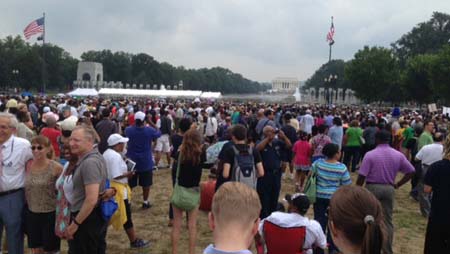
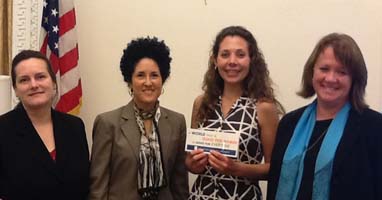
    All of these experiences have informed my teaching and research on women’s experiences with paid work and family work.

    Over the years, I have seen the question, “Can women have it all,” raised repeatedly. These debates have never been satisfying, because I felt they were asking the wrong question. The reality is that almost two-thirds of women with children under the age of six are employed. Overall, women’s rates of employment are fast approaching men’s. Moreover, employed women are even more likely than women not in the labor force to have children.

    According to the research, for most women, as for most men, employment has its ups and downs. Good jobs contribute to health and well-being, including self-esteem and feelings of efficacy, and provide opportunities to make a contribution to others. Bad jobs are exhausting, mind- and body-numbing and bad for our health and the health of those around us. One of the questions employed women and men ask is, “How can I find and keep a good job, a career that I enjoy and value?”

    But what about “having it all?” I hear many young women concerned about whether their job and career choices will jeopardize their future family, and whether their desire for a family will inhibit their ambitions.

    The research clearly shows that combining paid work with raising children is actually a positive for most women and men. Paid work provides working parents with the income to raise their families, and can provide a sense of well-being that spills over to home, while providing a balance in their lives.

    Even when combining work and family is stressful, most workers report more benefits from the combination than drawbacks. For the majority of women, and men, the question is, “how can I manage the stresses, and what can my employer do to support me to be the best worker as well as the best parent?”

    Based on the research, I second Sheryl Sandberg’s advice: “don’t leave before you leave.”

    However, for some parents, work and family is difficult to manage. Because mothers still do more of the day-to-day work of parenting young children, mothers of babies sometimes face more work-family conflict than they can manage, especially if they have very demanding jobs, or very demanding home lives, such as a baby who is sick more than other babies are. Parents with larger families, a serious illness or crisis in the family, or with one or both adults employed in demanding jobs, may find that home demands cannot be met while maintaining demanding jobs, and something needs to give.

    For these people, the question is, “how can I manage caring for my family?” For Anne-Marie Slaughter, and others like her, the answer to that question was to make changes in their paid work. Dr. Slaughter chose to leave the Washington D.C circles of power for a full-time job as a professor, where she could be more available to her family; others choose to take time out from paid work, or to leave completely.

    It’s time, then, to stop the media fascination with the “Mommy Wars.” No one wins in the current climate. Instead, we need to step up to the challenge of creating good jobs for all workers, and providing parents with needed supports, including family-friendly workplaces, as well as affordable child care and health care.

    Nancy Marshall, Ed.D. is an Associate Director and Senior Research Scientist at the Wellesley Centers for Women (WCW) at Wellesley College. She leads the Work, Families and Children Team at WCW and is an Adjunct Associate Professor at Wellesley College.

    Reflections on the March on Washington

    Social Scientific Perspectives on Making Change in AmericaBlogMarchCrowd

    Yesterday I attended the 50th Anniversary of the March on Washington with two members of the WCW staff. We had been in Washington, D.C., for a series of meetings--indeed, we had just met with a liaison to the White House Council on Women and Girls earlier that morning--and we wanted to be a part of this history. The fact that my own mother had been a civil rights activist in the early 1960s was part of my inspiration to attend this event and share in the national moment on reflection on how far we had or hadn’t come in terms of meeting the deeply enshrined American ideals of equality and justice.

    WCWHSWHCWGDuring the flight home, as I reviewed the day’s remarks by three U.S. Presidents-- Carter, Clinton, and Obama--vis-à-vis the poignantly articulated and enduring dream of Martin Luther King, Jr., I began to think about a social science perspective on progress towards our shared civil and human rights goals. Of course there are political and philosophical ways to think about achieving equality and justice, but how does the achievement of these ends look through lenses of psychology, sociology, education, or economics, for example?
    The work we do at WCW is geared towards social change, yet our methods revolve around empirical social science research. Research not only informs action here, but it also allows us to evaluate the effectiveness of action using evidence. As I mentioned in one of our D.C. meetings, WCW is a kind of “evidence factory”--we are in the business of generating the kind of evidence that shapes effective policy and sound action programs. And it is no accident that, these days, everybody from activists and advocacy groups to philanthropists and Federal funders are seeking evidence that the actions they engage or invest in actually make a difference. Social-change oriented research organizations like WCW are key players in this equation.

    Tomorrow, I will post a blog that takes a deeper look at some of the ways that social science research--including work by WCW scholars--informs social justice questions. Over time, I’d like to enlarge this dialogue about the role of research in social change, and I hope you’ll join me by adding your comments and reposting our blogs on your social media channels. By staying in conversation and creating a buzz, together we move the needle on the issues we all care about!

    Layli Maparyan, Ph.D. is the Executive Director of the Wellesley Centers for Women at Wellesley College.


    Reflections on a time in Cabo Verde

    Cabo Verde Flag

    This article was originally posted by Natália Marques on her Medium blog on June 4, 2018.

    I landed in Cape Verde on June 17th. I’ve been here for a while already, but as someone who has just spent the last four months away from home, I know that the adjustment period to living in a foreign country lasts essentially the entire time you are there.

    I’m here as part of an internship with the Center for Research on Women and Families (CIGEF). My internship involves participation in a much larger project of labor inclusion for the young women of the community of Bela Vista, Praia. As an intern, I will be conducting workshops on the topic of women’s empowerment, and gender-based violence, as a way to contribute to the end goal of including the women of Bela Vista in the formal labor force. Luckily, I will not be working alone, I will be partnering with Mira, a student studying English at the University of Cape Verde (UNI-CV). Together, we will be researching gender-based violence and leading these workshops.

    Last week, I visited Bela Vista. It does not look radically different from other parts of Praia, apart from a larger prevalence of spontaneous settlement housing. Those who cannot afford regular housing will stake their claim to a plot of land by building a tiny, one-room structure, and then slowly adding on to it as they are able. This type of housing often lacks basics such as running water and bathrooms.

    Many members of the community, notably the women, are employed in the informal sector. This means that the women that I pass by every day on my way to CIGEF, selling fruit, candy, or cigarettes on the sidewalk, might be from the community of Bela Vista, and might be the women who I end up working with closely.

    Based on what I have learned so far, Bela Vista has been characterized as an underserved community. But there is always so much more to a place than it being “underserved”, and I am eager to learn more about Bela Vista’s people and their celebrations, past-times, diversity, food, apart from only their struggles. I was very glad to visit Bela Vista’s community center last week, where I will be holding the workshops.

    That being said, I also do want to focus on the struggles of the people of Bela Vista in a more productive way, as in, are there community leaders that are currently fighting for better conditions for the community? Who are they, and what exactly are they concentrating on?

    Especially as I am doing research and leading workshops on the issue of gender-based violence, which from what I hear is a prominent issue in Cape Verde. How to the women of Bela Vista understand gender-based violence as an issue in their lives? How do they understand gender, as it applies to them? Do they see obvious, unchanging biological differences between men and women? Do they see a need for women to be liberated?

    I am extremely curious to know how these women conceptualize the world around them, as it relates to issues of gender. And I have started reading critical pedagogy, and an important principle that stood out has been that there are no new ideas that I can introduce as an educator. I am not here to teach these women anything new about their lives, I am not here to tell them that they are oppressed, that they must memorize and regurgitate the latest gender theories that I learned in college. I am here to “lend theoretical coherence to available evidence” (as Theodore Mills Norton states). If a theory is valid, the evidence of it is out there in the world. If the women of Bela Vista are deeply affected by gender-based violence, and this violence is mass violence that has the potential to poison an entire community from within, and the only way this violence can be combated is through a radical feminist understanding of the world, then these women and I can work cooperatively to stitch together the evidence that proves this to be the case. If this cannot be done, then the theories and the teaching methodology have failed in their principal objective: to remain rooted in reality. These theories are on trial here, not the “correctness” of theoretical knowledge of Cape Verdean women.

    Therefore I want to be the type of educator that challenges both herself and her students to sift through evidence and reach conclusions together. I don’t want to teach anyone anything really, because I don’t think I know much at this point in my life, and because I am very aware of the implications of a white western woman educating proletarian African women. I am very aware of the choices I must make as someone who has been tasked as an educator within a group of people who will share radically different experiences from myself. Intersectionality theorists such as Crenshaw argue that sexism is not universally experienced by all women. Women who grew up in Bela Vista might have very different ideas of gender, and the role it plays in their community. I must learn from them as much as they must learn from me.

    These next few days, I need to challenge myself to continue reading about radical pedagogy, gender & feminist theory, theories around abuse and gender-based violence, as well as how this phenomenon exists in Cape Verde specifically. I need to inform myself so that these workshops are as useful to the women of Bela Vista as possible. I hope that I can commit to writing these posts weekly, so that next week I can return by sharing more research that I have done around the topic of gender-based violence in Cape Verde. I am also challenging myself to write each post in both English and Portuguese, so that I can strengthen my language skills.

    P.S. This internship experience is made possible through a collaboration between the Wellesley Centers for Women at Wellesley College and CIGEF, and by funding from the Anchor Point Fellows Program at Wellesley College.

    Natália Marques is Political Science major at Wellesley College (Class of 2019) and the second intern participating in the WCW-CIGEF internship program.

    What Does It Mean To Be a Female Athlete?

    Caster Semenya and other female runners compete at a track meet.We don’t live in an “either/or” world. Most non-sport institutions get this. It’s why Starbucks has unisex bathrooms, why there are forms to change your gender on government documents, why there is even a concept of “preferred pronouns.”
    But athletics remains stubbornly committed to a male-female dichotomy. Enforcement of that rigid divide is again causing a stir. Last month, the International Association of Athletics Federations (the I.A.A.F.) issued new rules for track athletes that will take effect in November requiring some female athletes – those with naturally elevated testosterone – to take medication to suppress those hormones.

    The requirement applies to females the IAAF describes as “athletes with differences in sexual development” (they call it “DSD”) and only to middle-distance running events between 400 meters and the mile. Athletes would have to take the medication for six months prior to the Olympic and international events the rules govern.

    The IAAF said the rules hope to ensure “fair and meaningful competition within the female classification.” Higher levels of testosterone provide an advantage in speed, power, and endurance, said the IAAF, giving an unfair advantage to these hyperandrogenic athletes.

    Reasonable, right? After all, transgender female athletes competing in women’s events must undergo hormone therapy to lower testosterone levels.

    Yet it’s one thing to decide to transition and another to be forced to change. Perhaps the problem is the guardianship of “the female classification”? It’s true that a 2017 study in the British Journal of Sports Medicine (commissioned by the IAAF), found that athletes with “elevated testosterone levels gained a competitive advantage from 1.78 percent to 4.53 percent,” in the hammer throw, the pole vault, the 400 meter, the 400 meter hurdles and the 800 meter.

    The new rule, however, applies to running events, not the hammer throw or pole vault.

    The rule also has a personal – even cultural or racial – sheen. That’s because there is no way to consider this rule without looking at the consequences for South African middle-distance runner and two-time 800-meter Olympic champion Caster Semenya, criticized for her muscular physique and deep voice. Since she burst onto the scene in 2009 as an 18-year-old who broke a South African record at the African Junior National Championships, and then won the world title in Berlin, there have been questions about the “unfairness” of her natural physical gifts. (In Berlin, she was reportedly subjected to sex testing).

    Semenya has also undergone public sex-questioning, including news reports citing unnamed sources describing her sex organs. “God made me the way I am and I accept myself. I am who I am and I am proud of myself,” she tweeted on May 1.

    Image shows the text of a quote pulled from this article in white text on an orange background. The quote reads, Indian sprinter Dutee Chand also has suffered public questions and humiliation. In 2014 at the Glasgow Games, she was pulled aside and not allowed to compete. Offered medical “treatment,” she refused. She appealed to the Court of Arbitration, which in 2015 ruled that Chand could compete. The court suspended the IAAF’s hyperandrogenism rules, citing “insufficient evidence about the degree of the advantage” the condition provided.

    This is presumably why the IAAF rules now dig into ranges of performance advantage in terms of muscle strength and hemoglobin associated with elevated testosterone levels. While Chand is not affected by the new rules as a sprinter, Semenya certainly is. Two weeks ago, South African law professor Steve Cornelius resigned from the IAAF’s tribunal, stating that he could not associate with “an organization that insists on ostracizing certain individuals, all of them female, for no reason other than being what they were born to be.”

    His point: Who defines “female”? How “female” must one be to be “female”? Men in the sport world do not face scrutiny of their physical gifts or surveillance of their hormone levels. At what point is this about biological conformity and social norms? At what point is enforcing a dichotomy – male/female – a failed approach?

    Last month, a study in Journal of Sports Sciences analyzed Semenya’s actual times, finding they “were 1.24 percent and 1.49 percent faster than the predicted performance in 800m finals.” That relatively small percentage confuses the male-female divisions even more.

    Wrote the authors: “The present study indicates that the percentage difference in performance between women with and women without hyperandrogenism does not reach the 3 percent difference requested by the Court of Arbitration for Sport for the reinstatement of the Hyperandrogenism Regulations, neither does it reach the 10 percent accepted range of difference in performance between men and women.”

    Is hyperandrogenism an advantage? Yes. Is it more of an advantage than other naturally-occurring physical gifts athletes enjoy? Unclear. Is it “fair” that Michael Phelps has size 14 feet, double-jointed ankles, and a prodigious wingspan? That Usain Bolt is 6’5”?

    If testosterone is the game-changer, then eschew “male” and “female” and re-classify athletes based on testosterone levels – like weight classes in wrestling. Or create some other structure. Otherwise what we are doing here – without naming it – is demanding biological conformity to a Western view of what it means to be a woman.

    Laura Pappano is writer-in-residence at the Wellesley Centers for Women and was a leader of the Women’s Sports Leadership Project. She is an award-winning journalist, co-author of Playing with the Boys (2008), and for seven years, she edited the FairGameNews blog, now an archive.

    Why the #MeToo Movement Disrupts the Creeping Commodification of Feminism

    This blog was originally posted by the International Press Service News Agency and is reproduced with permission from the author.

    Headshot of the author, Rangita de Silva de AlwisAs the 62nd Session of the Commission on the Status of Women (CSW) at the United Nations in New York draws near, women from every corner of the world will convene to deliberate on the theme of CSW 2018: Challenges and Opportunities in achieving gender equality and the empowerment of rural women and girls. This year, the theme of empowerment has added significance. The #MeToo movement has shocked our collective conscience and made it impossible to ignore that empowerment goes far beyond economic agency.
    Women’s economic empowerment has enormous consequence. Research from McKinsey & Company shows that gender equality adds U.S. $12 trillion to the global economy, yet women are conspicuously absent from boardrooms and in some communities, school rooms. The evidence is now clear, when women are absent from the marketplace, the market suffers.

    Although the cost analysis is important, the #MeToo movement has helped unmask the way in which sometimes women’s economic participation pays lip service to women’s power, while serving those in power. Feminism’s urgent charge is not to commodify women through glossy stories and data, but to pierce those veils to identify the underlying power structures and structural barriers that prevent women’s access to and retention in the market.

    Feminism’s latest incarnation, “economic feminism,” poses a complicated challenge to the pursuit of gender equality around the world. By providing legal economic rights to women empowerment is thus framed as voluntary, and structural barriers are normalized.

    Herein the champions of economic feminism proudly parade entrepreneurial women as proof of gender equality, a byproduct of a transformation in a society that sees value in women. In this cultural shift, if a woman is not in the marketplace, it is because she has made a choice not to work – and not because of debilitating structural inequalities.

    However, this thinking masks patriarchy’s power over women. Economic feminism, in its unquestioned authority, can pose a threat to women’s advancement around the world. The importance attached to economic instrumentalist arguments for women’s rights can hide unexamined challenges.

    Without a doubt, the plethora of recent research confirming gender equality significantly boosts economic growth from the International Finance Corporation (IFC), as well as the aforementioned McKinsey study, is to be celebrated for giving a tangible economic reason for countries to improve the status of women.

    Unfortunately, this message has been warped by some economies, and economic policies such as Abenomics in Japan supplant important social change policies on sexual abuse and hold back feminism’s goal of full realization of gender equality under law. The reality is that women continue to face inequality that goes beyond just economic opportunity.

    Quote from the article: Gender equality in all laws, most importantly family laws, have a profound impact on shaping and advancing women’s economic participation. Several countries, notably Japan, have put forward “win-win” economic policies, but they ignore controversial and difficult social policies such as violence against women. This approach is similar to the nations that peddled the “Asian Values” theory in the 1990s. The better approach is to reveal the interconnectedness of women’s economic participation with equal protection of laws.
    For example, in many corners of the world, from Afghanistan to Zimbabwe, women have unequal access to property and land. Globally, women’s unequal access to citizenship, residency, inheritance, and decision-making in public and private often subordinate women’s economic participation.

    Gender equality in all laws, most importantly family laws, have a profound impact on shaping and advancing women’s economic participation. In many countries, laws that regulate women in their families require women to get permission from their husbands to travel and disallow married mothers to confer citizenship on their children. Several nations have legislation that do not recognize women as heads of household and control their free movement.

    Further, laws around the world permit underage and forced marriage for girls. Every two seconds, a girl is forced into marriage. Women married as children will reach one billion by 2030, according to UNICEF.

    Martha Minow, the former Dean of Harvard Law School, has argued that the rules of family law construct not only roles and duties of men and women, but can shape rules about employment and commerce, and perhaps the governance of the state.

    And not to be forgotten is that violence is one of the most insidious barriers to women’s economic empowerment. Where a woman suffers sexual and other forms of abuse, her capacity to work and function are severely impaired – Fortune estimates that it costs the US $500 billion, but the human cost cannot be computed.

    Fortune argues that when talking about equality, the focus should include violence, or more specifically, violence against women. And according to McKinsey, violence is one of the biggest factors holding American women and all other women back.

    Feminism’s and the #MeToo movements’ power lies in its potential to disrupt seemingly immutable gender norms. The international women’s rights community, as it convenes in New York in March, should not be swayed by the promise of economic opportunity alone, it must continue to press on issues of violence, sexual abuse and discrimination that disallow women from participating in economic activity, and inhibit women’s full empowerment.

    Rangita de Silva de Alwis, S.J.D., is a senior scholar at the Wellesley Centers for Women, associate dean of International Affairs at University of Pennsylvania Law School, and advisor to the UN SDG Fund.

    Orange is the New Black

    OrangeIsTheNewBlackBookWhat can a good-looking, white woman with a Smith College degree and middle-class upbringing teach us about prisons in America?
    When she was in her 20s, Piper Kerman was persuaded by her lover Norma--who was involved in an international drug ring--to carry a suitcase of drug trafficking money into the U.S. She was not caught at the time, but was arrested five years later as part of an investigation into the drug kingpin, a Nigerian, and his coterie of mules and couriers. A further five years elapsed as she waited for the Nigerian to be extradited from the U.K. to face trial in the U.S., where she was expected to testify against him. When it became clear that he was not going to be extradited, her ‘hotshot’ lawyer advised her to plead guilty to a lesser charge of money laundering to avoid being charged with conspiracy to smuggle drugs, and receive a mandatory minimum sentence of ten years. Thus, ten years after her offense she was sent to the federal prison in Danbury, Connecticut to serve a 13-month sentence.

    She writes about her personal journey in surviving incarceration in the book, Orange Is the New Black (now also a Netflix video series). The help and support she receives from her fiancé, family, and friends in New York, Massachusetts, and California are critical; they visit frequently, write constantly, and send books and money. Equally important, though, are the women she gets to know in the prison who teach her lessons in perseverance, creativity, spirituality, and collegiality. Wary and mistrustful at first, she allows herself to become close to some women, is grateful for the lessons they teach her, and is profoundly changed by her experience.

    blogpullquoteOrangeNewBlackThese lessons are realized just a few weeks before her scheduled release date, when she encounters Norma in the Chicago Correctional Center where she has been transported by “Con Air” to give testimony against another major player in the drug scheme. She overcomes her anger at Norma’s betrayal as together they cope with conditions far worse than the federal prisons from which they have come. In the Correctional Center, Kerman is horrified by the ‘crazy’ women and indifferent staff; the idleness and lack of daily structure; lack of daylight and exercise; inedible food and filthy conditions; and the inability to escape the constant noise and light.
    Certainly, the picture she paints of the Danbury prison is not without criticism: there is only one psychiatrist for 1,400 inmates; drug treatment is not available so women are sent ‘down the hill’ to the main prison for it; and most of the guards, including those conducting strip searches, are men. But the prisoners generally have steady work, exercise, opportunities to prepare food, create their own entertainment, and to celebrate birthdays and other milestones.

    Understandably, her experience is focused on herself. This book’s value is that it offers a rare autobiographical account of life in prison as experienced by a woman. Although she mentions the scale of incarceration in the U.S. -- the average daily population is around two million people, of which 211,000 are women--any references she makes to other prisons and the larger context are largely parenthetical to her account, and she provides only a brief appendix with a list of organizations to contact for information.

    As someone who has conducted research on women in prison and facilitates a group working to expand alternatives to incarceration for women (the Massachusetts Women’s Justice Network) I would like to underscore five of the disparities and concerns she discusses.

    1. A tribal community. Kerman has no illusions regarding her atypical class and racial status. She observes that race is an organizing factor in the ‘tribe’ mentality of the initial prison reception area, and becomes less of a factor later on in women’s efforts to choose compatible, long-term bunkmates. However, race and ethnic distinctions are the sharpest dividing point within corrections. While Black men are imprisoned at a rate of 3,074 per 100,000, compared to the rate for non-Hispanic white men at 459 per 100,000, women are also divided racially. Black women are imprisoned at a rate of 133 per 100,000 compared to 47 for non-Hispanic white women.

    2. Federal prisons and the rest. Although Kerman comments on how federal prison is an improvement on the Chicago jail, she misses the opportunity to educate readers about the small percentage of women held in federal prisons (7%) compared to state (46%) and local (47%) institutions; or how the number of women in prison has grown 400 percent since the 1980s.

    3. One bad choice. Kerman is perplexed by a system that treats her harshly for making one bad decision. Yet her experience in successfully entering a plea for a lesser charge compares starkly to the experience of Elaine Bartlett, an African-American woman from the Lower East Side, who also made one serious mistake. In agreeing to her boyfriend’s request that she transport an envelope of cocaine to an upstate New York motel, she sees an opportunity to buy presents and food for Christmas for her four children. When caught in a ‘sting’ operation, she is unable to plea bargain and receives a mandatory minimum drug sentence of 16 years in Bedford Hills, a New York maximum security state prison.

    4. Families. Kerman mentions that 80 percent of women in prison have children and describes how some women in Danbury forgo visits to spare their children the shock of seeing their mothers in prison. Yet, left to wonder where their mothers have gone, many children experience anger, anxiety, and depression. However, women who make this choice not to maintain regular contact with their children are vulnerable to having them adopted after 15 months. The children who are brought to visit by grandparents and other family members often travel several hours, and find the experience intimidating: few prisons have child-friendly visiting rooms with toys; children may be searched; and snacks may be forbidden.

    5. The ‘snakepit’ of pretrial detention. She is shocked to find out that almost all the women in the Metropolitan Corrections Center have not been sentenced, but are awaiting trial. Prior to this, her skilled lawyer’s intervention and her ability to post bail had allowed her to avoid pretrial incarceration and to carry on with her work, life, and love for five years prior to being sentenced. Nationally, about 60 percent of the incarcerated population in local jails is held pretrial.

    The book’s title, Orange is the New Black, adopts a sophisticated sartorial tone taken from a New York Times Style Section. It is ironic that few of Kerman’s fellow inmates would understand the title and that she wears the orange uniform only for a few days at the end of her sentence when she is transported to testify in Chicago, and is held in the pretrial unit. Certainly her experience is atypical, but it highlights a broken and biased system that is especially hard on women and has serious consequences for the next generation.

    Note: The Massachusetts Women’s Justice Network, the Wellesley Centers for Women, has selected the pretrial issue as one of its two priorities for action, 2012-2013; and a Briefing Note with recommendations for change is currently being circulated to policy makers. We found that women are held pretrial for an average of 60-77 days, depending on the facility, because they could not pay or were denied bail--often a bail as small as $50. The results are devastating; although they have not yet been tried their children are displaced; they likely lose their homes, possessions, and jobs; and any medical treatment they need is disrupted. In addition, women from five counties are transported to the isolated medium security state prison because their counties have no facilities for women. The Awaiting Trial Unit is the most overcrowded in the state system, operating at 300-400 percent of capacity. Although federal and state statutes are clear that no person should be excluded from bail because of inability to pay, about half of the women are held because they cannot pay bail. And women may be denied bail for not complying with a probation requirement, i.e., they are imprisoned for an offense that initially did not warrant a prison sentence.

    Erika Kates, Ph.D. is a Senior Research Scientist at the Wellesley Centers for Women, Wellesley College. She is a leading member of the Massachusetts Women’s Justice Network.

    Healthy Aging: Reflections & Tribute

    HealthyAgingRuthJacobsSeptember is Healthy Aging Month and there is no one more ideal at the Wellesley Centers for Women to contribute to a blog on this topic than Ruth Harriet Jacobs, Ph.D., a gerontologist, sociologist, educator, and voracious writer. Ruth, our friend and colleague, died last Thursday evening after living more than 88 years. Her advice to older women (and men) was to embrace the gift and responsibility of a life long lived and to move beyond the rage often experienced because of one’s age (physical and cognitive changes, neglect, stereotypes, discrimination…) to a life of outrageousness and joy.

    At the end of her book, Be an Outrageous Older Woman, Ruth encourages her readers (whom she has done her best to recruit to outrageousness) to hold a graduation ceremony. Here is the valedictorian speech Ruth wrote and recommends:

    “I own my years. I am proud to be a long liver and to associate with other long livers. Rather than asking them, how old are you, I will ask them, how many years have you lived? There is a difference in the two questions because how old are you is passive. How many years have you lived implied accomplishments. It is an accomplishment to be an old woman, especially considering the amount of sexism and ageism in stressful society.

    blogpullquoteHealthyAging“I intend to be outrageous for the rest of my life. Being outrageous means that I will not accept insults, being ignored, or being maltreated. I deserve to be valued, listened to, and respected and treated well by others. I also deserve to listen to my own needs and wants and to try to fulfill them.

    “I will be outrageous also in the pursuit of a good society and world for all people, young, middle-aged, and old. I will use my crone’s wisdom to nag, advocate, fight for good causes and fight against the bad.

    “I consider myself and other old women beautiful. Our face wrinkles record the wonderful emotions we have expressed all our lives and will continue to express. Our bodies also show the burdens we have carried and the wonderful journeys we have made. Our gray or white hair is a halo softening our features and symbolizing new beauty. I will be vital in my dress, not drab as if to hide myself. I am not a bit of refuse from life. I am a celebration of it.”

    In the book, Ruth shared several poems, including one written collectively by a group of women in one of her poetry writing groups for senior citizens. Each woman contributed one line to finish the sentence that began, “Aging is…” Their poem follows:

    What Is Aging?

    Aging is: The orange time of life, vivid, hopeful, wrinkling, sprinkling, winking, fierce attention and careful monitoring, getting older, hopefully becoming wiser and enjoying each day as it comes—savoring life.

    Aging is full measure, learning to live for today and tomorrow, being thankful for every single day.

    Aging is: sometimes a slide, sometimes a climb, coming to the last lines of the melody of life, amalgamating memories happy, sad, useful, climbing stairs one at a time, a pain in every joint, adaptability to change without feeling its losses, a great opportunity to develop courage.

    Aging is: Too soon old, too late smart, another blessed open door, growing better while growing older, enjoying a wonderful life continuing to unfold, looking forward to tomorrow, a time to reminisce and do the things you missed.

    Aging is: The small mysteries—What happened to my keys, eyeglasses, letters and the kind voice that says “Let’s help each other.”

    Aging is what happens to my body while my inner child stays always young and beautiful.

    Aging is delightful and enlightening, learning I can change as I get older, never OLD.

    Aging is a kaleidoscope of bright colors becoming softer, sweeter but right to the point and finding out with surprise and delight that I will never come to the end of my self.

    What is aging to you? We invite you to expand upon this poem by adding your own perspective on what “aging is” in the Comment section below, in tribute to Ruth Harriet Jacobs' outrageous life and in celebration of healthy aging.

    WCW Blog

    • CONTACT: news-wcw@wellesley[dot]edu
     

    Views expressed on the Women Change Worlds blog are those of the authors and do not represent the views of the Wellesley Centers for Women or Wellesley College nor have they been authorized or endorsed by Wellesley College.

    Our website uses cookies to enhance your experience. By continuing to use our site, or clicking "Continue", you are agreeing to our privacy policy.
    Continue Privacy Policy