



 It’s Afterschool Professionals Appreciation Week! Perhaps we should back up - what is an Afterschool Professional? Maybe you call them staff, teachers, or care providers. There are many names for the same thing – someone trained to work with youth during out-of-school time.
This week is a chance to recognize the “professional” in Afterschool Professionals. We know that afterschool matters for kids, and that afterschool professionals impact the quality of that programming. Some fun facts:
- Participation in afterschool programs consistently increased from 2004 to 2014, rising by nearly 2 million children from 2009 to 2014 alone. In 2014, 10.2 million children (18%) participated in an afterschool program.
- Regular participation in afterschool programs has been shown to help narrow the achievement gap between high- and low-income students in math, improve academic and behavioral outcomes, and reduce school absences.
- The Afterschool field has defined what it takes to provide quality afterschool programming. The National AfterSchool Association (NAA) has adopted a set of Core Knowledge and Competencies, and at least 24 states have their own versions.
- Afterschool Professionals are well-educated. A recent NAA survey of its members found that 34% of staff surveyed reported having a Masters or Doctorate degree.
And some less fun facts:
- Less than half of afterschool professionals surveyed have access to health insurance and 39% do not have any benefits (such as insurance, paid vacation, sick leave, retirement savings).
- The field suffers from high turnover (with some estimates up to 40% annually), with pay cited as the number one reason people leave their job.
So how can you show your appreciation? The actions of this week should be twofold. First, express your individual appreciation for those in your community who work with youth – maybe your own children - afterschool. Give them a card with words of heartfelt thanks, bake them some muffins, say thanks. But don’t stop there. Second, take some time to appreciate the incredible contribution of afterschool professionals in improving youth academic, behavioral, and social emotional outcomes. Given the proposed budget cuts of the current administration, it seems an opportune time to also suggest you contact your representatives and let them know how much you support afterschool professionals (the Afterschool Alliance also has information to guide you).
This week is a chance to both thank Afterschool Professionals for keeping our kids safe and happy, and to think bigger about what it takes to be an afterschool professional and the huge positive impact they have on the lives of youth. So, to all the Afterschool Professionals, thank you!
Betsy Starr, M.Ed. is a research associate at the National Institute on Out-of-School Time (NIOST) at the Wellesley Centers for Women. Her work focuses on professional development and system-building for the field of afterschool and youth development.


 Victims of Domestic Violence Often Face Housing Problems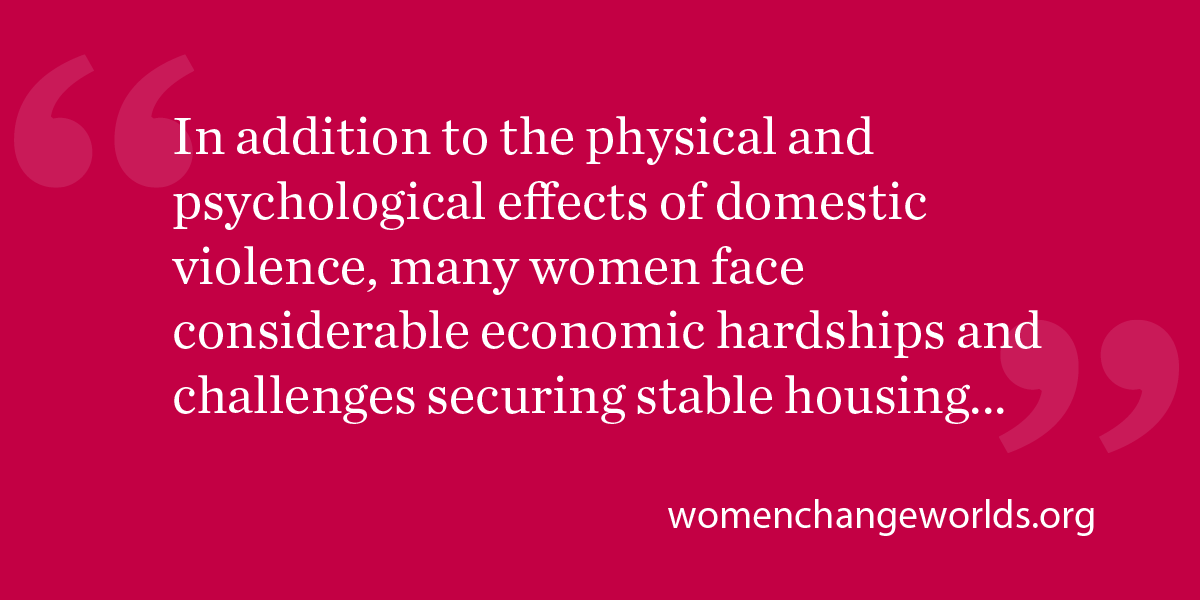

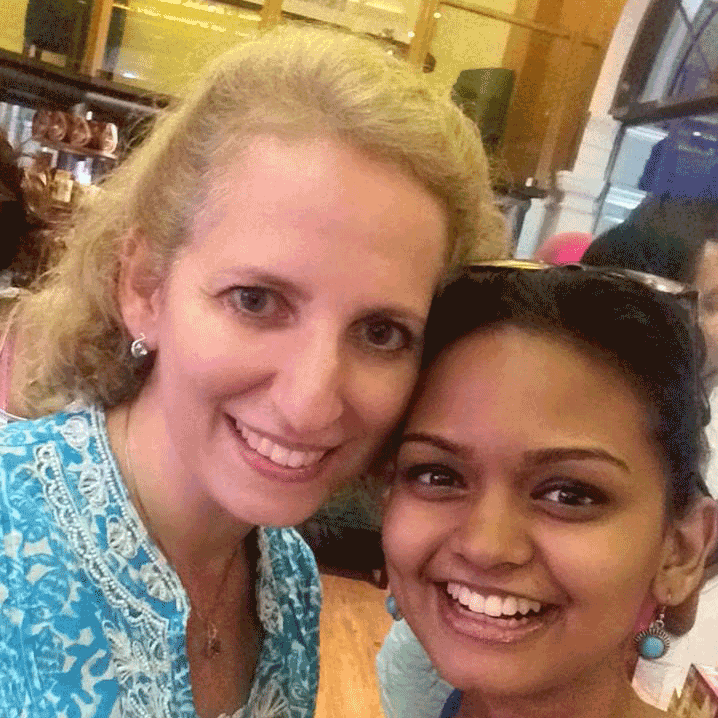 Mentorship was the reason I came to Wellesley College, all the way across the globe from Sri Lanka. Back in 2013 on the day of the United Nations’



 It’s one thing to teach kids to say “thank you” when they receive a gift or when someone does a favor for them. But how can we help children understand what
  In partnership with the Greater Good Science Center and the John Templeton Foundation,
  Transitional age youth, those who are leaving state systems of care, are one of our most vulnerable populations of children. Each year in the United States, about 23,000 young people age out of foster care,
 I wrote these thoughts as a white, upper-middle-class, able-bodied, heterosexual, secular humanist woman, with the primary goal of connecting more deeply with other white people and being open to all other intersections. I was deeply impacted by and must honor this writer of color--Isobel Debrujah’s “
 CALLING IN WITH LOVING ACCOUNTABILITY:
 I love the people in my life who push me to be better. I owe much gratitude for this piece to Mirah Anti, Jorge Zeballos, Pat Savage-Williams, Andrea Johnson, Donald Burroughs, Matthew Biecker, Ashley Tuzicka Ray, and Jamie Utt.
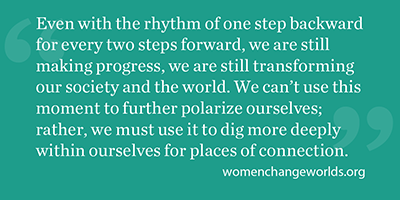 The biggest gift I can offer at this time is empathy – to those whose hopes were shattered, to those whose anger, pain, and frustration led us in this surprising direction, and to those who are just plain terrified right now, especially the little ones and the youth. Clearly, we are a country of different realities, and we need to find common ground. I remind myself of my own mantra, “All of us are sacred.” As Thich Nhat Hanh taught me, I breathe in, breathe out, and utilize the present moment as a place of refuge.
 Since voting this morning, all I have been able to think about is the next four years. Without even knowing yet who is going to win, my mind has already jumped ahead. What do we want the next four years to be like? What can we do to make them be the way we want them to be? The negativity of the last 18 months has been excruciating, and I know it doesn’t represent the best of who we are. I want better for all of us!
 I’m starting with a post-election community unity block party in my neighborhood. I’m inviting the people I see every day – and a few I’ve yet to see, since I’m new to my neighborhood – to my home for an evening of fellowship and food with my family. I’ve let everyone know that it doesn’t matter how you voted, where you worship, whom you love, or where you come from – I just want us to come together in the spirit of friendship and community. My hope is that we will affirm each other as neighbors, discover through conversation the wonders of our diversity, and deepen our sense of connection, concern, and shared destiny. Maybe you can do something like this on the block where you live, too.
 Depression is Prevalent but Prevention Programs Are Limited
 Approaches & Recommendations
 Boston After School & Beyond (BASB)
 National nonprofit organizations like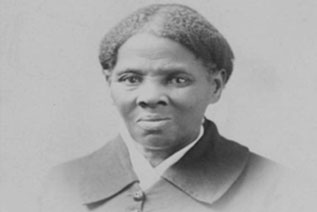
 When the U.S. Department of the Treasury announced two years ago that it was planning to put a woman on the $10 bill, I voted for Harriet Tubman every chance I got. I was privileged to participate in an invitation-only phone call of women leaders with representatives from the Treasury Department, and I also voted online as an “ordinary citizen.” And I unapologetically urged my friends on social media to do the same. So, when the
  Admittedly, if I had a private audience with Secretary Lew, I would suggest the inclusion of some notable Americans of Asian, Latin, Middle Eastern, Native American, and Pacific Islander descent in addition to the very welcome inclusion of African Americans on the new bills--and I might even suggest that he replace the image of slaveholder President Andrew Jackson (after whom my hometown, Jacksonville, Florida, is named, incidentally) with these diverse Americans, since he has (too) long had his day in the sun. I can only hope that this is the plan for the $50 and $100 bills!



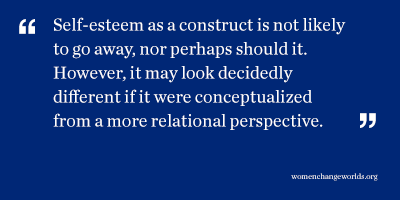 I could not help but be reminded of something that my grandmother Donnie would say to young people in our family. If anyone one of us dared to violate her standards of good grooming or “respectable” behavior, she would say: “Don’t go out acting like you don’t have people.” At the time, her counsel was little more than an irritation. “Having people” could mean anything from representing your family by working hard in school to properly ironing a ruffled blouse. It’s a safe bet that my grandmother never heard of Maslow, and I’m guessing she lived the better part of eight decades without ever using the words “self-esteem.” She did, however, know a lot about respect, reverence, and dignity. What we now call self-esteem is what my grandmother expressed as self and other--awareness. Her version of self-esteem was awareness of connection to community. Further, it meant appreciation for the care that community bestows, and an obligation to represent that care in the world and to the world. Put plainly the lesson was this: how you go out into the world is not just your private business; your behavior reflects on and has consequences for the communities from which you come.
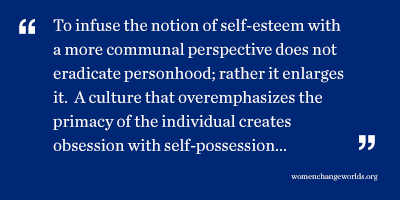 One of the foundational tenets of Relational-Cultural Theory is that the purpose of being in relationship. Having a sense of agency then is to claim our responsibility as co-creators of human possibility. I can think of a no more telling example of this perspective than a conversation I had with a young Indonesian man a few years ago. He told me that as a member of a religious minority in his country, he knew that he had to work twice as hard to get half as far: precisely the advice that I had heard growing up in a racially stratified culture decades earlier. Interestingly, this belief did not engender defeatism or victimhood. Rather, it confirmed the obligation to community: to advance the contributions of preceding generations and to provide “uplift” for future generations. Further, it instilled confidence in our ability and obligation to make the world a little bit better for others.

 So, how do we promote and ensure quality? One major key is staff training and professional development. Since NIOST’s early role in the
 form of justice-involvement (mostly probation). However, comparisons between justice-involved and non-justice-involved women revealed few differences on demographic and other characteristics. For example, their ages, maternal status, the number of children they have, their children’s ages, and the percentage living with their children.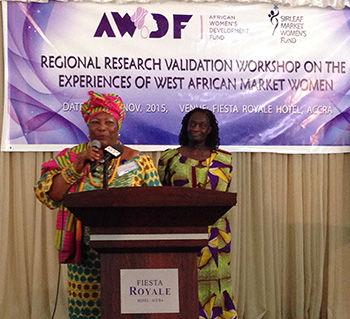
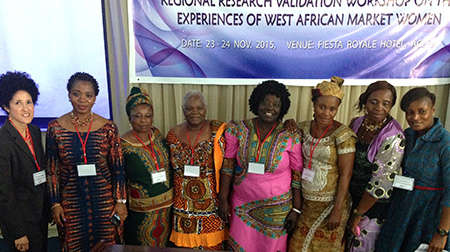
 market women organizations, with a special focus on gender parity in leadership. Although women are, by far, the largest proportion of marketers and traders, often it is the few men who are afforded positions of leadership that allow them to engage with policymakers. The market women who participated in our study would like to see women’s voices rise to the top and for women’s leadership to be recognized with top-level posts. Additionally, they indicated that the time might be right for a West Africa-wide market women’s organization that allowed market women from different countries to network, share best practices, and shape policy that affects them. Many touted the Sirleaf Market Women’s Fund as a good example of a multi-constituency organization that has raised the visibility of market women’s issues at the same time as it has brought different stakeholders together for a common cause, and they imagined this model growing from its roots in Liberia to other countries. Additionally, the pivotal roles of the African Women’s Development Fund, UN Women, and Ford, all of which have provided funding for market women’s issues and related actions, were lauded as model donors.
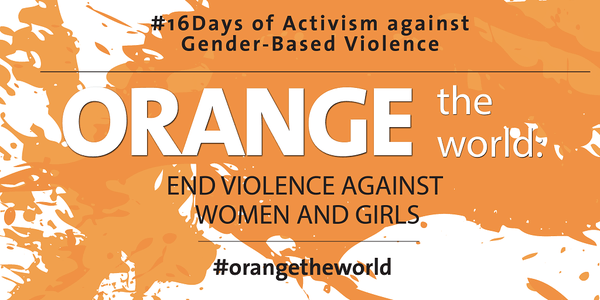
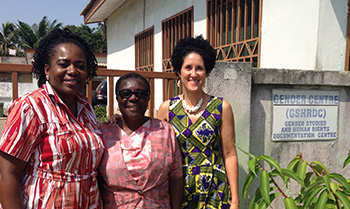
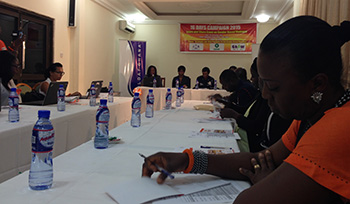
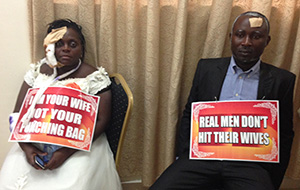 One conundrum that was discussed is the fact gender-based violence statistics have gone up in recent years in Ghana, begging the question of whether domestic violence really is on the rise or, alternately, whether the new law has merely increased reporting of incidents due to society-wide sensitization. Although both factors may be at play, there was general agreement that the law was a necessary intervention on an unacceptable situation--broad scale gender-based violence in Ghana. (Of course, lest anyone single Ghana out, the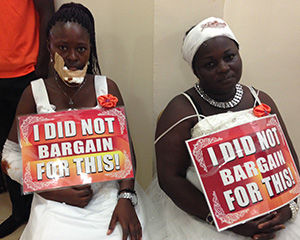
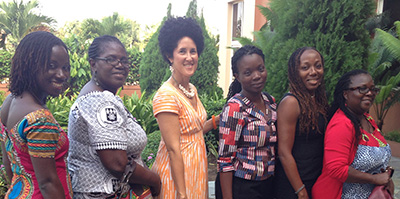
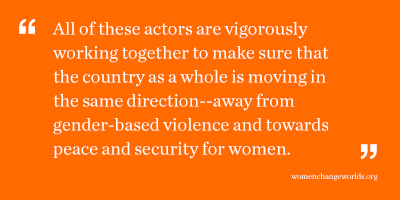 data, convened a group of stakeholders to write new policy, and shepherded the draft policy through the national legislative process while simultaneously engaging in public education so that the government and the people were in it together. They needed to piece together support from many sources over many years to make this happen. Many others who also cared passionately about ending gender-based violence worked with them or supported this work. Now, as Ghana looks ahead the tenth anniversary of its landmark domestic violence legislation, the country can claim many accomplishments. These include the expansion of its judiciary system to address gender-based violence, a sensitized police force that includes a domestic violence unit, and the leadership of its Ministry of Gender, Children, and Social Protection. It also includes increased awareness of groups with special vulnerabilities (such as people with disabilities), and the education and sensitization efforts of numerous NGOs like WiLDAF and academic institutes like CEGENSA. All of these actors are vigorously working together to make sure that the country as a whole is moving in the same direction--away from gender-based violence and towards peace and security for women. Other countries can learn from Ghana --and other countries can increase the link between research and action to end gender-based violence.

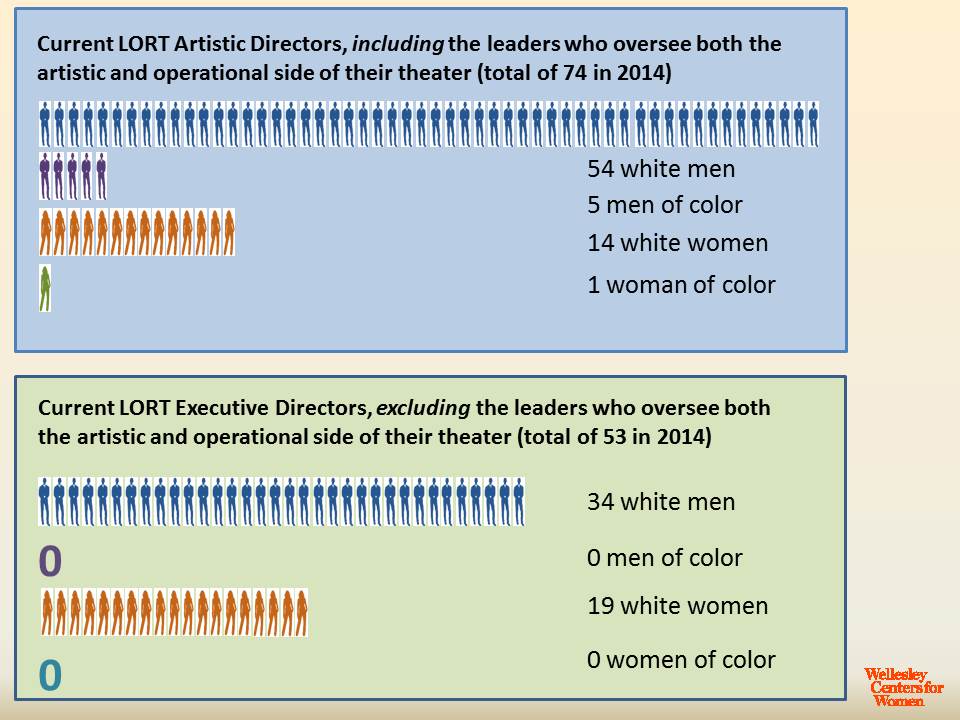
 A word of caution: To conclude that the main problem is a pipeline issue and over time more women and people of color will become viable candidates is an incomplete diagnosis of the problem, and an excuse. It dismisses the large numbers of producers and directors who are well prepared and eager to take on artistic director positions. In addition to the pipeline, there is just as profound a glass ceiling that can be broken with a change in mindset among those who make hiring decisions. Here are some action points for hiring committees about selecting ADs:
 Beatrice’s education. As a result, Beatrice made it all the way to
  Recently, Beatrice updated us about her activities, which have grown to support the communities where she works in even broader ways. In addition to a library/community center in Amor Village, which was her project under IREX, she has now started a school complex in Tororo village that already includes a primary school and will grow to include a nursery school, a secondary school, and a vocational education center. Twenty-seven of the mentees who started with PCEF/RGCM at the beginning of secondary school are now pursuing university education. About half of them are studying to become teachers, but the others are pursing fields as diverse as accounting and finance, adult education, economics, motor mechanics, clinical medicine, nursing, human resource management, and wildlife management. Finally, Beatrice is mobilizing donors to purchase solar panels for the families in her network so that they can stop using kerosene lamps. She just thinks of everything!
 responding to and addressing such backlogs, including policies and protocols for notifying and involving victims. States and local jurisdictions have also been responding by implementing backlog reduction legislation or initiatives.
 director of the Women’s Law Project, who was honored by the
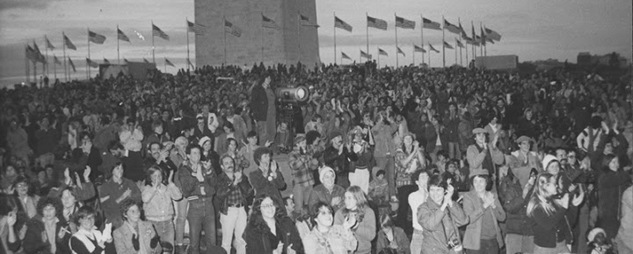
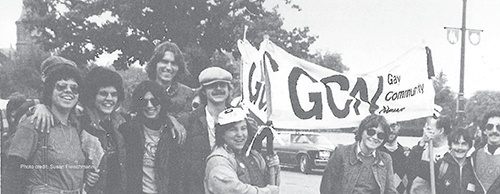 Thirty-six years later, the social status of LGBT people has changed enormously. Few LGBT people in Montana, say, would worry that a march in Washington, DC, would cause them to be set upon by an angry mob. In liberal Massachusetts, my employer, my neighbors, and my doctor all know I’m a lesbian. I’ve been married to my partner of 27 years since 2003—and my entire family came to our wedding. Since the Supreme Court’s Obergefell decision in June, my marriage is recognized by the federal government as well as that of my state. I can watch many television shows and movies in which LGBT characters make it through the entire plot without killing themselves. I can kiss my wife goodbye on the front steps when I leave for work in the morning without worrying (too much) that we’ll be beaten or shot.
 Still, as
 Everyone Needs to STOP the Pain!
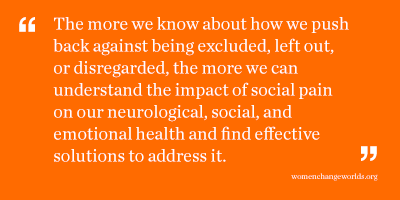 The obvious forms of social pain are glaringly obvious, often flagrant and extreme. Black men and women being stopped by police, detained or harassed, and imprisoned at sweepingly disproportionate rates compared to White people; too often resulting in violence and even murder.
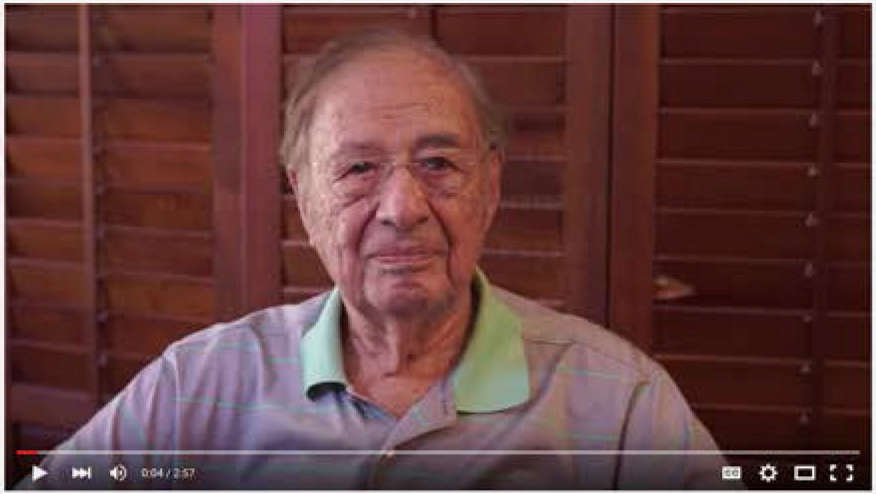 Over the summer, Alan visited us here at the Wellesley Centers for Women, and here’s what he had to say about Maggie>>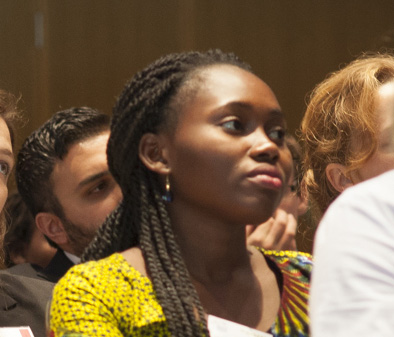
 The three-day conference was full of conversations and speeches by professors, politicians, lawyers, and students from around the world and it helped further shape my ideas about peace and how, instead of been skeptical, I can contribute to achieving world peace. It wasn’t merely these conversations or speeches that shaped my thinking, but mostly by being a part this global community I had the opportunity to use my voice--and the voices of other participants--to rally behind a common good. The conference exposed me to a lot of factors undermining peace around the world as well as possible solutions to tackle them. It brought me face to face with other young people from around the world who had similar experiences as mine but who had examples of proven and possible solutions for peacebuilding. One of those participants was a Canadian law student, originally from Rwanda, who became an immigrant at a tender age because of the genocide in her country. She stressed her idea that peace is possible but only if we focus our efforts on changing international humanitarian laws.
 services to women and girls who need them. What our clinic staff has seen firsthand is that blocking access to abortion and comprehensive reproductive health care doesn’t stop them from being needed, or even stop them from happening — it just keeps them from being safe. Due in large part to extensive abortion bans throughout the region, 95% of abortions in Latin America are performed in unsafe conditions that threaten the health and lives of women.
 Although these are all big questions, I have at least learned a few things over the years through my
  Lisa Fortuna
 My academic and teaching interests lie at the intersection of culture, computation, community, and cognition--I like to think about how technology can support learning in community and public settings. In my
  Robbin Chapman

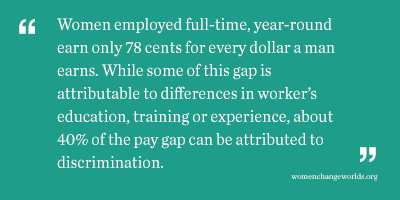 Service occupations, such as maids and housekeeping cleaners, personal care aides and child care workers, are the lowest paid of all broad occupational categories. This disproportionately affects the earnings of
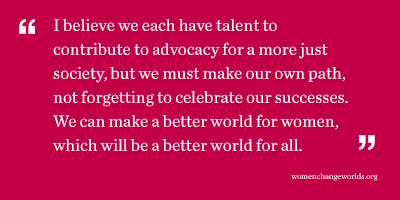 Dr. Hardisty had served on the Board of Directors of the Highlander Center for Research and Education, the Ms. Foundation, the Center for Community Change, and the Center for Women Policy Studies, among others. Her book, Mobilizing Resentment: Conservative Resurgence from the John Birch Society to the Promise Keepers, was first published by Beacon Press in 1999. Some of her WCW-related
  In the mid-1970s, Stanford-based psychologist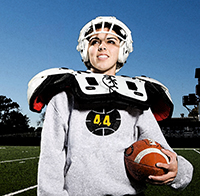
 Championship, was confused when he arrived on campus. His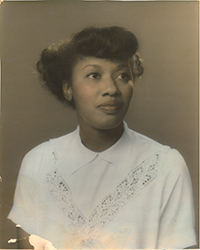
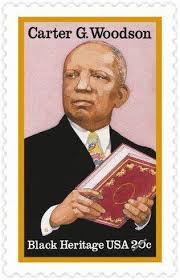 ck History Month, which began as Negro History Week in 1926. He was an erudite and meticulous scholar who obtained his B.Litt. from Berea College, his M.A. from the University of Chicago, and his doctorate from Harvard University at a time when the pursuit of higher education was extremely fraught for African Americans. Because he made it his mission to collect, compile, and distribute historical data about Black people in America, I like to call him “the original #BlackLivesMatter guy.” His self-declared dual mission was to make sure the African-Americans knew their history and to insure the place of Black history in mainstream U.S. history. This was long before Black history was considered relevant, even thinkable, by most white scholars and the white academy. In fact, he writes in the preface of The Negro in Our History that he penned the book for schoolteachers so that Black history could be taught in schools—and this, just in time for the opening of Washington High School.
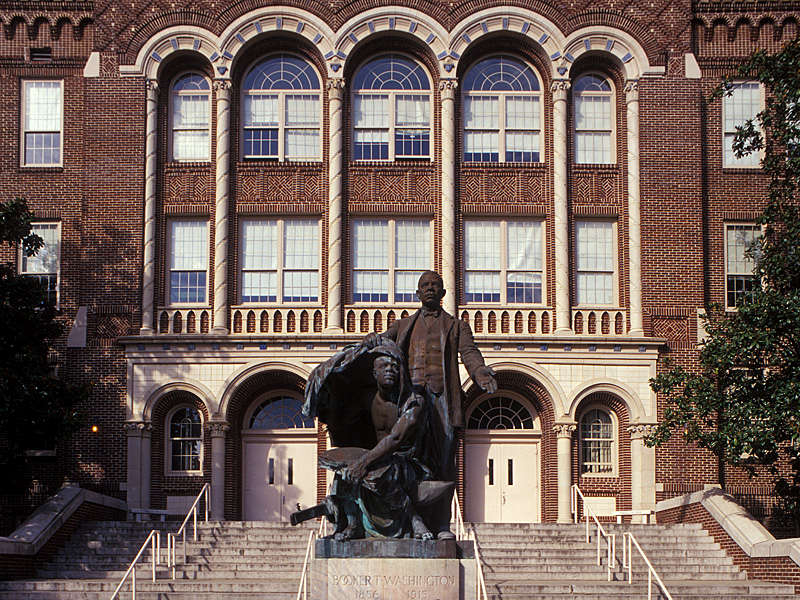 women. It enlivens my curiosity to imagine my grandmother Jannie as a young woman learning in school about her own history from Carter G. Woodson’s text, which, at that time was still relatively new, alongside anything else she might have been learning. It saddens me to reflect on the fact that my own post-desegregation high school education, AP History and all, offered no such in-depth overview of Black history, African American or African.
 After finishing high school, my grandmother Jannie, like many of her generation, worked as a domestic for many years. However, after spending time working in the home of a doctor, she was encouraged and went on to become a licensed practical nurse (LPN), which took two more years of night school. From that point until her death, she worked as a private nurse to aging wealthy Atlantans. This enabled her to make a good, albeit humble, livelihood for herself and her two daughters, along with my great grandmother Laura, who lived with her and served as her primary source of childcare, particularly after her brief marriage to my grandfather, an older man who she found to be overbearing, ended. With this livelihood, she was able to put both her daughters through Spelman College, the nation’s leading African American women’s college, then and now. It stands as a point of pride to our whole family that, although she was unable to attend due to family responsibilities, Jannie herself was also at one time admitted to
 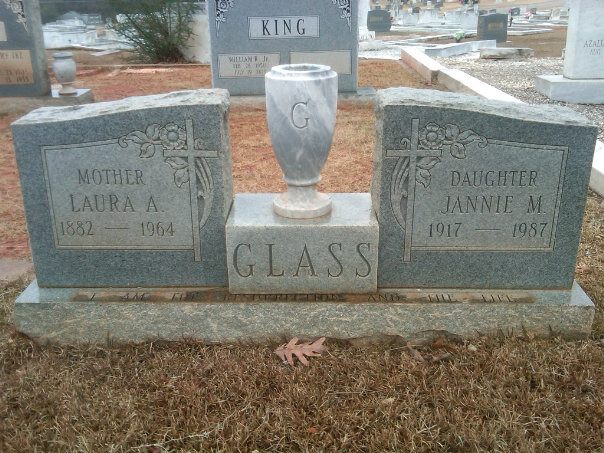 ge. Sadly, she didn’t live to see me attain my Ph.D., but, when she passed away, I was already pursuing my Masters degree, and, like her, I was also mother to a second child. Thus, when I inherited The Negro in Our History, it was more than a quaint artifact of an earlier era, and more than just a physical symbol of Black History Month. Rather, it was where Black history, women’s history, the pursuit of education, the pursuit of social justice, my own history, and my own destiny met.

 So dopamine itself is not the problem, nor is the dopamine reward system. Dopamine is simply the carrot on a stick designed to give a reward to life-sustaining activities like eating healthy food, having sex, drinking water, and being held in nurturing relationships so that you would keep doing these healthy things over and over again. The problem is how we stimulate the dopamine pathway. In an ideal world—one that understands the centrality of healthy relationship to health and wellness—the dopamine reward system stays connected to human connection as the primary source of stimulation. Unfortunately, we do not live in this ideal world. We live in a culture that actively undermines this precious dopamine-relationship connection. We raise children to stand on their own two feet while the separate self is an American icon of maturity. It is making us sick.
 Deep in my brain, the area in the prefrontal cortex that plans and executes the physical movement of walking out the door is being stimulated. Though I am not moving, the same nerve cells are firing. When you touch the door and pull your hand away quickly and shake it a little I “know” that the door was quite hot from the pounding sunshine on the glass. My somatosensory cortex that creates sensations fires and my hand feels a low-grade sense of heat and smoothness from the window window. That is added to the immediate mix of how I am reading your experience. And finally, you walk through the door and a large smile crosses your face as you fall into the arms of a loved one. In my brain and body the nerve signal has now traveled through the insula into my “feeling centers” in my body and I feel a similar joy and lightness. I “know” you are with someone you love. All of this has happened in the blink of an eye and without you sharing any of your experience with me. My brain and body uses itself as a template to have a shared experience with you and the closer our life experiences internally have been, the more resonant we feel.
 The story of
  I was many things at ten years old, but one thing I wasn't was accepted. My family moved to a new town that summer—it was 1972—and on the first day of school when the school bell rang I stood in the middle of the girls’ line anxiously waiting to meet my new classmates. As I was studying my shoes I heard the laughter and the whispering, “What is that new boy doing in the girls line!” They were talking about me, well-dressed in boys clothing. I was humiliated, filled with shame, desperate to go back to my old school where people knew and accepted me. It was a long year of pain, accentuated by my teacher who routinely tried to force me to join the Girl Scouts.
 This is where the story gets really interesting. The area that lit up when a subject was excluded is a strip of brain called the
 killers flood your system buffering the pain. Neither of these reactions are under your conscious control. You are automatically protected.