Senior Research Scientist Linda Charmaraman, Ph.D., has spent years studying social media’s effects on youth, and she is often asked for her thoughts on this controversial subject. There are certain things she says over and over again: “Social media is not inherently good or bad. Its effects likely depend on what teens do and see online, their preexisting strengths or vulnerabilities, and the contexts in which they grow up.”
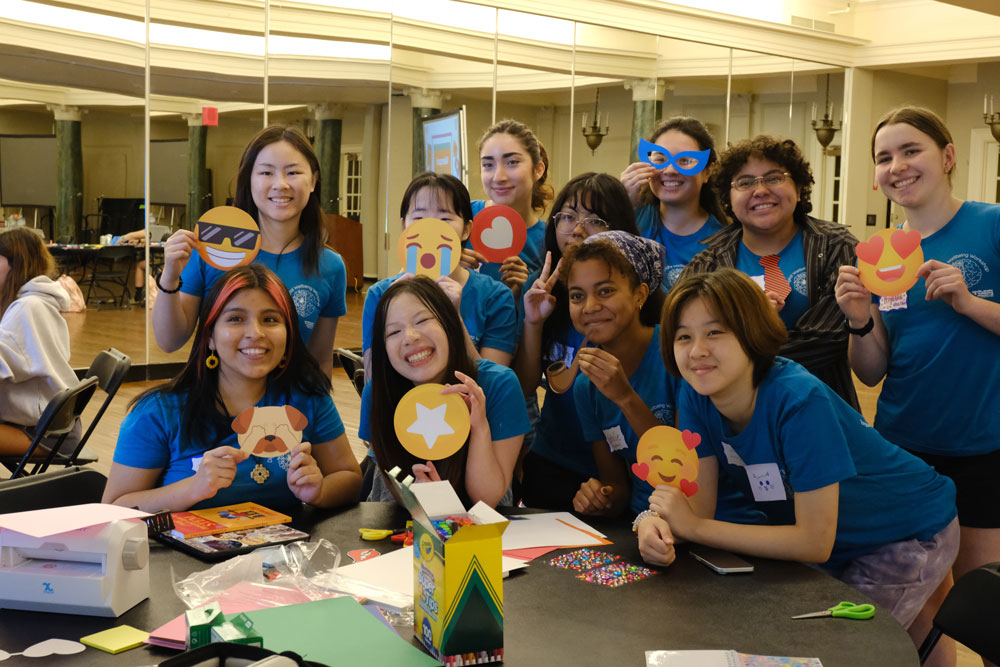 The Wellesley College students who helped run the Youth, Media & Wellbeing Research Lab’s 2025 digital wellbeing workshops.As the conversation has shifted to artificial intelligence (AI) and its effects on youth, Charmaraman has found that if you replace “social media” with “AI,” the statement still holds true. The American Psychological Association (APA) put it this way in its recent advisory (which Charmaraman contributed to):
“The effects of AI on adolescent development are nuanced and complex; AI is not all ‘good’ or ‘bad.’ Consideration of the impacts of AI should include factors such as the specific application of AI, design features of applications, data uses to train AI systems, and the context of the use of these technologies.”
So given the complexities involved, how should we approach the issue of youth using AI? Charmaraman believes it should be similar to the way she approaches social media: empower youth rather than just try to protect them.
One of the ways she puts this approach into action is through her Youth, Media & Wellbeing Research Lab’s annual digital wellbeing workshops. Since 2019, Charmaraman and her team of Wellesley College students and local teens have offered summer workshops that teach middle schoolers how social media algorithms work and give them the opportunity to imagine and design more positive online communities of their own.
This year, the workshops focused on AI, and participants created their own chatbot companions to boost teen self-esteem. In a hands-on workshop activity, they learned how to create parameters on their chatbots and then tested vulnerabilities of the systems they created. In the process, they got a peek behind the curtain of how AI works. Program evaluations highlighted youth feeling more like “scientists” and STEM innovators by the end of the program—empowering young girls to feel included in STEM fields that often do not include their voices and perspectives.
“Giving youth agency is our goal,” said Charmaraman. “They’re curious and smart and can understand these technologies as well as the adults around them. So why not empower them with information rather than simply tell them to stay away?”
The APA advisory includes “Four ways parents can help teens use AI safely,” which all involve the method Charmaraman advises most often: conversation between parents and their teens. The metaphor she uses when talking about social media also applies here.
“When your teen sits in the driver’s seat of a car for the first time, you don’t toss them the keys and say ‘good luck out there,’” said Charmaraman. “You sit next to them and help them learn the rules of the road. You talk through tricky situations. You give them the tools to one day drive on their own. We should be doing the same with AI.”
Read more from the APA’s advisory on AI and adolescent wellbeing: