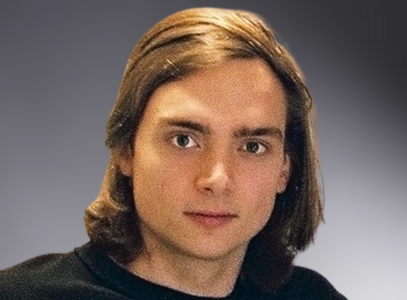
Ben Berners-Lee
Ben Berners-Lee, Ph.D., is a postdoctoral research scientist at the National Institute on Out-of-School Time. He joined WCW as a research associate in June 2023 and was promoted to postdoc in 2024 after he received his Ph.D.
Tell us about your professional background and how you learned about WCW.
My background is in studying how people communicate about their thought processes and psychological wellbeing, and the forms of human communication that follow uptake of new technologies in these areas. My Ph.D. is from an interdisciplinary program in communication and cognitive science. There, I studied how psychiatrists and data scientists communicate with each other and with participants as they develop a mental health treatment that uses machine learning. I first learned of WCW when I learned about Relational-Cultural Theory (RCT), which was developed at the Stone Center.
What are you currently working on?
My current work includes qualitative research to better understand how cognitive, social, and emotional skills manifest in observable activities. I use these findings to develop and improve questionnaires we administer to youth that participate in academic, social, and emotional learning programs. I also work with community organizations and school districts in Massachusetts to develop data-driven systems to continuously improve afterschool and summer programming and bring about social and emotional learning and other youth development outcomes.
Why is WCW the place for you and your work?
At WCW I am surrounded by scholars with expertise on the questions that are central to my work. Broadly, the centers are known for research into how people can be understood not just as individuals, but also in terms of the other people, communities, and organizations that they relate to. It is an ideal place to take a feminist perspective on how human communication changes with the advent of new technologies—one that challenges the dichotomy between cold, calculating technical systems on one hand, and intuitive, human interactions on the other. It is also a historic home for groundbreaking research on youth development, out-of-school time, and the important role these systems play in the lives of women.
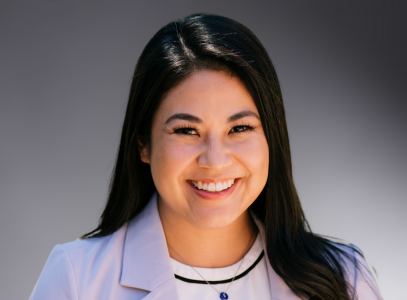
J. Maya Hernandez
J. Maya Hernandez, Ph.D., is a postdoctoral research scientist in the Youth, Media & Wellbeing Research Lab. She joined WCW in January 2025.
Tell us about your professional background and how you learned about WCW.
My work has always centered around youth mental health, and I actually started my research journey at Boston Children’s Hospital in 2014 as a clinical research intern. Since then, I’ve studied pediatric mood disorders and chronic pain, and then shifted to an in-depth understanding of adolescence in the context of the digital age. I completed my Ph.D. in 2023 from University of California, Irvine and took a little break from academia to chase another passion in nonprofit; however, I found my way back to WCW as a postdoc with a longtime mentor, Dr. Linda Charmaraman.
I say I found my way back because I actually learned about WCW through a little stroke of luck. During my first year of grad school, I was curious to see what other researchers across the country were focusing on in the field of adolescence in the digital age. I stumbled upon Dr. Charmaraman’s work, and decided to take a shot in the dark to email her to see if she would be willing to chat with me. One call later, our collaboration began, the rest is history, and I have since been continuously inspired by her work and WCW.
What are you currently working on?
At the Youth, Media & Wellbeing Research Lab… What are we not working on?! But in all seriousness, I’m currently focused on a few projects in depth, including preparing to lead the Youth Advisory Board for our Digital Wellbeing Workshops, which are going into their 8th year; managing and analyzing several datasets, including a four-year analysis of social media behaviors and social anxiety among adolescents; exploring various parent behaviors within our Media and Identity Election Study with our amazing students in the lab; and lots of grant writing.
Why is WCW the place for you and your work?
WCW is a unicorn for research in so many ways. The way it embraces the interdisciplinary nature of creating social change through top-tier research is something that aligns so deeply with my research orientation and beliefs. Not only does WCW value actionable research, it isn’t afraid to transcend borders to create meaningful connections with communities around the world to achieve the goal of social change, with an emphasis on women, girls, and families. My and the lab’s work focuses on uplifting the voices of youth who are historically underrepresented in traditional academic research, and WCW does not shy away from celebrating this. This is why I feel grateful and privileged to be a part of the WCW community.
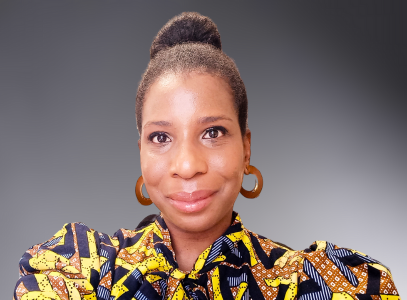
Nyasha Karimakwenda
Nyasha Karimakwenda, Ph.D., is an associate research scientist in the Justice and Gender-Based Violence Research Initiative. She joined WCW in January 2025.
Tell us about your professional background and how you learned about WCW.
I’m a feminist researcher of gender-based violence in African contexts, and entered the world of research as a second career, beginning over 15 years ago. Over this time, I have worked independently and with academic research institutions, nonprofit organizations, and government bodies to examine different facets of gender-based violence, including sociocultural drivers of violence, access to justice, and women’s help-seeking experiences.
I came to WCW after returning to the United States from South Africa, where I had lived and studied for over six years. For a particular project, I was researching rape case attrition in African countries and came across America-focused research conducted by the Justice and Gender-Based Violence Research Initiative at WCW. This is how I learned about the Centers’ work on gender-based violence, and reached out to them. In addition, I am a proud Wellesley College alumna and knew of WCW during my time here.
What are you currently working on?
I am supporting the development of a project to address gender-based violence in higher education institutions in Africa. This project has encouraged me to stretch my brain in new ways as it involves extensive program development planning and multi-partner collaborations. I am also continuing my work on marital rape, which is a type of intimate partner violence that I have studied closely. I aspire to do more empirical work in South Africa on forms of cultural practice called “ukuthwala” that involve abduction for purpose of marriage, and are sometimes characterized by rape and other abuses.
Why is WCW the place for you and your work?
WCW is a rare gem of a community that I am honored to be part of. It is women centered and therefore coincides well with my feminist work. It also applies research to action. I truly believe that research should not sit in a bubble or ivory tower, but should be used to change lives for the better, which is what WCW is doing. I am also glad that WCW has done work focused on Africa and is continuing to expand in this direction. This allows me to stay connected to the research areas that I am passionate about, and to help foster more linkages with the African continent.