
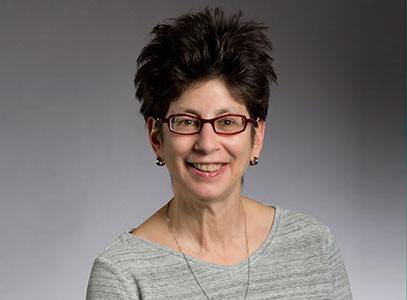
M.F.A., University of Massachusetts, Amherst
ahoffman@wellesley[dot]edu
Link to website
Former editor of Women’s Review of Books, providing unique perspectives on literary landscape with reviews of books by and about women.
For more than a dozen years, until winter 2018, Amy Hoffman was editor in chief of the Women’s Review of Books (WRB), which is published by the Wellesley Centers for Women (WCW) at Wellesley College, in collaboration with Old City Publishing in Philadelphia, PA. She is a member of the creative nonfiction faculty at Pine Manor College's MFA program. A writer and community activist, she has been an editor at Gay Community News (GCN), South End Press, and the Unitarian Universalist World magazine. Hoffman is the author of three memoirs -- Lies about My Family; An Army of Ex-Lovers: My Life at the Gay Community News; and Hospital Time.
Hoffman has taught writing and literature at the University of Massachusetts and Emerson College and served as development director for the Massachusetts Foundation for the Humanities and the Women’s Lunch Place, a daytime shelter for homeless women. She has served on the boards of GCN, Sojourner, Gay and Lesbian Advocates and Defenders (GLAD), and the Boston Lesbian and Gay History Project and as a judge of the Lambda Literary Awards. Hoffman has a B.A. in English from Brandeis University and a Master of Fine Arts in creative writing from the University of Massachusetts at Amherst.
Hoffman has been awarded fellowships from the Virginia Center for the Creative Arts for five consecutive years, from 2012 through 2016.
Hoffman’s memoir, Lies About My Family, was published by the University of Massachusetts Press in 2013. Her memoir An Army of Ex-Lovers, about Boston's Gay Community News and the lesbian and gay movement of the late 1970s, was published by the University of Massachusetts Press in 2007. Her first book, Hospital Time, about taking care of friends with AIDS, was published by Duke University Press in 1997. An Army of Ex-Lovers was a finalist for both the Publishing Triangle Judy Grahn Award and a Lambda Book Award in Memoir/Biography in 2008. Hospital Time was short-listed for the American Library Association Gay Book Award and the New York Publishing Triangle Judy Grahn Award and was a New York Public Library Books for the Teen Age selection. Learn more about Hoffman’s books on her website.
You can reach the Wellesley Centers for Women, including Media Relations and Speaker Requests, at wcw@wellesley[dot]edu or 781.283.2500. Search the Wellesley College directory for contact information for specific research scientists, project directors, or other WCW staff.
The Wellesley Centers for Women has offices in two Wellesley College buildings: Simpson Cottage and Waban House (click on links for driving directions). Do not use our mailing address for driving directions.
Wellesley Centers for Women
Wellesley College
106 Central Street
Wellesley, MA 02481-8203 USA
Subscribe to our email list to receive our free Research & Action Report and other updates.
The Wellesley Centers for Women will use the information you provide on this form to send periodic emails about our work. You can unsubscribe from emails at any time by clicking unsubscribe or contacting us at wcw@wellesley[dot]edu. Learn how we manage your privacy.
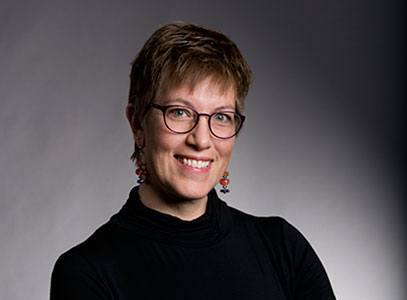
B.A., Humboldt State University; M.S. and Ph.D., Pennsylvania State University
atracy@wellesley[dot]edu
Specialized in latent variable and longitudinal modeling; collaborated with researchers at WCW, Wellesley College, and other institutions; occasional instructor of advanced workshops in methodology and guest lecturer.
Allison Tracy has over 15 years of experience providing methodological and statistical consultation for researchers in a wide variety of disciplines, research topics, and institutions – academic, applied, and commercial. Her approach to consulting is to translate researchers’ articulated research questions and hypotheses into statistical models and to translate results of these models back into plain English that can be understood by individuals both within and outside academia.
She has technical expertise in a wide range of statistical techniques used in the social sciences, including structural equation modeling, confirmatory factor analysis and MIMIC approaches to measurement, path modeling, regression analysis (e.g., linear, logistic, Poisson), latent class analysis, hierarchical linear models (including growth curve modeling), latent transition analysis, mixture modeling, item response theory, as well as more commonly used techniques drawing from classical test theory (e.g., reliability analysis through Cronbach’s alpha, exploratory factor analysis, uni- and multivariate regression, correlation, ANOVA, etc). She also has expertise in missing data analysis and power analysis. She has a strong background in program evaluation and measurement development. She is currently expanding her expertise to include Rasch modeling and Generalizability Theory approaches to measurement.
We believe in our motto -- A world that is good for women is good for everyone.™
The Wellesley Centers for Women (WCW) is an academic research and action institute at Wellesley College that is focused on women and gender and driven by social change.
We envision a world of justice, peace, and wellbeing for women and girls, children and youth, families and communities, in all their diversity around the world.
Our mission is to advance gender equality, social justice, and human wellbeing through high-quality research, theory, and action programs.
Former executive director Layli Maparyan, Ph.D., explains WCW’s theory of change.
WCW received NGO (Non-Governmental Organization) Special Consultative Status with the Economic and Social Council for the United Nations in 2001. This standing allows WCW to designate official representatives to a wide range of UN meetings held around the globe, including the United Nations Commission on the Status of Women.
Our work is sustained by funding from federal, state, and local government agencies, private foundations, the Centers’ endowment (managed by Wellesley College), and the generosity of individual donors committed to social change. WCW receives essential infrastructure, facility, and governance support from Wellesley College.
Along with the Madeleine Korbel Albright Institute for Global Affairs and the Hillary Rodham Clinton Center for Citizenship, Leadership, and Democracy, WCW is part of Wellesley College’s Wagner Centers for Wellesley in the World. The Wagner Centers are a hub and catalyst for research and global solutions, especially on critical issues related to women, democracy, and gender equity.
WCW provides meaningful research experiences for Wellesley College students through paid internships and research assistant positions. WCW also employs Wellesley students in administrative support roles, and some research scientists and project directors at WCW teach courses at Wellesley College.
WCW offices are a part of the Wellesley College campus. We recognize the many Indigenous peoples who have rich histories on this land, and we acknowledge the many Indigenous people who live, work, and study at Wellesley and in Massachusetts. Read the official Wellesley College Land Acknowledgment.

Susan McGee Bailey retired at the end of 2010 as the executive director of the Wellesley Centers for Women at Wellesley College and a professor of Women's & Gender Studies and Education at Wellesley College, after 25 years leading the premier research-and-action organization.
She was executive director of the Wellesley College Center for Research on Women from 1985 until 1995, when the Center and the Stone Center for Developmental Studies at Wellesley College merged to become a single organization--the Wellesley Centers for Women.
Dr. Bailey received a B.A. from Wellesley College and M.A. and Ph.D. in Social Science Educational Research from the University of Michigan. She was awarded both a University fellowship and a social science educational training fellowship while in graduate school and completed a postdoctoral fellowship in public health at Johns Hopkins University. Before joining the Wellesley Centers for Women, she directed the Resource Center on Educational Equity at the Council of Chief State School Officers in Washington, D.C., the Policy Research Office on Women's Education at Harvard and Radcliffe, and held various posts at the Connecticut State Education Agency. She has taught elementary and secondary school in the United States, Asia, and Latin America.
Dr. Bailey has written and lectured extensively on issues of gender equitable public policy with a particular emphasis on education. She was the principal author of the 1992 AAUW Report: How Schools Shortchange Girls. Following the NGO Forum at the Fourth World Conference for Women in Beijing, China, she coauthored a guide for junior and senior high school teachers, Shaping a Better World: Global Issues/Gender Issues. Her most recent publication, Unsafe Schools: A Literature Review of School-Related Gender-Based Violence in Developing Countries, is available here in PDF format. Among her honors and awards are the Activist/Policy Award from the Women Educators of the American Educational Research Association (AERA) and the Abigail Adams Award from the Massachusetts Women's Political Caucus. She has also received the Award for Leadership from the SIG Research on Women’s Education (AERA) and the Willystine Goodsell Award for contributions to research on women in education (AERA).
Involved in a variety of professional activities, she currently sits on the board of the National Centers on Sexuality at San Francisco State University and has served as a Trustee of Regis College, and as an advisory board member of the National Women's History Project. She was president of the board of the National Council for Research on Women, and chair of the AERA Special Interest Group: Research on Women in Education. She has served in a variety of capacities with community organizations addressing the needs of disabled children.
 | Wellesley Centers for Women 781.283.2500 |
Copyright © 2026 Wellesley Centers for Women, Wellesley College | Privacy Policy
