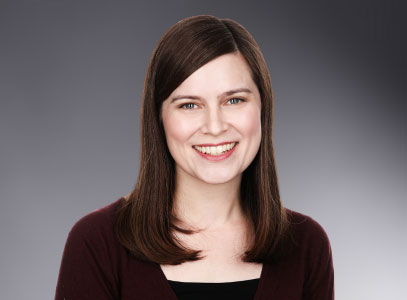
Rosanna Hertz, Ph.D.
Faculty Research Scholar
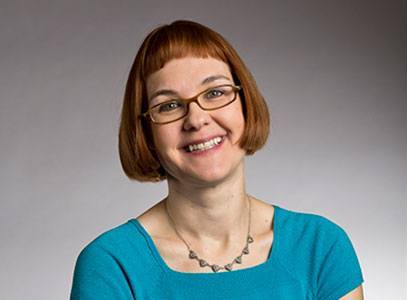
Rosanna Hertz is the Luella LaMer professor of sociology and women's and gender studies at Wellesley College where she has taught since 1983. She chaired the Women's Studies Department from 2000-2008.
She is the current president (2009-2010) of the Eastern Sociological Society, the oldest regional association of sociology. The theme she has selected for this year's meeting is "The Economic Crisis and New Social Realities" which will be held in March 2010. She has also been elected to the American Sociological Association's Council from 2009-2011.
She is presently the co-director of a newly formed Institute on Gender and the New Global Economy and a research scholar at the Wellesley Centers for Women. Her scholarship focuses on diverse families in a changing economy and how social inequality at home and in the workplace comes to shape the experiences of women and men. She is interested in how people weave together a life on their own, despite lack of government or workplace supports. Her present research examines how the media portrays unemployment in the U.S. and Canada. She is also completing a study of the interplay of genetics, social interaction, and culture expectations in the formation of web-based donorsibling kin groups.
Her book, Single by Chance, Mothers by Choice: How Women Are Choosing Parenthood without Marriage and Creating the New American Family (Oxford University Press, 2006) looks at the changes occurring in women’s lives. As hopes for marriage fade for middle class women, their commitment to motherhood continues. The potent combination of the age-old desire for motherhood and the new possibilities of science are well on their way to creating major changes in the formation and functioning of families. This is a projection of a possible future, one that reevaluates the place of women and men in families. Ultimately, building families from a mother-child core is the future. The book was named Outstanding Academic Title for 2007 by Choice, the review publication for academic libraries. In addition, Single by Chance was a finalist for the prestigious 2006 C. Wright Mills Award from the Society for the Study of Social Problems. The award honors writing that “critically addresses an issue of contemporary public importance.” For more information about this book, see rosannahertz.com.
In her groundbreaking 1986 book, More Equal Than Others: Women and Men in Dual-Career Marriages, she provided an early framework for examining the dual-earner marriage. Using in-depth interviews with a select group of middle level employees she examined how couples cope with issues of equality, finances and childrearing. She found that when faced with the choice between demanding relief from inflexible work schedules from their employers and purchasing services to substitute for "homemade" originals, dual-earner couples almost invariably meet the demands of employment. The New York Times praised the book for the “sober and informative” analysis it provided in what is often a controversial topic.
Two earlier empirical studies featured equally penetrating analyses of the interaction between the social organization of family life and the demands of the external economy. The first study (co-authored with Joy Charlton) looked at how working class families whose members live on different shifts stitch together the fragments of their lives to make something whole as time. Of added interest was the context for the shiftwork: military bases, which were among the first to integrate enlisted women into this combat career field.
The second study focused on the dynamics of care and kinship. Hertz interviewed couples of different social classes and racial groups about how they made the decisions about childcare arrangements in order to better understand how ideological beliefs about parenthood, racial concerns about minority status of children and work schedules are factors that inform parents’ decisions. See her home page in the Women’s Studies Department for selected articles.
Hertz teaches courses on the changing family and social policy, the social construction of gender, and women and the global economy. She has had a long-standing interest in social science methodology, which she has incorporated into an interdisciplinary course, “The Feminist Inquiry.”
She received a B.A. at Brandeis University in sociology and philosophy and an M.A. and Ph.D. in sociology from Northwestern University. In addition, she completed a two-year post-doctoral fellowship in the Department of Psychiatry at Harvard Medical School.
Recently she has published articles in the Christian Science Monitor and the Huffington Post. She has been quoted in such publications as The New York Times, The Washington Post, The Wall Street Journal, Newsweek, The Los Angeles Times, The Chicago Tribune and The Boston Globe. She appears frequently in the broadcast media commenting on social problems for local news specials.
|
|
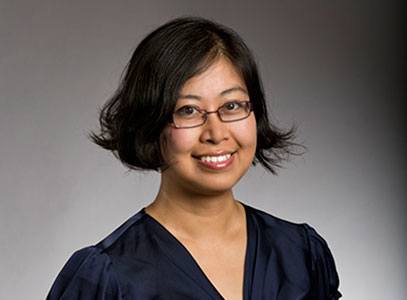
Susan M. Reverby, Ph.D.
Faculty Research Scholar
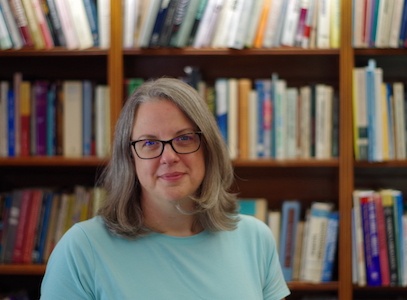
Susan M. Reverby is the Marion Butler McLean Professor in the History of Ideas and Professor of Women's and Gender Studies at Wellesley College and a historian of American women, medicine and nursing. The first hire at Wellesley in Women's Studies in 1982, she has taught at the college for more than two decades. She is the co-editor of America's Working Women: a Documentary History (1976); Health Care in America: Essays in Social History (1979); and Gendered Domains: Beyond the Public and Private in Women's History (1992). She was the editor of The History of American Nursing: a 32 Volume Reprint Series (1982-83). Her prize-winning book, Ordered to Care: The Dilemma of American Nursing (New York: Cambridge University Press, l987) is still considered one of the major overview histories of American nursing. She has completed two books on what is referred to as the infamous "Tuskegee" Syphilis study (1932-72), the longest running non-therapeutic research study in U.S. history that involved the United States Public Health Service and nearly 600 African American men in the counties surrounding Tuskegee, Alabama. The men thought they were being "treated," not studied, for what they thought of as "bad blood." The study has become a central metaphor for distrust of the health care system and as the key example of unethical research. She was a member of the Legacy Committee on the Tuskegee Syphilis Study that successfully lobbied President Bill Clinton to offer a public apology to the surviving men and their heirs in l997. Her edited book of articles and primary documents on the study appeared in 2000 (Tuskegee Truths: Rethinking the Tuskegee Syphilis Study). Her new book, Examining Tuskegee: The Infamous Syphilis Study and its Legacy is now available. Please see the following website for more information: http://www.examiningtuskegee.com. One of her articles on the study, "History of an Apology: From Tuskegee to the White House" won both the Will Solimene Award and the Ralph A. Deterling Award from the New England Chapter of the American Medical Writers Association in l998. Her article on Nurse Eunice Rivers, a key figure in the study, appeared in the Nursing History Review and is reprinted in her edited book on the study, Tuskegee's Truths: Re-thinking the Tuskegee Syphilis Study (Chapel Hill: University of North Carolina Press, 2000). Susan Reverby is completing a book entitled Testifying on Tuskegee: Telling the Tuskegee Syphilis Study Stories that examines the differing narratives that have been created to understand the study. Susan M. Reverby's scholarship has appeared in a wide range of publications from scholarly journals to editorials in the popular press. Her work on the Tuskegee Syphilis Study has appeared in England in both the Times Education Supplement and in the Postgraduate Medical Journal and in the ethics journal, Hastings Center Report, in the United States. She has spoken widely in the United States, Australia, Canada, and Sweden, on the history of gender, ethics and health care issues. She is a frequent commentator on health, gender and race issues in public forums. Most recently she was on WBUR radio's "The Connection" and WGBH television's "Greater Boston" to discuss rising cesarean section rates. She has appeared in several documentaries as a "talking head" on both nursing and the Tuskegee study. At Wellesley, Susan M. Reverby has taught a wide range of courses from introductory women's studies to history of American health care. Her other courses have focused on history/gender and memory, the politics and history of passing, and the politics of identity in American history. Susan M. Reverby received her BS degree from Cornell University in Industrial and Labor Relations with a focus on labor and economic history. Her M.A. is from New York University and her Ph.D. is from Boston University in American Studies. She has worked as a community organizer in New York and as a women's health activist. She spent three years as a health policy analyst at the Health Policy Advisory Center in New York in the early 1970s, focusing on women's health and nursing issues. From 1993-1997 she served as the consumer representative on the U.S. Food and Drug Administration's Obstetrics and Gynecology Devices Advisory Panel, and from 1998 and 2007 served on the Board of Directors of the ACLU of Massachusetts. She is currently the Affirmative Action officer for the American Civil Liberties Union of Massachusetts and has served on its Board of Directors since l998. She has held the Whitehead and Luella LaMer chairs at Wellesley College and received support for her scholarship from the American Council of Learned Societies, the National Endowment for the Humanities and the American Association of University Women. She has been a fellow at the Bunting Institute at Radcliffe and the W.E.B. DuBois Institute at Harvard. In 2002-03, she received a Radcliffe Institute Fellowship at Harvard.
E-Mail:
This e-mail address is being protected from spambots. You need JavaScript enabled to view it
|
|
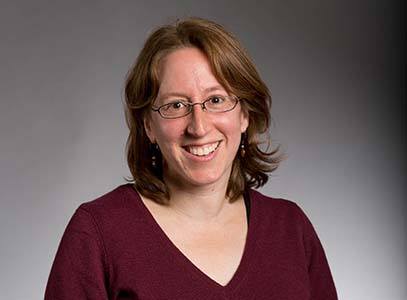
Amy Banks, M.D.
Director of Advanced Training at the Jean Baker Miller Training Institute
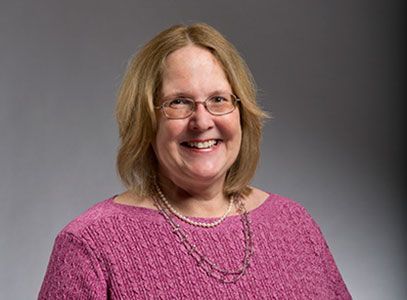
In addition to her work at the Jean Baker Miller Training Institute (JBMTI), Amy is also an instructor in psychiatry at Harvard Medical School. After graduating magna cum laude from Tufts University she earned her medical degree at Georgetown University and her psychiatric training at the Massachusetts Mental Health Center, a Harvard residency program. Amy was the psychiatrist-in-charge of The Women’s Treatment Program, a residential and day treatment program at Mclean Hospital based on relational-cultural theory; she was the team psychiatrist for the Victims of Violence Program at Cambridge Hospital, and Medical Director for Mental Health at the Fenway Community Health Center in Boston, MA. Over the last ten years at JBMTI, Amy has been integrating emerging neuroscience information with relational-cultural theory. She has spoken throughout the country on “The Neurobiology of Relationship” and has an ongoing passion to spread the message that we are “hard-wired for connection.”
Amy co-edited The Complete Guide to Mental Health for Women published by Beacon Press in 2004. She has written numerous articles on the treatment of childhood trauma including a popular manual “PTSD, Relationships and Brain Chemistry," published as a Project report at the Stone Center, Wellesley College. She has been a co-investigator of the “National Lesbian Family Study," a 20+ year longitudinal study (led by principal investigator Nanette Gartrell, M.D.) and has co-authored numerous journal articles describing the findings. Most recently, Amy has been exploring the field of energy psychology, integrating unified field theory into an understanding of how and why connections heal. Amy has a private practice in Lexington, MA specializing in “relational psychopharmacology” and the therapy and pharmacology of traumatized individuals.
Books Amy would recommend:
- The Neuroscience of Human Relationships by Louis Cozolino
- The Brain that Changes Itself by Norman Doidge
- Women’s Growth in Connection by Judith V. Jordan, Ph.D., et al.
- The Healing Connection by Irene Stiver and Jean Baker Miller
- How Connections Heal by Wendy Rosen and Maureen Walker
Fax: 781.860.9592
|
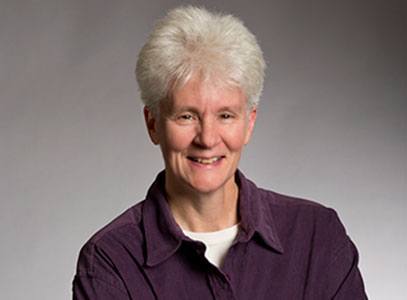
Sally Engle Merry, Ph.D.
Senior Scholar
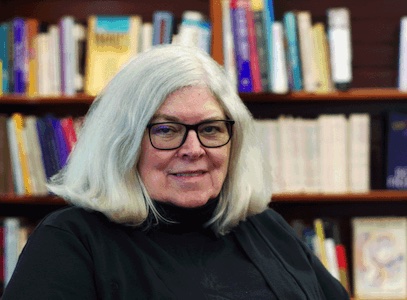
Sally Engle Merry is Professor of Anthropology and of Law and Society at New York University. Her work explores the role of law in urban life in the US, in the colonizing process, and in contemporary transnationalism. She is currently doing a comparative, transnational study of human rights and gender. She was previously on the faculty of Wellesley College, where she was the Marion Butler McLean Professor in the History of Ideas and Professor of Anthropology.
Her recent books are Colonizing Hawai’i: The Cultural Power of Law (Princeton Univ. Press, 2000), which received the 2001 J. Willard Hurst Prize from the Law and Society Association, Human Rights and Gender Violence: Translating International Law into Local Justice (University of Chicago Press, 2006), and The Practice of Human Rights: Tracking Law between the Local and the Global, (co-edited with Mark Goodale; Cambridge University Press, 2007). She has authored or edited four other books: Law and Empire in the Pacific: Hawai’i and Fiji (co-edited with Donald Brenneis, School of American Research Press, 2004), The Possibility of Popular Justice: A Case Study of American Community Mediation (co-edited with Neal Milner, Univ. of Michigan Press, 1993), Getting Justice and Getting Even: Legal Consciousness among Working Class Americans (University of Chicago Press, 1990), and Urban Danger: Life in a Neighborhood of Strangers (Temple University Press, 1981). She has recently published articles on women's human rights, violence against women, and the process of localizing human rights. She is past-president of the Law and Society Association and the Association for Political and Legal Anthropology and currently a member of the Executive Boards of the American Anthropological Association and the Law and Society Association. In 2007 she received the Kalven Prize for scholarly contributions from the Law and Society Association. Dr. Merry received her B.A. from Wellesley College in 1966, her M.A. from Yale University in 1967, and her Ph.D. from Brandeis University in 1978.
E-Mail:
This e-mail address is being protected from spambots. You need JavaScript enabled to view it
|
|
|
-
Erika Kates, Ph.D.
-
Nancy MacKay, B.A.
-
Sallie F. Dunning, Ed.M.
-
Wendy B. Surr, M.A.
-
Jean Kilbourne, Ed.D.
-
Tracy R.G. Gladstone, Ph.D.
-
Sari Pekkala Kerr, Ph.D.
-
Joanne Roberts, Ph.D.
-
Peggy McIntosh, Ph.D.
-
Jennifer M. Grossman, Ph.D.
-
Laura Pappano
-
Judith V. Jordan, Ph.D.
-
Linda Charmaraman, Ph.D.
-
Michelle V. Porche, Ed.D.
-
Rangita de Silva-de Alwis, S.J.D.
-
Georgia Hall, Ph.D.
-
Jean V. Hardisty, Ph.D.
-
Sumru Erkut, Ph.D.
-
Nancy L. Marshall, Ed.D.
-
Wendy Wagner Robeson, Ed.D.
-
Ruth Harriet Jacobs, Ph.D.
-
Nan Stein, Ed.D.
-
Ellen S. Gannett, M.Ed.
-
Amy B. Hoffman, M.F.A.
-
Allison J. Tracy, Ph.D.
-
Monica Ghosh Driggers, J.D.
|
<< Start < Prev 1 2 3 4 5 6 7 Next > End >>
|
|
Page 1 of 7 |